

Start here
What Commuting to Campus Actually Involves
Next
Parking Permits and Campus Parking Systems
Then
Budgeting for Your First Semester on the Road
Build on it
Safety Habits Every Student Driver Should Build
When you're ready
Practical Strategies to Reduce Commuting Stress
What Commuting to Campus Actually Involves
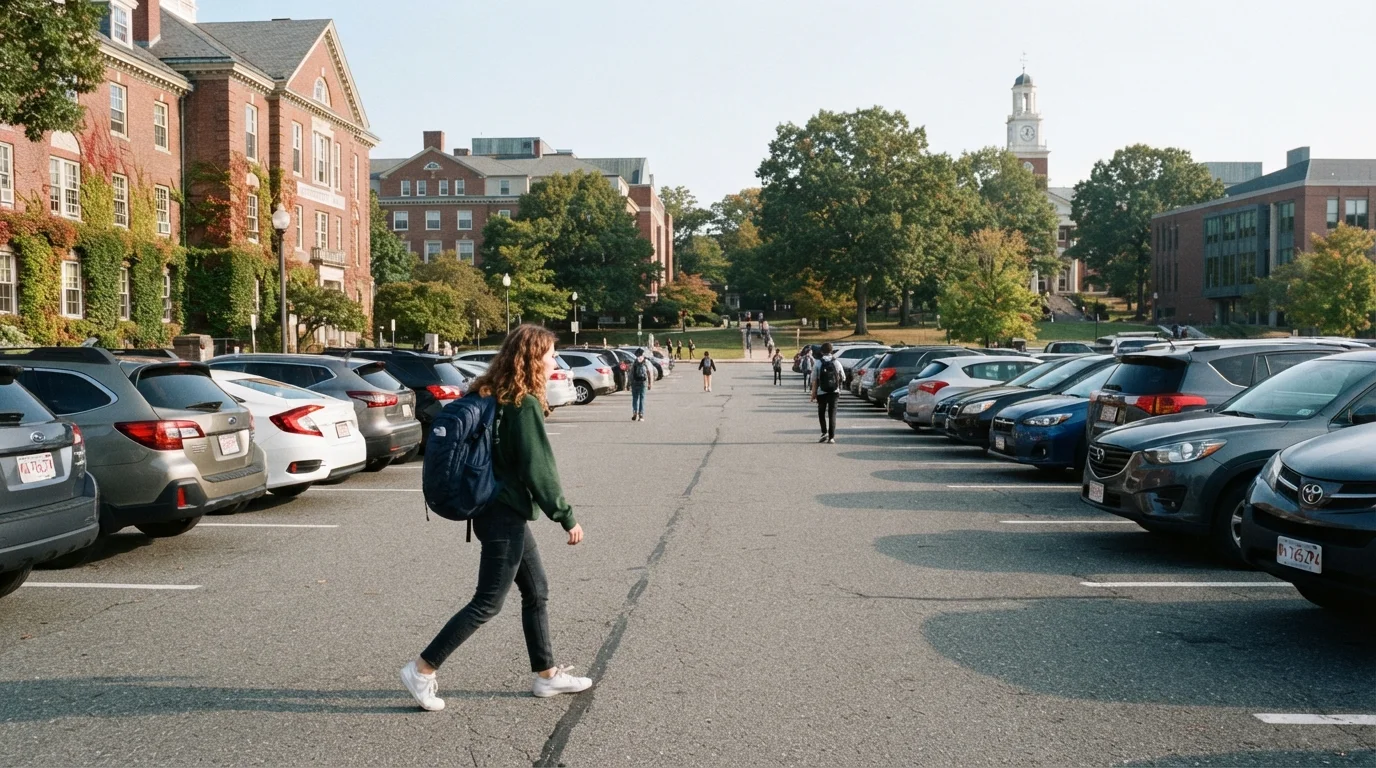
Commuting to college by car means more than just driving to class. It involves managing a vehicle, navigating campus systems, covering ongoing costs, and building routines that fit your academic schedule. For most first-semester students, the biggest surprises aren't the driving itself - they're the logistics that surround it.
Before committing fully to a car-based commute, it's worth getting a realistic picture of what's ahead. Our article on driving to campus every day walks through what the experience genuinely looks like across a full semester - including the trade-offs many students don't anticipate until they're already dealing with them.
This guide focuses on the practical setup: what to do before your first week, what systems to understand, and what habits will serve you throughout the semester.
Commuter student
A student who lives off campus and travels to college each day rather than residing in campus housing.
Parking permit
An official authorization - usually a sticker, hang tag, or digital pass - that allows you to park in designated campus lots or zones.
Commuter lot
A parking area on or near campus specifically designated for students who commute rather than live on campus.
Roadside assistance
A service - often included in auto insurance or available as an add-on - that dispatches help when your vehicle breaks down, gets a flat tire, or runs out of fuel.
Vehicle registration
The state-issued documentation confirming your car is legally allowed to operate on public roads. Many campuses require you to submit this when applying for a parking permit.
Parking Permits and Campus Parking Systems
Campus parking is one of the first logistical hurdles a commuter faces - and one of the most misunderstood. Most colleges require students who drive to campus to register their vehicle and hold a valid permit. Permit types often differ by student classification, lot location, and sometimes by time of day.
Waitlists are common at larger schools, and applying late can mean spending weeks parking off-campus or in metered areas at your own expense. Submit your application as early as your school allows.
Campus Parking Rules Vary Widely
There is no single standard for how colleges manage parking. Some schools use tiered permit systems based on class year or proximity to campus; others operate first-come, first-served lots. Always consult your specific school's transportation services office or website rather than relying on general assumptions. Policies can also change between semesters.
Once you have a permit, learn the specific zones it covers. Parking in the wrong zone - even by one lot - can result in a fine regardless of intent. For a thorough breakdown of how these systems work, see our guide on campus parking permits explained. If you regularly drop off a passenger or pick someone up, also review the rules around drop-off zones and short-stay parking - these areas have specific time restrictions that catch many new students off guard.
Budgeting for Your First Semester on the Road
The cost of commuting adds up across several categories. Fuel is the most visible expense, but it's rarely the largest. A realistic first-semester commuting budget should also account for:
- Parking permit fees - these range from under $100 to several hundred dollars per semester depending on the school and lot tier
- Auto insurance - student drivers, particularly those under 25, typically pay higher premiums; confirm your coverage is current and adequate before the semester begins
- Routine maintenance - oil changes, tire rotations, and wiper blades are recurring costs that are easy to overlook until they become urgent
- Unexpected repairs - building a small emergency fund specifically for car issues is one of the most practical things a student driver can do
For a comprehensive view of what car ownership costs during college, the Student Car Costs hub is a useful reference. And if you want a pre-semester checklist to confirm your vehicle is genuinely road-ready, the car-ready checklist covers the key items.
Don't Ignore Vehicle Readiness
A car that hasn't been serviced recently is a liability for any commuter. Before the semester starts, confirm your tire pressure, oil level, and that your insurance and registration are current. The car-ready checklist covers each of these in detail.
Safety Habits Every Student Driver Should Build
New commuters often underestimate how different driving near a college campus is from suburban or highway driving. Pedestrian traffic is heavy and unpredictable, cyclists share lanes, and campus speed limits are typically low for good reason. Building deliberate safety habits from the start - rather than adjusting after a close call - is the better approach.
A few specific areas where student drivers commonly struggle:
- Driving in adverse weather - rain, ice, and low visibility require adjusted speed and following distance. Our guide on driving in bad weather near campus addresses the most frequent errors new drivers make in these conditions.
- Distracted driving - phone use behind the wheel remains a leading cause of collisions among younger drivers. Establishing a phone-off rule before you put the car in drive is a simple but effective habit.
- Emergency preparedness - knowing what to do if your car breaks down, gets a flat, or won't start reduces panic and keeps you safer. See what to keep in your car year-round for a practical list of items that help in these moments.
Map Your Route Before Day One
Drive your full commute - including finding and entering the parking lot - at least once before classes begin. Doing this during a low-traffic time helps you gauge realistic travel time and spot potential issues, like confusing lot entrances or limited turn lanes, before they make you late.
Practical Strategies to Reduce Commuting Stress
Even well-prepared commuters find the first few weeks of the semester stressful. Parking lots fill up during peak hours, unexpected traffic delays are common, and coordinating a commute around a packed academic schedule takes practice. A few approaches that consistently help:
- Arrive earlier than you think you need to. Finding a space can take significantly longer during midterms, registration periods, or major campus events.
- Consider carpooling. Sharing a ride with a classmate who has a similar schedule cuts fuel costs, may reduce your parking costs, and can make the commute feel less isolating. Our article on carpooling vs. solo driving breaks down the real trade-offs.
- Use campus resources. Many schools offer commuter student lounges, lockers, and dedicated services. The first semester resource checklist can help you identify what's available before you need it.
- Build flexibility into your schedule. Where possible, schedule classes with buffer time between them so a delayed arrival doesn't cascade into a missed session.
Commuting by car is manageable with the right preparation. The goal in your first semester is to reduce variables - know your permit, know your route, know your costs - so that the commute itself becomes routine rather than a daily source of uncertainty.
Campus Parking Permits Explained
A detailed breakdown of how campus parking systems typically work - zones, waitlists, and what to do if your permit tier doesn't cover your usual lot.
What Student Commuters Should Keep in the Car
A practical rundown of emergency and everyday supplies worth keeping in your vehicle throughout the academic year.
Driving in Bad Weather Near Campus
Common mistakes new student drivers make in rain, ice, and low visibility - and how to avoid them before they become a problem.
Student Car Costs Hub
An overview of all the real costs tied to owning and operating a car during college, from insurance to maintenance to unexpected repairs.
Frequently Asked Questions
Most colleges require commuter students to register their vehicle and purchase a permit specific to commuter lots. Permit types, costs, and availability vary by school. Check your campus transportation or parking services website well before the semester starts, as permits often sell out quickly.
Costs vary widely depending on distance, fuel prices, insurance rates, and campus parking fees. Common expenses include fuel, a parking permit, routine maintenance, and auto insurance. Building a monthly estimate before the semester begins helps you avoid budget surprises.
Useful items include jumper cables, a flashlight, a basic first-aid kit, an emergency phone charger, and a printed campus map. A small amount of cash and a copy of your insurance card are also worth having on hand.
Carpooling can significantly reduce fuel and parking costs and may qualify for dedicated carpool spaces on some campuses. The trade-off is reduced scheduling flexibility. It works best when you and your carpool partners have compatible class schedules.
Always park in zones covered by your permit, and familiarize yourself with time-limit rules in short-stay and drop-off areas. Signage in these zones is not always intuitive, so read it carefully each time you use an unfamiliar spot.
Pull safely off the road, turn on hazard lights, and call for roadside assistance if you have it. Notify your professors by email as soon as it's safe to do so. Keeping a basic emergency kit and your insurance provider's contact number in the car reduces how disruptive a breakdown becomes.
The content provided on our blog site traverses numerous categories, offering readers valuable and practical information. Readers can use the editorial team’s research and data to gain more insights into their topics of interest. However, they are requested not to treat the articles as conclusive. The website team cannot be held responsible for differences in data or inaccuracies found across other platforms. Please also note that the site might also miss out on various schemes and offers available that the readers may find more beneficial than the ones we cover.