

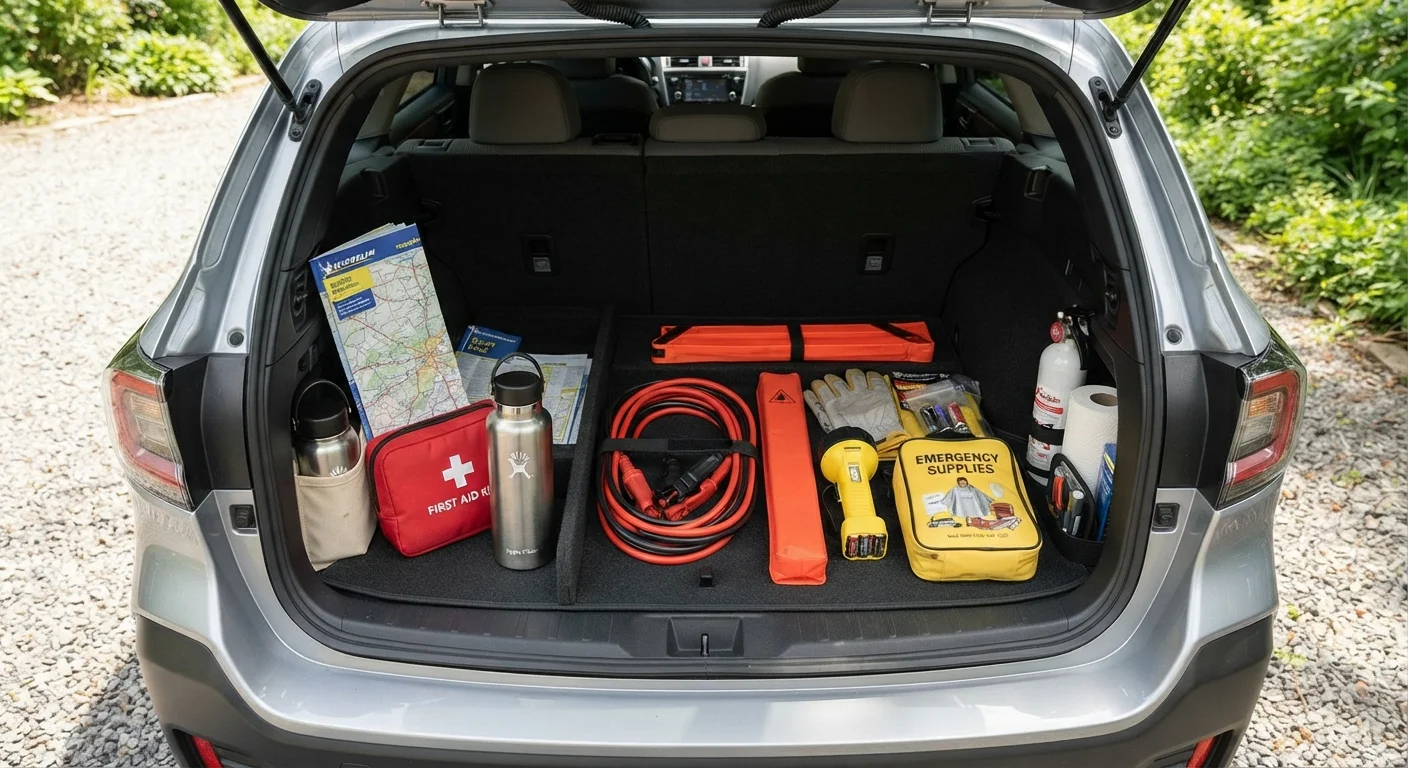
Why your car kit matters more than you think
Most commuter students drive without incident the vast majority of the time - and that's exactly why a roadside problem feels so disorienting when it happens. A dead battery at 7 a.m. before an exam, a flat tire in an unfamiliar parking lot, or a minor fender bender after a long study session: these situations are stressful enough without realizing your car has nothing useful in it.
The good news is that a practical, year-round car kit doesn't require a large investment or much storage space. It's a one-time assembly task that pays off disproportionately to the effort involved. If you're still weighing whether commuting by car is right for your situation, this full breakdown of the daily commute covers the realistic costs and logistics worth considering first.
Below are the seven items that genuinely earn their place in every student commuter's car, regardless of the season.
Jumper cables or a portable jump starter
A dead battery is one of the most common reasons student drivers end up stranded. Jumper cables work fine if another willing driver is nearby, but a compact lithium-ion jump starter lets you handle it entirely on your own - no flag-waving required. Jump starters have dropped considerably in price and many double as a USB power bank for your phone. Either option belongs in the trunk regardless of how new your battery is, because cold weather, a forgotten interior light, or an aging alternator can drain a battery without warning.
A portable jump starter means you never have to wait for a stranger's help.
A basic first aid kit
Minor cuts, burns, or headaches happen. A compact first aid kit - adhesive bandages, antiseptic wipes, gauze, pain reliever, and medical tape - handles the everyday stuff without a trip to the campus health center. Pre-packaged kits designed for vehicles are widely available and take up very little space in your glove box. Check expiration dates on any medications inside at the start of each semester and restock anything you've used.
Note: A car first aid kit covers minor, non-emergency situations. For anything serious, call 911 or campus emergency services immediately.
Restock your first aid kit at the start of every semester to keep it genuinely useful.
A phone charger and a backup power bank
Your phone is your navigation, your emergency contact, and your roadside assistance app all in one. A dead phone during a breakdown or in an unfamiliar neighborhood is a serious safety gap. Keep a car charger plugged in at all times, and store a fully charged power bank in your center console or bag. Aim for one with enough capacity to bring your phone from zero to usable - typically 10,000 mAh or more. Recharge the power bank whenever you notice it running low.
A charged power bank is your safety net when your car charger alone isn't fast enough.
A printed copy of key documents and a campus map
Store printed copies of your insurance card, vehicle registration, and roadside assistance information in your glove box. Many states legally require these documents during a traffic stop, and shuffling through your phone at the roadside is far less reliable than a paper copy. A printed campus map - including parking lot locations and emergency call box positions - is equally useful when GPS fails or your phone dies. If you're still building your commute routine, this first-semester overview covers permits and parking strategy that pair well with having the map on hand.
Paper documents don't need a signal or a charged battery to work.
Water and a non-perishable snack
A sealed water bottle and a non-perishable snack - a granola bar, nuts, or similar - can matter more than they sound. If you're stuck in traffic, waiting for a tow, or locked out in summer heat, having water on hand is a practical safety measure. Replace water bottles periodically, especially in summer, as heat can degrade plastic and affect water quality over time. Hydration basics are easy to overlook when you're rushing between classes; this quick-reference hydration guide is worth a read if you've ever felt fatigued during a long commute day.
In summer heat, a bottle of water in the car is a basic safety item, not a luxury.
A flashlight and reflective triangles or road flares
If you break down after dark - or even in a poorly lit parking garage - a reliable flashlight is essential. Keep one with fresh batteries in the glove box, or choose a hand-crank model that needs no batteries at all. A set of collapsible reflective triangles or LED road flares belongs in the trunk alongside the jumper cables. Placing them behind your car when you're stopped on or near a roadway significantly increases your visibility to other drivers and is a step many student commuters overlook until the first time they need them. For more on staying safe in difficult driving conditions, see our guide on common weather-related driving errors near campus.
Reflective triangles take up almost no space but dramatically improve your roadside safety.
A small cash reserve and a written emergency contact list
Stash $20-$40 in small bills somewhere secure in your vehicle - parking meters, cash-only tolls, and emergency supplies sometimes require cash when cards won't cooperate. Alongside that, keep a written list of two or three emergency contacts (family member, a local friend, roadside assistance number) folded in your glove box. When your phone is dead or broken, you'll need that list to borrow someone else's phone and actually make the call.
A written contact list is useless until the moment it's the only option left - then it's everything.
Build the kit once and maintain it with minimal effort
You don't need to overhaul your car kit every month. The goal is to assemble it thoughtfully once and then check it briefly at the start of each semester. Replace anything expired, recharge the power bank, and do a quick visual on the trunk. That's it.
Assemble it once, check it twice a year
The easiest way to build your car kit is to do it all at once - dedicate one afternoon at the start of your first semester. After that, a quick check each semester (replace expired items, recharge the power bank, restock anything used) keeps everything ready without ongoing effort. Pair this with the semester car-ready checklist for a complete pre-semester review.
Seasonal adjustments matter
In winter months, add an ice scraper, a small snow brush, and a warm blanket or extra layer to your trunk. In summer, check that nothing heat-sensitive - like medications or chocolate - is stored where temperatures spike. Doing a quick seasonal swap at the start of fall and spring semesters keeps your kit genuinely useful all year.
Once your kit is in place, it largely takes care of itself. Pair it with consistent commuting habits - departure timing, parking strategy, and route awareness - and the daily drive becomes significantly less stressful. Our guide on habits that reduce commute stress covers those routines in more detail if you're looking to fine-tune your whole approach.
This article is for general informational purposes. For medical emergencies, always call 911. For roadside situations involving safety risks, contact emergency services rather than attempting repairs yourself.
The content provided on our blog site traverses numerous categories, offering readers valuable and practical information. Readers can use the editorial team’s research and data to gain more insights into their topics of interest. However, they are requested not to treat the articles as conclusive. The website team cannot be held responsible for differences in data or inaccuracies found across other platforms. Please also note that the site might also miss out on various schemes and offers available that the readers may find more beneficial than the ones we cover.