

Summary
22 items · 45–90 minutes
Why This Checklist Matters Before You Hit the Road
Driving back to campus feels routine — load the car, say goodbye, go. But skipping a few basic checks can turn a four-hour drive into an expensive detour. Tire blowouts, overheating engines, lapsed insurance, and expired parking permits are among the most preventable problems student drivers face. This checklist is designed to be run once before each semester begins, covering your car's mechanical condition, your paperwork, and your financial preparedness.
If you're new to driving yourself to college, see our first-semester campus commuter overview for a broader look at permits, parking strategy, and budgeting from day one. This checklist pairs well with that foundation.
Documents and Paperwork
Fluids and Under the Hood
Tires and Brakes
Lights, Wipers, and Battery
Emergency Preparedness and Budget
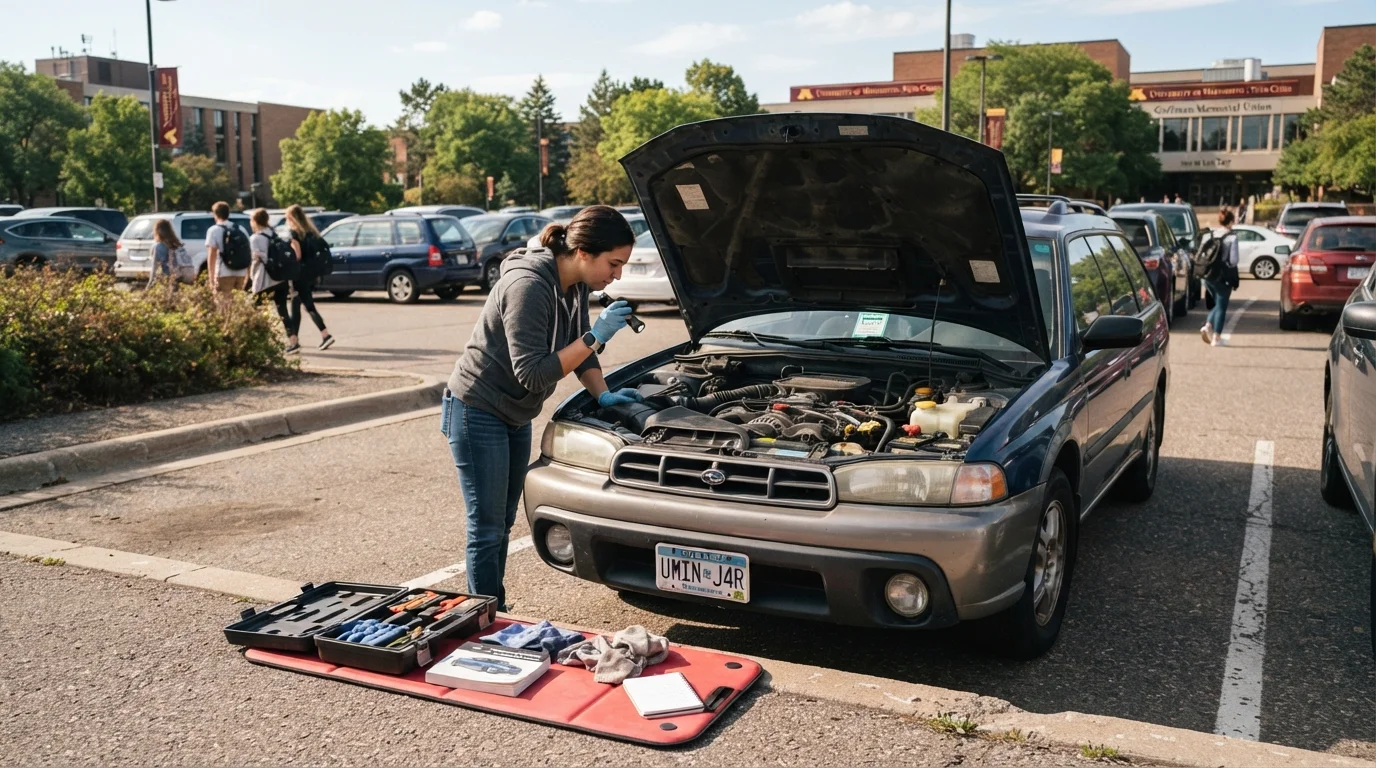
Tools and Resources You'll Need
Most of these checks require only basic tools you may already own. A few items — like a tire pressure gauge — are worth buying if you don't have one yet. They're inexpensive and available at most auto parts stores.
Tire pressure gauge
Used to check all four tires and the spare against the manufacturer's recommended PSI.
Flashlight or work light
Helps you see clearly when inspecting the engine bay, tires, and undercarriage.
Vehicle owner's manual
Provides the correct fluid specifications, tire pressure recommendations, and maintenance intervals for your specific vehicle.
Clean lint-free rags
Needed for wiping the dipstick when checking engine oil and for handling fluid reservoirs cleanly.
Jumper cables
Essential for a dead battery situation — include these in your permanent in-car emergency kit.
Tread depth gauge
Provides a more precise tire tread measurement than the quarter test, useful if tread depth is borderline.
Understanding Your Costs Before You Commit
Car ownership while in college involves more than fuel. Insurance, registration renewals, routine maintenance, and unexpected repairs all add up. A practical approach is to estimate your fixed monthly costs (insurance, parking permit amortized over the semester) and set aside a small buffer for variable expenses like oil changes and tire rotations.
Don't Guess on Insurance or Brakes
Two items on this checklist should never be deferred: verifying your insurance is active and having any brake concerns evaluated by a qualified mechanic. Driving uninsured — even briefly — exposes you to serious legal and financial consequences. Brake problems can develop gradually and may not feel critical until they are. If you're unsure about either, get them resolved before your drive, not after.
For a fuller picture of campus commuting costs and logistics, explore the Campus Commuting hub — it covers parking, traffic patterns, and daily driving considerations relevant to student drivers. And if you want a deeper dive into fluid maintenance specifically, the fluid check routine guide walks through what to look for and how often, in beginner-friendly terms.
Once you've completed this checklist, make a note of anything that needs professional attention. Items like worn brake pads, uneven tire wear, or a check engine light should be evaluated by a qualified mechanic before you make a long drive — not after. Running through a pre-semester driving checklist alongside this one can help you catch anything you may have missed.
This article is for general informational and educational purposes only. It does not constitute professional automotive, financial, or legal advice. Always consult a qualified mechanic for vehicle safety concerns and a licensed professional for financial or insurance decisions specific to your situation.
The content provided on our blog site traverses numerous categories, offering readers valuable and practical information. Readers can use the editorial team’s research and data to gain more insights into their topics of interest. However, they are requested not to treat the articles as conclusive. The website team cannot be held responsible for differences in data or inaccuracies found across other platforms. Please also note that the site might also miss out on various schemes and offers available that the readers may find more beneficial than the ones we cover.