

Our Verdict
Commuting by car to campus works well when you live far from reliable transit, carry equipment, or have an irregular schedule that demands flexibility. However, the recurring costs - fuel, parking permits, insurance, and maintenance - add up faster than most students anticipate, and daily parking stress is a real quality-of-life factor worth weighing carefully.
Best for students commuting from off-campus housing without convenient transit access, or those balancing jobs and irregular class schedules that public transportation cannot accommodate.
What Driving to Campus Actually Looks Like Day to Day
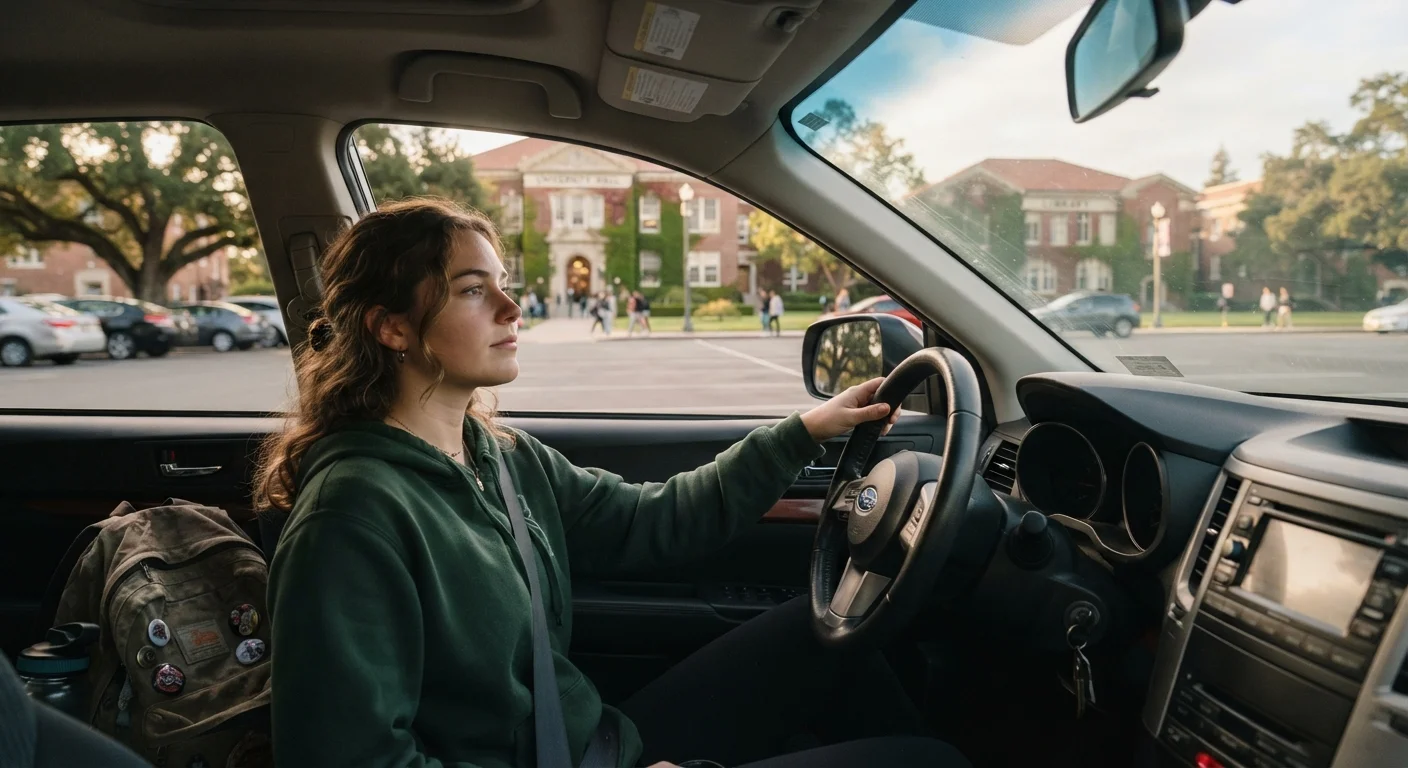
For many students, commuting by car feels like the obvious choice - especially when living off-campus, working part-time, or attending a school with limited bus service. But the daily reality involves more than just driving from point A to point B. You're managing fuel stops, parking logistics, traffic timing, and vehicle upkeep on top of an already demanding academic schedule.
Before committing to a car-based commute, it helps to look honestly at what other student commuters actually report - both the genuine benefits and the friction points that build up over a semester. For a broader look at the full picture, see what daily campus driving really involves.
The Real Advantages of Commuting by Car
Driving gives student commuters capabilities that other transport modes simply don't offer. Here's where a car consistently delivers value:
Flexible departure and arrival times
A car lets you leave when your schedule demands, not when the next bus runs. This matters most for students with early morning labs, evening classes, or part-time jobs with variable shifts.
Haul gear that transit can't accommodate
Musicians, athletes, nursing students, and art majors often carry bulky or fragile equipment. A car removes the daily logistical challenge of transporting that gear on foot or by bus.
Run errands and hold a job more easily
A car integrates your commute with the rest of your day - grocery runs, medical appointments, and work shifts become far more manageable without coordinating transit schedules.
Live farther from campus to save on rent
Students willing to drive 20-40 minutes often access significantly cheaper housing. Whether the rent savings outweigh commuting costs depends on your specific situation.
Private, comfortable travel environment
Your car is a controlled space - useful for listening to lecture recordings, decompressing between classes, or simply avoiding a crowded bus at the end of a long day.
These advantages are most meaningful when your campus lacks reliable transit, your schedule changes week to week, or you're hauling instruments, sports gear, lab materials, or a week's worth of groceries. Students balancing part-time jobs especially cite schedule flexibility as a major reason they choose to drive.
The Real Drawbacks You Should Factor In
The costs and frustrations of car commuting are often underestimated at the start of a semester. Here's where student drivers commonly run into problems:
Recurring costs add up quickly each semester
Fuel, a parking permit, insurance, and routine maintenance (oil changes, tires, brakes) collectively represent a substantial recurring expense. Many students underestimate total annual ownership costs when they first start driving to campus.
Campus parking is often scarce and expensive
Commuter parking permits can range from modest fees to several hundred dollars per semester depending on the institution, and even permit holders frequently struggle to find spots during peak hours.
Commute stress accumulates over a semester
Daily traffic, searching for parking, and time pressure before class create a low-grade stress that many student commuters only fully recognize after switching to a different arrangement.
Vehicles require time and attention to maintain
Skipping maintenance to save money in the short term tends to produce larger, costlier problems later. Tires, oil, and brakes all require attention - and unexpected repairs can derail a student budget quickly.
Ties up financial resources needed elsewhere
Money spent on a car commute is unavailable for tuition, textbooks, or savings. For students on tight budgets, the opportunity cost of car ownership is a genuine trade-off worth examining. The financial case for and against a college car explores this in more depth.
Driving adds accident and liability risk
More miles driven means more exposure to traffic incidents. College-age drivers typically pay higher insurance premiums partly because statistical accident rates are higher for this age group.
Parking is a particular pain point on many campuses. Permit costs vary widely, but commuter lots frequently fill early - especially near midterm and finals seasons. Understanding why campus traffic feels uniquely congested can help you time your arrivals better.
~$1,500+
Estimated annual fuel cost for average student commuter
Based on U.S. average fuel prices and a round-trip commute of 20-25 miles daily for a typical academic year; actual costs vary by vehicle and local prices.
$200-$800
Typical annual campus parking permit range
Parking permit costs vary significantly by institution and permit type; urban universities and high-demand campuses tend toward the higher end of this range.
How to Reduce the Downsides Without Giving Up the Flexibility
Most of the drawbacks of car commuting are manageable with a few deliberate habits. These adjustments won't eliminate costs, but they can meaningfully reduce both financial strain and daily stress.
- Carpool when possible. Splitting fuel and parking costs with even one classmate makes a notable difference. See how carpooling compares to solo driving across cost, flexibility, and convenience.
- Cluster your classes. Scheduling back-to-back classes on fewer days reduces the number of trips you make each week, cutting fuel use and wear.
- Arrive early or off-peak. Many commuter students report that arriving 30-45 minutes before their first class significantly reduces both parking stress and the time spent circling lots. For more strategies, explore habits that make the campus commute less draining.
- Track your actual costs. Students who log fuel, parking, and maintenance often find they're spending more than they estimated. A realistic budget helps you decide whether driving remains the right call. Understanding the true cost of commuting by car is a useful starting point.
Consider Your Campus's Transit Coverage First
Before assuming a car is necessary, check what transit routes actually serve your area. Some campuses offer free or subsidized bus passes for enrolled students - a detail that's easy to overlook when you're already used to driving. If reliable transit reaches your home and your schedule, the financial case for a car commute weakens considerably. Your campus transportation office is the most accurate source for current route and pass information.
If you're weighing driving against living on campus, the cost comparison is worth doing carefully. The commuter parking vs. on-campus housing breakdown lays out a framework for doing that math based on your own situation.
The content provided on our blog site traverses numerous categories, offering readers valuable and practical information. Readers can use the editorial team’s research and data to gain more insights into their topics of interest. However, they are requested not to treat the articles as conclusive. The website team cannot be held responsible for differences in data or inaccuracies found across other platforms. Please also note that the site might also miss out on various schemes and offers available that the readers may find more beneficial than the ones we cover.