

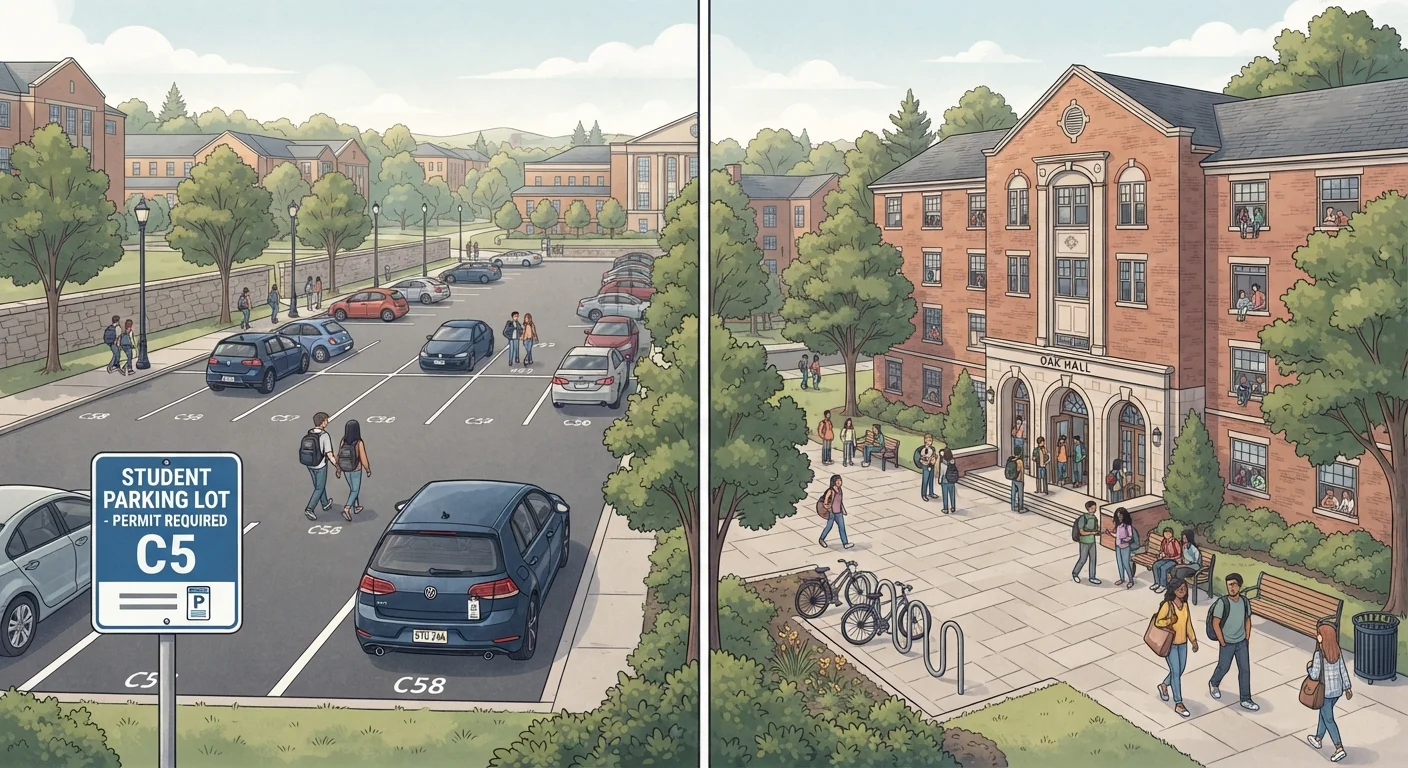
Our Verdict
Neither option is universally cheaper - it depends on your specific distance, campus parking rates, and personal lifestyle. Students living close to campus who commute short distances may find commuting cost-competitive, while those driving 20+ miles each way often spend more than on-campus room rates once all vehicle costs are counted. Always calculate your full annualized figures before deciding.
| Best for | Recommended |
|---|---|
| Students driving fewer than 10 miles from home with free or low-cost parking | Commuter parking |
| Students with heavy class loads, late-night labs, or limited family transportation support | On-campus housing |
| Students who value schedule independence and already own a reliable vehicle | Commuter parking |
| First-year students prioritizing campus integration and eliminating transportation variables | On-campus housing |
Why This Comparison Is Harder Than It Looks
At first glance, commuting from home seems obviously cheaper - you avoid dorm fees and meal plan costs. But the math gets complicated quickly once you account for every vehicle expense. Similarly, on-campus housing looks expensive upfront, but it bundles costs that commuters pay separately.
The goal here isn't to declare a winner. It's to give you a fair framework for running your own numbers. See our full breakdown of commuting costs for a detailed look at what vehicle expenses actually add up to over an academic year.
| Commuter Parking | On-Campus Housing | |
|---|---|---|
| Upfront annual cost (typical range) | Varies: permit + fuel + insurance + wear | $12,000-$15,000+ (room and board bundled) |
| Utilities and Wi-Fi | Paid separately at home | Usually included in housing fee |
| Meal costs | Pay separately; flexible spending | Meal plan typically bundled in |
| Transportation flexibility | High - drive anywhere, anytime | Low - dependent on walking, transit, or rideshare |
| Commute stress and time cost | Real - traffic, parking hunts, weather | None - steps from class |
| Campus social integration | Limited by commute schedule | Higher - 24/7 campus access |
| Vehicle required | Yes - must maintain and insure | Not necessarily - car optional or absent |
What Commuter Parking Actually Costs
Commuter students pay for a parking permit, but that's rarely the largest line item. Here's what to tally on an annual basis:
- Parking permit: Campus permits vary widely - from under $100 to over $1,000 per academic year depending on the institution and lot type.
- Fuel: At 30 miles per gallon and a 20-mile round trip, five days a week over 30 weeks, you're looking at roughly 100 gallons per semester - more if your car is less efficient.
- Insurance premium increase: Insuring a vehicle driven regularly to campus, especially in a city, often costs more than a car parked at home. This is general information; your actual premium depends on your insurer and policy details.
- Maintenance and wear: Regular commuting adds miles, accelerating oil changes, tire wear, and eventual larger repairs. A common estimate is $0.08-$0.12 per mile for routine wear and depreciation, though this varies significantly by vehicle age and condition.
Driving to campus every day involves more trade-offs than most students anticipate before their first semester.
Get the Real Permit Price First
Before estimating commuting costs, look up your specific campus's current parking permit rates on the transportation or parking services website. Permit prices range from under $100 to over $1,000 per year depending on the school and lot. This single figure can shift your entire cost comparison significantly.
What On-Campus Housing Actually Costs
On-campus room and board figures from the College Board suggest average annual costs at four-year institutions can range from approximately $12,000 to $15,000 or more, though this varies widely by school and room type. That number is large - but look at what it typically includes:
- A furnished room with utilities (heat, electricity, Wi-Fi)
- A meal plan covering most daily meals
- Proximity to classes, libraries, and campus resources - reducing or eliminating transportation needs entirely
Students living on campus often don't need a car at all during the academic year, which means no insurance, no fuel, no permit, and no maintenance costs for those months. If your family situation allows leaving the vehicle at home, those savings are real.
For a broader look at the on-campus versus off-campus trade-off, see our comparison of renting versus student halls.
$12,000-$15,000+
Average annual on-campus room and board
The College Board publishes annual survey data on room and board costs at four-year institutions across the United States.
$0.08-$0.12
Estimated per-mile vehicle wear cost
This is a general range commonly cited for routine wear and depreciation; actual costs vary widely by vehicle age, make, and condition.
Non-Financial Factors That Shift the Decision
Cost alone rarely settles this question. Consider these practical realities:
- Schedule density: Students with 8 a.m. classes, evening labs, or weekend commitments on campus pay a real time and stress cost commuting. That friction compounds over a semester.
- Academic access: On-campus students can more easily use late-night library hours, office hours, and study groups. Commuters sometimes miss these by necessity, not choice.
- Mental load: Finding parking, traffic delays, and weather-related driving stress are invisible costs that affect study time and wellbeing.
- Social integration: Research consistently suggests on-campus students report stronger campus community ties, which can affect retention and satisfaction - though individual experiences vary.
Car commuting has genuine advantages too - storage space, off-campus flexibility, and independence are real benefits worth weighing.
How to Build Your Personal Comparison
Before registering for housing or a parking permit, build a simple side-by-side estimate:
- Get your school's actual parking permit cost from the transportation office - not a guess.
- Estimate your annual mileage and calculate fuel costs using your car's real MPG rating.
- Contact your insurance provider to understand how commuting use affects your premium.
- Add a conservative wear estimate based on expected annual miles.
- Compare that total to your school's published room and board figure, subtracting any costs you'd still pay at home (utilities, groceries equivalent to a meal plan).
Also check whether carpooling to campus could meaningfully reduce your commuting costs if you lean toward commuting. Splitting fuel and parking with one or two classmates changes the equation significantly.
For a comprehensive look at all the costs associated with running a car through college, visit our student car costs hub.
This article provides general financial and educational information only and is not personalized financial advice. Costs vary significantly by institution, location, and individual circumstances. Consult your school's housing and transportation offices for current, accurate figures before making any housing or commuting decision.
The content provided on our blog site traverses numerous categories, offering readers valuable and practical information. Readers can use the editorial team’s research and data to gain more insights into their topics of interest. However, they are requested not to treat the articles as conclusive. The website team cannot be held responsible for differences in data or inaccuracies found across other platforms. Please also note that the site might also miss out on various schemes and offers available that the readers may find more beneficial than the ones we cover.