

The Three Cost Categories Every Commuter Student Should Know
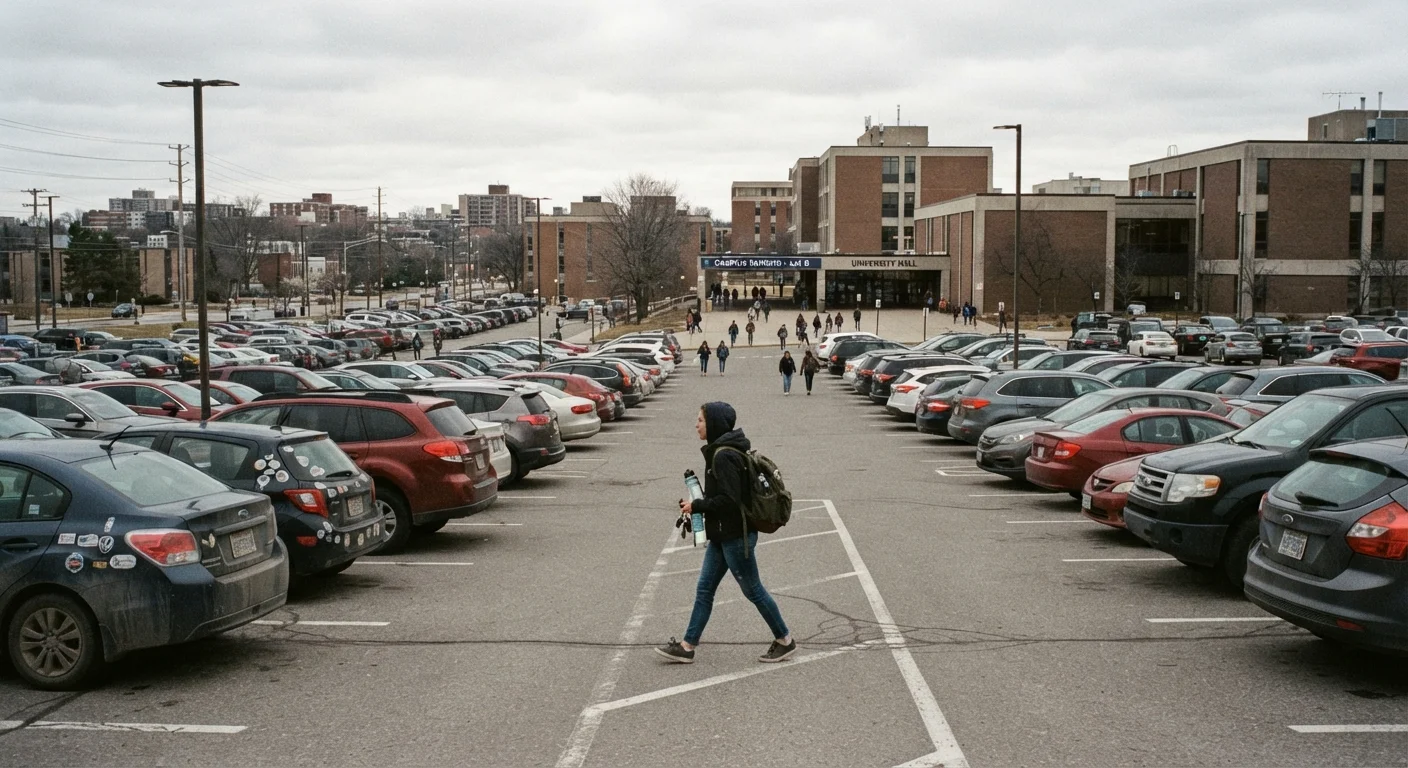
When students think about driving to campus, fuel tends to get all the attention. But the actual cost of commuting by car breaks into three distinct categories - fuel, parking, and vehicle wear - and ignoring any one of them leads to a budget that falls short every month.
Understanding how each category works is the first step to calculating a realistic commuting number. For a deeper look at what regular campus driving involves before you commit to it, see our full campus commuting guide.
Fuel
Fuel costs depend on three variables: how many miles you drive each week, your vehicle's fuel economy (measured in miles per gallon, or MPG), and local gas prices. A straightforward formula helps:
(Weekly miles ÷ MPG) × price per gallon = weekly fuel cost
A student driving 80 miles per week in a car averaging 30 MPG, with gas at $3.50 per gallon, spends roughly $9.33 per week - or about $37 per month - on fuel alone. Longer commutes or lower-MPG vehicles push that figure significantly higher. For a structured approach to estimating your monthly number, see how to map out your monthly fuel budget.
Parking
Campus parking costs vary enormously. Annual student parking permits at U.S. colleges typically range from under $100 at some public commuter schools to over $1,000 at urban universities with limited space. That doesn't include daily or hourly meters on days when your permit lot is full, or fines for violations. Many students also park in surrounding neighborhoods or off-campus garages, which carry their own fees. A detailed look at parking permits and campus car fees is worth reviewing before you assume you know what parking will cost you.
Vehicle Wear
Every mile driven contributes to wear on tires, brakes, fluids, and engine components. The IRS standard mileage rate - which accounts for depreciation, maintenance, and fuel - has historically been used as a proxy for the true per-mile cost of driving a personal vehicle (though this figure changes annually and is not a guarantee). Even conservative estimates suggest vehicle wear adds 10-20 cents per mile beyond fuel alone. A student driving 5,000 commuting miles per year could accumulate $500-$1,000 in wear-related costs that never appear in their monthly fuel spend.
Putting It All Together: Your Real Monthly Commuting Cost
To find your actual monthly cost, add all three categories together. Most commuter students find their total is meaningfully higher than their fuel receipts suggest.
Fuel economy (MPG)
Miles per gallon - a measure of how far a vehicle travels on one gallon of fuel. Higher MPG means lower fuel costs per mile driven.
Vehicle depreciation
The gradual loss of a car's market value over time and with use. Every mile driven contributes to depreciation, even when no repair is needed.
Parking permit
A credential purchased from a college or municipality that authorizes parking in a designated lot or zone. Permits vary in cost, availability, and restrictions by campus.
Vehicle wear
The cumulative degradation of mechanical components - tires, brakes, fluids, belts - that occurs with regular driving. Wear costs are real but often invisible until a repair bill arrives.
Per-mile cost
The total expense of driving one mile, accounting for fuel, maintenance, depreciation, and other operating costs divided by miles driven.
Here's a simplified example for a student commuting 15 miles each way, five days a week, for a 15-week semester:
- Total commuting miles: 15 × 2 × 5 × 15 = 2,250 miles per semester
- Fuel cost (30 MPG, $3.50/gal): approximately $262
- Parking permit (mid-range): approximately $200-$400 per semester
- Vehicle wear (@$0.12/mile): approximately $270
- Estimated semester total: $732-$932
Spread across a 4-month semester, that's roughly $183-$233 per month - a figure many students don't account for in their budgets. For a side-by-side look at how commuting costs fit into broader car ownership expenses, the category-by-category cost reference is a useful companion.
$183-$233
Estimated monthly commuting cost (mid-range example)
Based on a 15-mile one-way commute, 30 MPG vehicle, mid-range permit, and conservative wear estimate over a 15-week semester.
~$270
Wear-related cost per semester in the example scenario
Calculated at $0.12 per mile over 2,250 commuting miles - a cost that doesn't appear in fuel receipts.
$1,200+
Annual parking permits at some urban U.S. campuses
Campus parking costs vary widely; urban institutions with limited lots tend to charge significantly more.
Hidden costs like parking tickets, tire replacements, and oil changes can push real-world numbers higher still. See which overlooked expenses catch student drivers off guard - and factor them in before your first semester starts. If you're comparing fuel types, running cost differences between gas and electric vehicles can also affect your long-term calculation.
This article provides general cost information for educational purposes only. Actual costs depend on your vehicle, location, driving habits, and campus policies. Figures cited are illustrative estimates and are not guarantees of what you will spend.
The content provided on our blog site traverses numerous categories, offering readers valuable and practical information. Readers can use the editorial team’s research and data to gain more insights into their topics of interest. However, they are requested not to treat the articles as conclusive. The website team cannot be held responsible for differences in data or inaccuracies found across other platforms. Please also note that the site might also miss out on various schemes and offers available that the readers may find more beneficial than the ones we cover.