

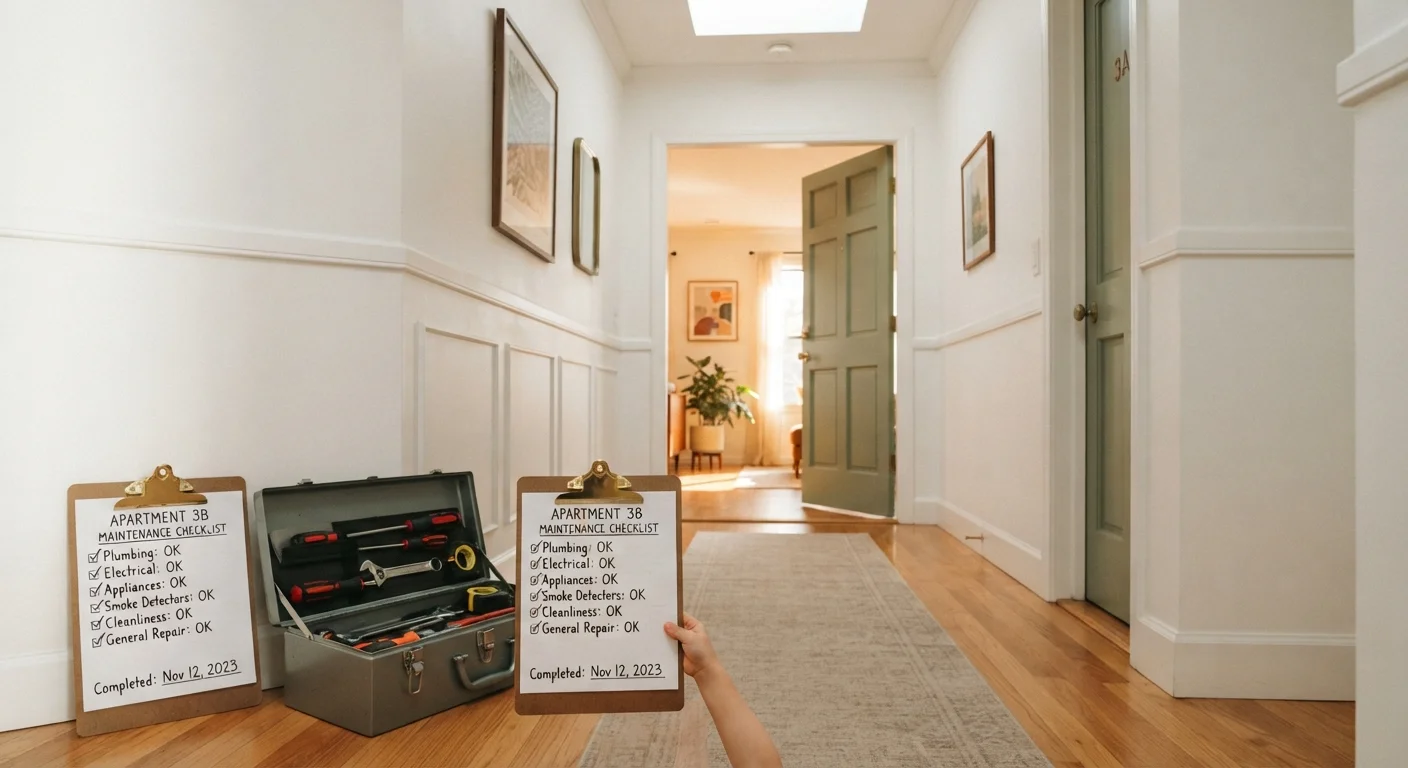
Why This Vocabulary Matters
When something breaks in your rental, the conversation you have with your landlord — or the clause you read in your lease — will often hinge on a handful of technical terms. Misunderstanding one word can mean accepting responsibility for a repair that was never yours to handle, or missing a deadline that costs you part of your deposit.
This reference guide covers the terminology you're most likely to encounter as a student renter. Think of it as a pocket dictionary for your first apartment. For a broader introduction to renting basics, see the Apartment Basics hub.
| Most common tenant dispute | Deposit deductions for damage vs. fair wear and tear (General tenancy guidance, US and UK housing authorities) |
| Who is responsible for structural repairs | The landlord, in virtually all US states (Implied warranty of habitability, US common law) |
| Typical move-in documentation advised | Written snagging list + dated photographs (Standard tenancy best practice) |
| Emergency repair response expectation | 24–48 hours for urgent issues (varies by state) (US state landlord-tenant statutes, varies by jurisdiction) |
| What 'fair wear and tear' covers | Minor scuffs, faded paint, carpet worn from normal use (US and UK housing guidance) |
Core Maintenance and Property Terms
These are the terms that appear most often in leases, maintenance requests, and landlord communications.
Damp-proof course (DPC)
A horizontal barrier built into the base of a wall to prevent ground moisture from rising upward. If it fails, you may notice wet patches low on interior walls — this is a structural issue and the landlord's responsibility to fix.
Condensation
Moisture that forms when warm, humid air meets a cold surface. It's the most common cause of mould in rental properties and is often linked to ventilation habits rather than structural faults.
Penetrating damp
Water that enters through an external wall, roof, or window frame due to a defect such as cracked render or a broken seal. Unlike condensation, it appears as damp patches on walls regardless of ventilation.
Rising damp
Groundwater that wicks upward through masonry when the damp-proof course is absent or damaged. It typically leaves a tide-mark on lower sections of walls and is always a landlord repair.
Snagging list
A record of pre-existing damage or defects documented at the start of a tenancy. Submitting one promptly helps ensure you aren't held responsible for issues that existed before you moved in.
Schedule of condition
A more formal version of a snagging list, often including photographs, that records the property's state at the start and end of a tenancy. It is the key reference document during deposit disputes.
Repair covenant
A clause in a lease specifying which party — landlord or tenant — is obligated to carry out certain types of repairs. Reading yours carefully prevents costly misunderstandings.
Habitability standard
The legal minimum condition a rental property must meet to be considered safe and livable. Landlords are generally required by law to keep properties up to this standard regardless of what the lease says.
Betterment
An improvement that goes beyond restoring something to its original condition. Landlords cannot typically charge tenants for betterment — for example, replacing an old worn carpet with a brand-new one at the tenant's expense.
Fair wear and tear
Normal, expected deterioration of a property through everyday use over time. Landlords cannot deduct from your deposit for damage that falls within this category, such as minor scuffs or faded paint.
Emergency repair
A fault that poses an immediate risk to health, safety, or security — such as a broken boiler in winter or a burst pipe. Most leases and local laws require landlords to address these within a very short timeframe.
Void period
The time between tenancies when a property stands empty. If you're moving in after a void period, it's worth checking that systems like boilers and water pipes have been recommissioned properly.
Understanding the difference between condensation, penetrating damp, and rising damp matters more than it might seem — each has a different cause and a different responsible party. Our companion article on ventilation, condensation, and damp explains each in plain language.
If you spot mould in your bathroom, that sits in a slightly different category. Read our guide on mould in the bathroom to understand when surface cleaning is sufficient and when it's a landlord issue.
Lease and Tenancy Terminology
Beyond the physical property, you'll encounter a second layer of terminology tied to your tenancy agreement itself.
~50%
Renters who lose part of their deposit
Research by various tenant advocacy groups suggests roughly half of renters experience some deposit deduction at the end of a tenancy, often disputed.
1 in 5
US renters who report maintenance issues going unaddressed
According to national renter surveys cited by housing policy organizations, delayed repairs are among the most common landlord complaints.
A snagging list is one of the most practical tools a new tenant has. It's a written record of existing damage or defects you note at the start of your tenancy — scuffs on walls, broken drawer handles, stained carpet. Submitting this list promptly protects your deposit when you move out. A schedule of condition serves a similar purpose but is more formal, sometimes accompanied by photographs.
Understanding who fixes what is closely tied to these terms. See our detailed breakdown in Tenant vs. Landlord: Who Fixes What for a clear outline of responsibilities.
Keep a Written Paper Trail
Whether you're reporting a broken heater or submitting your snagging list, always communicate with your landlord in writing — email is usually sufficient. This creates a timestamped record if a dispute arises later. Verbal agreements are much harder to rely on if you need to escalate a complaint or contest a deposit deduction.
Putting It Into Practice
Knowing these terms is useful only when you apply them. When you move in, walk through every room with your snagging list. Report anything you find to your landlord in writing and keep a copy. When a maintenance issue arises, use the correct terminology in your communication — it signals that you understand your rights and makes it harder for vague responses to delay action.
Having a few basic tools on hand also makes a difference for the small fixes that fall in your court. Our guide to basic tools every student renter should own covers what's worth having and why.
Finally, remember that utilities-related terminology — things like meter readings, standing charges, and inclusive bills — overlaps with maintenance language. Our utilities explainer covers that vocabulary in full.
The content provided on our blog site traverses numerous categories, offering readers valuable and practical information. Readers can use the editorial team’s research and data to gain more insights into their topics of interest. However, they are requested not to treat the articles as conclusive. The website team cannot be held responsible for differences in data or inaccuracies found across other platforms. Please also note that the site might also miss out on various schemes and offers available that the readers may find more beneficial than the ones we cover.