

Why Knowing the Difference Matters
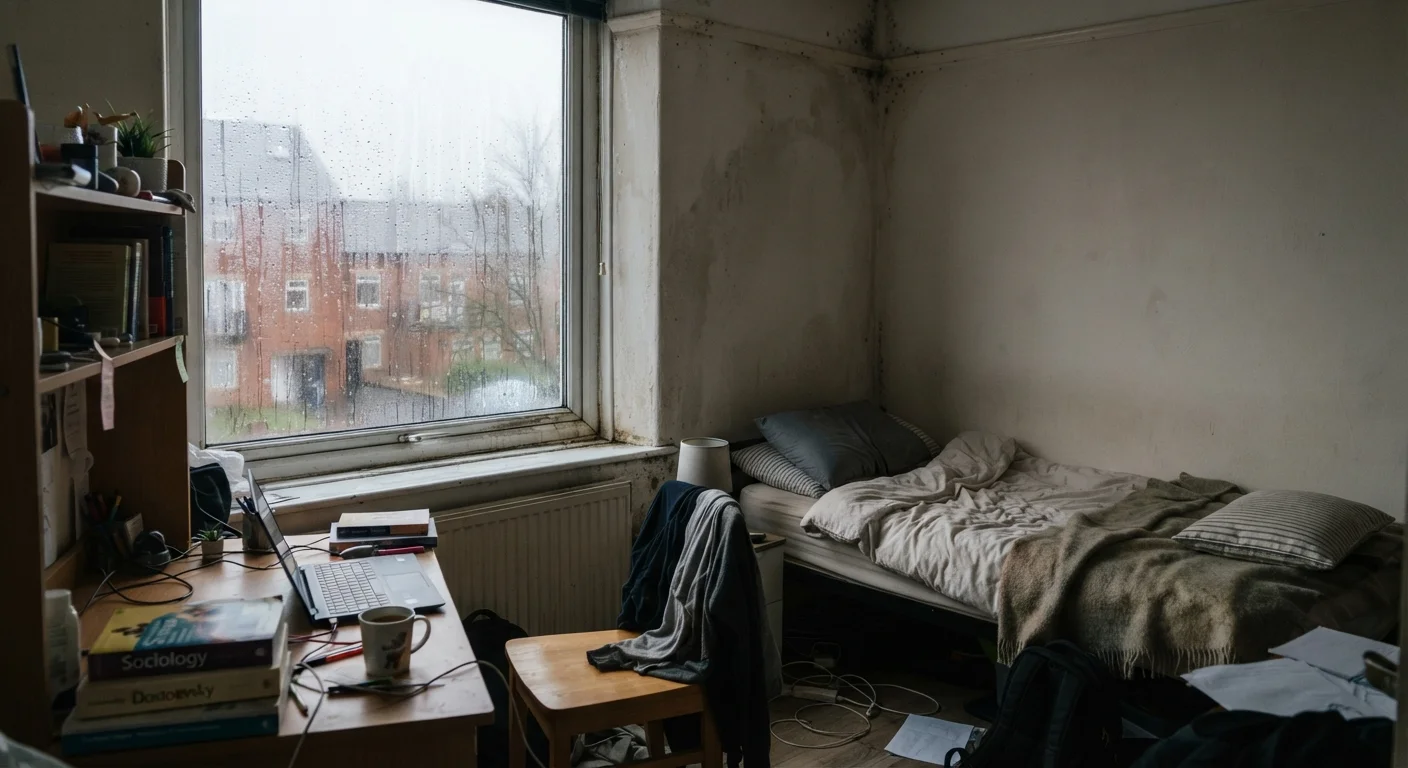
Walk into many student apartments in autumn or winter and you'll notice something: a faint mustiness, a smear of black on a bathroom ceiling, or droplets on a bedroom window. Most students assume it's all just "damp" — but lumping these problems together makes them harder to solve and harder to report.
The type of moisture problem you have determines its cause, its fix, and who is responsible for sorting it. Getting that wrong means you might be scrubbing mold weekly when the real issue is a structural crack in an exterior wall — or, conversely, blaming your landlord for something a cracked window each morning would largely prevent.
Understanding these distinctions is a core part of being an informed renter. For a broader grounding in the language of rental maintenance, our plain-English maintenance glossary covers related terminology you'll actually encounter.
Condensation: The Most Common Culprit
Condensation forms when warm, moisture-laden air comes into contact with a cold surface — usually exterior walls, windows, or poorly heated corners. Everyday activities generate a surprising amount of airborne moisture: cooking, showering, drying laundry indoors, and even breathing all contribute.
When that moisture has nowhere to go — because windows are sealed, extractor fans aren't used, or heating is uneven — it settles on the coldest surfaces it can find. Over time, persistent condensation creates the conditions for black mold (Cladosporium or Aspergillus species are common in homes) to take hold.
Quick Daily Habits That Reduce Condensation
Open a window or use the extractor fan for at least 15–20 minutes after showering or cooking. Keep lids on pots while boiling water. If you dry laundry indoors, do it in a ventilated room rather than a closed bedroom. Pull large furniture a few inches away from exterior walls to let air circulate freely.
Where to look for condensation damage
- Window frames and sills — often the first to show droplets and black spotting
- Corners of exterior-facing walls — cold spots where air circulates poorly
- Behind large furniture placed flush against outside walls
- Bathroom and kitchen ceilings — especially without extractor fans
The good news: condensation is largely preventable. Ventilating consistently — opening windows briefly even in winter, using extractor fans during and after cooking or showering, and avoiding drying clothes indoors without ventilation — makes a measurable difference. For a full list of preventive habits, see habits that prevent common rental problems.
1 in 5
UK homes affected by damp or mold
According to data cited by the UK's Housing Ombudsman in its 2023 Spotlight report on damp and mold, approximately one in five social-rented homes reported moisture-related issues — a figure thought to be similarly prevalent in private rentals.
~50–60%
Indoor relative humidity that encourages mold growth
Environmental health guidance generally identifies sustained indoor humidity above 60% as a threshold that significantly raises the risk of mold formation on surfaces.
~14 pints
Moisture produced daily by a typical household
Estimates from building science research suggest an average household generates roughly 14 pints (around 8 liters) of water vapor daily through cooking, bathing, breathing, and drying clothes.
Penetrating Damp: Water Getting In From Outside
Penetrating damp is what happens when rainwater finds a way through the building's exterior — through cracked mortar, damaged roof tiles, failing window seals, or blocked guttering that causes water to overflow against walls. Unlike condensation, it is not related to indoor humidity levels. It's a structural or maintenance failure.
Signs that point toward penetrating damp rather than condensation include:
- Damp patches that appear or worsen specifically after heavy rain
- Staining that spreads inward from window frames, external wall corners, or the ceiling
- Damp appearing on internal walls that face the outside
- A persistent smell that doesn't improve with ventilation
Penetrating damp is unambiguously a landlord's responsibility. It requires investigation of the building's exterior — something beyond any reasonable tenant obligation. Document it with dated photos, note whether it follows rainfall, and report it formally. Our article on apartment maintenance requests explains exactly how to do this effectively.
Photographing Damp: What to Capture
When documenting penetrating damp for a maintenance report, take wide shots showing the wall in context and close-up shots of the staining. Note the date, recent weather conditions, and any existing damp reported at move-in. This creates a clear record if the issue escalates or disputes arise about when it began.
Rising Damp: The Least Common, But Serious
Rising damp is groundwater being drawn up through the base of walls by capillary action — the same process that pulls water up a paper towel. It's most common in older buildings where the damp-proof course (a horizontal moisture barrier installed near ground level) is absent, deteriorated, or has been accidentally bridged — for example, by soil or paving built up against an exterior wall.
Distinguishing features of rising damp:
- A visible tide mark — a horizontal stain line — typically no higher than about 3–4 feet up an affected wall
- A chalky, white crystalline deposit called efflorescence on the wall surface, left behind as water evaporates and minerals leach out
- Plaster that feels soft, bubbles, or crumbles in the lower section of an affected wall
- Damage concentrated at ground-floor level, often in older properties
Rising damp requires professional diagnosis and remediation — typically damp-proofing work or re-plastering with specialist materials. This is entirely a structural matter for your landlord. If you suspect rising damp, report it in writing and keep records. It also worth being aware of what seasonal checks to perform as a tenant; the seasonal upkeep guide for renters covers autumn and winter checks that can catch early warning signs.
“Damp and mold are not lifestyle issues — they are the result of property conditions that must be addressed by landlords. Tenants should not feel responsible for structural failures they did not cause.”
— UK Housing Ombudsman, Independent housing dispute resolution service (Spotlight Report on Damp and Mold, 2023)
A Quick Comparison at a Glance
| Feature | Condensation | Penetrating Damp | Rising Damp |
|---|---|---|---|
| Cause | Warm air meeting cold surfaces | Water entering from outside | Groundwater drawn upward |
| Location | Windows, cold walls, corners, ceilings | External-facing walls, ceilings | Lower walls, ground floor |
| Pattern | Spreads in patches, worse in cold weather | Worsens after rain | Tide mark at consistent height |
| Who fixes it | Shared (tenant habits + landlord infrastructure) | Landlord | Landlord |
If you're ever unsure which type you're dealing with, describe what you observe — where it appears, when it gets worse, and what it looks like — and request a professional inspection. Accurate reporting gets results faster. For a broader grounding in your rights and responsibilities as a renter, explore the Apartment Basics hub.
Frequently Asked Questions
Not necessarily. Condensation is caused by a mix of how a building retains heat and how much moisture occupants generate. However, tenants can reduce it significantly by improving ventilation habits. If poor insulation or inadequate heating is a contributing factor, that may be a landlord issue.
Rising damp usually appears as a distinct tide mark — a horizontal stain line — on lower sections of a wall, often with a chalky residue called efflorescence. Condensation tends to appear higher up, especially on windows, cold exterior walls, and in corners near ceilings. If you're unsure, report it to your landlord and ask for a professional assessment.
Prolonged exposure to mold spores can irritate the respiratory system and worsen conditions like asthma or allergies. This article provides general information — if you have health concerns related to mold exposure, consult a healthcare professional. Report significant mold growth to your landlord promptly.
Penetrating damp and rising damp are almost always the landlord's structural responsibility. Condensation responsibility can be shared: landlords must ensure adequate heating and ventilation infrastructure, while tenants are expected to use them. See your lease and local tenancy regulations for specifics.
Document the issue thoroughly with dated photographs and written records of every communication. Many jurisdictions have housing authorities or tenant protection bodies you can contact if a landlord fails to address a legitimate maintenance issue. Review our guide on <a href="/student-living/apartment-basics/apartment-maintenance-requests-what-to-report-and-how">reporting maintenance issues</a> for step-by-step help.
The content provided on our blog site traverses numerous categories, offering readers valuable and practical information. Readers can use the editorial team’s research and data to gain more insights into their topics of interest. However, they are requested not to treat the articles as conclusive. The website team cannot be held responsible for differences in data or inaccuracies found across other platforms. Please also note that the site might also miss out on various schemes and offers available that the readers may find more beneficial than the ones we cover.