

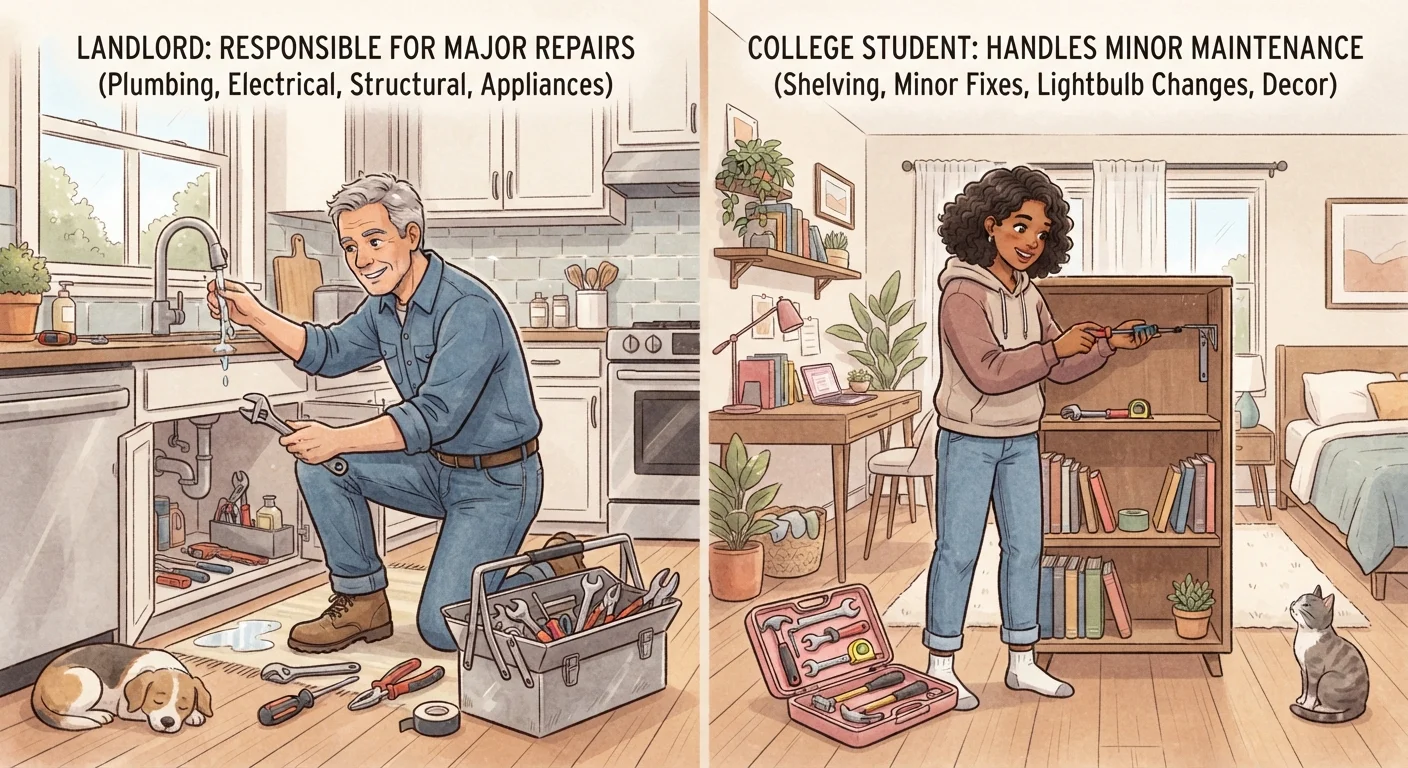
Option A
Landlord Repairs
The legally required, structural, and system-level fixes.
Best for: Major systems, structural safety, habitability — repairs that require a licensed professional or significant cost.
Option B
Tenant Responsibilities
Small, everyday upkeep that's yours to manage.
Best for: Minor maintenance caused by normal daily use, cleanliness, and preserving the unit as you found it.
The Legal Starting Point: The Implied Warranty of Habitability
In the U.S., most states recognize what's called the implied warranty of habitability — a legal standard requiring landlords to keep rental units safe and livable. This isn't just a courtesy; it's a baseline obligation. It typically covers working heat and hot water, functional plumbing and electrical systems, a structurally sound building, and protection from the elements.
Your lease adds another layer. Some agreements shift certain responsibilities to tenants — for example, lawn care or minor appliance upkeep — but a lease cannot legally waive the landlord's duty to maintain habitability. Before anything breaks, it's worth reading your lease carefully. Our guide on what your lease actually says about repairs walks through how to decode those clauses.
State Laws Vary Significantly
Landlord-tenant repair obligations are governed by state law, and some cities add local protections on top of that. What's required in California may differ from what's required in Texas or New York. Always check your state's tenant rights resources or your campus student legal services office if you're unsure what applies to you.
What Landlords Are Generally Required to Fix
Landlord repair obligations typically fall into these categories:
- Structural integrity: Roof, walls, floors, windows, and doors must be sound and weathertight.
- Heating and cooling systems: In most states, functioning heat is legally required. Central air conditioning requirements vary by state.
- Plumbing: Working toilets, sinks, and hot water are non-negotiable. A constantly running toilet often signals a landlord-responsibility problem, depending on the cause.
- Electrical systems: Safe, functional wiring and outlets. Faulty wiring is a fire hazard — always report it.
- Pest control: If an infestation existed before you moved in or is caused by building conditions, it falls on the landlord.
- Mold and moisture: Structural leaks or ventilation failures that cause mold are the landlord's problem to resolve.
When any of these issues arise, report them in writing right away. Our article on reporting maintenance issues to your landlord explains how to document and follow up effectively.
| Criterion | Landlord Repairs | Tenant Responsibilities |
|---|---|---|
| Heating system failure | Landlord must fix | Not tenant's responsibility |
| Clogged drain (hair/debris) | Generally not required | Tenant clears it |
| Structural leaks or roof damage | Landlord must fix | Report immediately; don't ignore |
| Light bulb replacement | Typically not required | Standard tenant upkeep |
| Pest infestation (pre-existing or structural) | Landlord must address | Tenant-caused infestations vary |
| Accidental damage (broken fixtures, holes) | Not responsible if tenant-caused | Tenant pays for repair |
| Faulty electrical wiring | Landlord must fix | Never attempt DIY electrical work |
| Mold from structural leak | Landlord must remediate | Tenant should report promptly |
What Tenants Are Generally Expected to Handle
Tenants are expected to maintain the unit in reasonable condition and address issues that stem from everyday use. Common tenant responsibilities include:
- Light bulb and battery replacement (smoke alarm batteries, for instance)
- Keeping drains clear — hair and debris clogs are a tenant issue
- Minor cleaning and upkeep to prevent damage (e.g., wiping down surfaces to prevent mold in bathrooms)
- Repairing damage you cause — a hole in the wall, a cracked fixture, a broken window blind
- Proper ventilation habits — opening windows after showers reduces mold risk that could otherwise be attributed to you
The key concept here is normal wear and tear versus tenant-caused damage. Scuffs on walls after years of use are typically wear and tear; a door frame you accidentally cracked is not. Understanding this distinction matters most when your security deposit is returned. Building preventive habits as a renter goes a long way toward keeping both parties happy.
89%
Renters unaware of full tenant rights
A survey by Avail (a landlord software platform) found the large majority of renters felt uncertain about their legal rights around repairs and habitability.
$200–$500
Average security deposit deduction for damage
Tenant advocacy groups commonly report that damage-related deductions — many attributable to repairs tenants didn't realize were their responsibility — rank among the most frequent deposit disputes.
Gray Areas and How to Handle Them
Not every situation falls neatly into one column. Appliances are a common gray area: if the landlord supplied a dishwasher and it stops working through no fault of yours, they're usually responsible. If you overloaded or misused it, you may be. The same logic applies to garbage disposals, window A/C units, and similar items.
Another frequent source of confusion is pest control mid-tenancy. If roaches or mice appear after months of messy conditions in the unit, a landlord may argue the tenant contributed. If they show up in a well-kept apartment due to building-wide issues, that shifts responsibility back to the landlord.
When you're unsure whether to DIY or wait, the decision framework in our article on DIY repairs vs. waiting for your landlord can help you think it through. The short version: when in doubt, notify your landlord in writing first — it protects you regardless of who ultimately fixes it. See also how to report apartment maintenance issues for a practical reporting checklist.
This article provides general information about typical rental repair responsibilities in the U.S. and is not legal advice. Landlord-tenant laws vary significantly by state and locality. Consult a tenant rights organization, student legal services, or a licensed attorney for guidance specific to your situation.
The content provided on our blog site traverses numerous categories, offering readers valuable and practical information. Readers can use the editorial team’s research and data to gain more insights into their topics of interest. However, they are requested not to treat the articles as conclusive. The website team cannot be held responsible for differences in data or inaccuracies found across other platforms. Please also note that the site might also miss out on various schemes and offers available that the readers may find more beneficial than the ones we cover.