

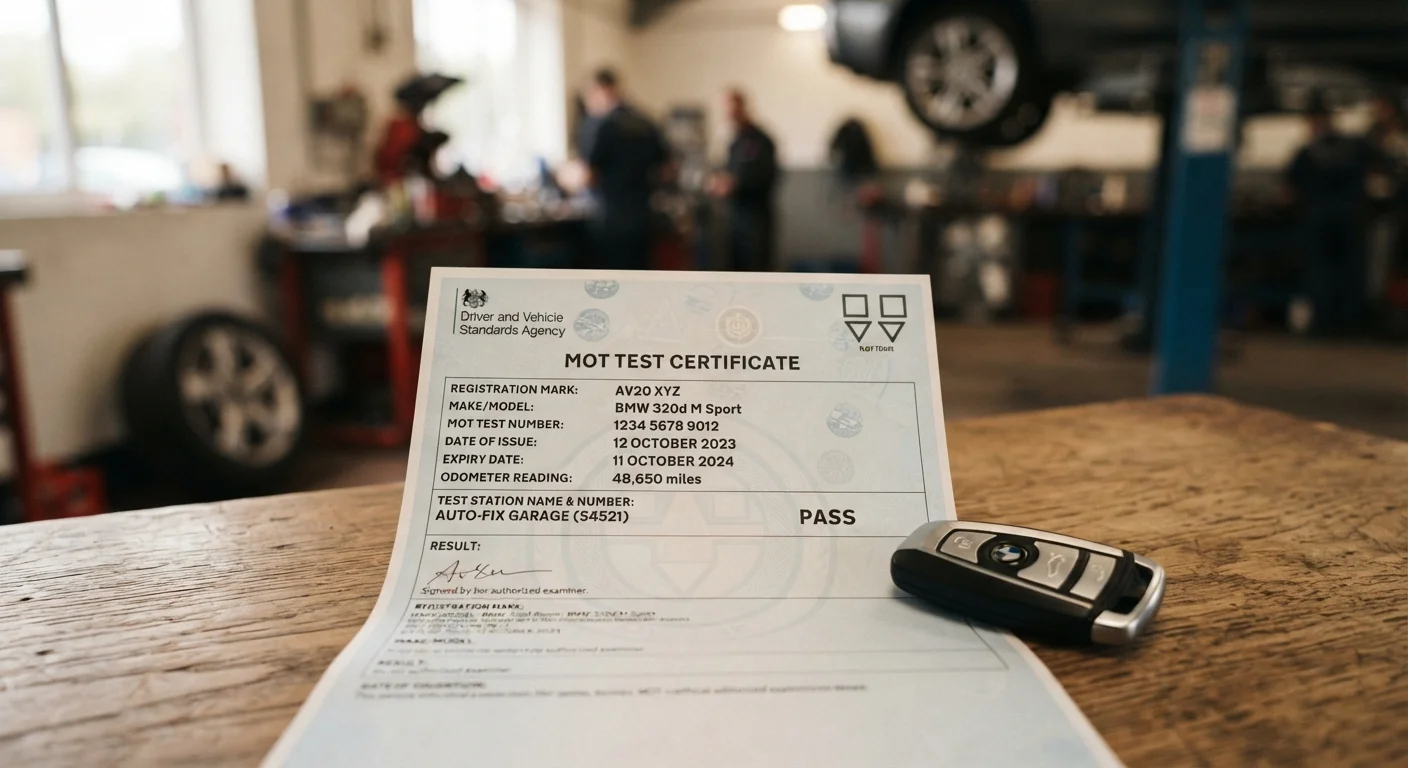
What the Three-Tier Result System Actually Means
Since 2018, MOT results in the UK are classified into five categories, though they effectively form three tiers a driver needs to understand.
- Pass: The vehicle met all minimum legal standards. It can be driven legally. Note that minor issues may still appear as advisories even on a passing certificate.
- Minor: A defect was found that has no significant effect on safety but should be repaired as soon as possible. The car still passes.
- Major: A defect that affects vehicle safety, could put other road users at risk, or impacts the environment. The car fails and cannot be driven until repaired.
- Dangerous: A direct and immediate risk to road safety. The car fails and must not be driven away from the test centre under any circumstances.
Advisory notices are separate - they flag wear or deterioration that doesn't yet meet the threshold for a failure but is heading in that direction. They are not failures, but they are warnings worth acting on.
An MOT Pass Has a Time Limit
A valid MOT certificate is usually good for 12 months from the test date. Driving a vehicle without a valid MOT (except to a pre-booked test) is a criminal offence in the UK and can result in a fine of up to £1,000. It also typically invalidates your car insurance - meaning any claim could be refused.
What an MOT Does - and Doesn't - Check
The MOT covers around 70 inspection points across key safety and emissions systems. These include:
- Brakes (condition, balance, and performance)
- Tyres (tread depth, condition, and correct fitment)
- Lights (headlights, indicators, brake lights, hazards)
- Steering and suspension components
- Seatbelts and horn
- Windscreen, wipers, and washers
- Exhaust emissions
- Bodywork (no sharp edges dangerous to pedestrians)
What it does not cover is equally important. The engine's internal health, the gearbox, clutch, air conditioning system, and general wear items like brake pad thickness beyond a minimum level are not fully assessed. This is why an MOT pass alone is insufficient due diligence when buying a used car. For a fuller picture, consider pairing MOT history with a pre-purchase independent inspection.
How to Read MOT History as a Buying Tool
Every UK vehicle's MOT history is publicly available for free via the DVSA's online check tool. All you need is the registration number. When you pull up a record, look for these patterns:
~40%
UK vehicles that fail their MOT first time
According to DVSA data, approximately 40% of vehicles tested fail their MOT on the first attempt in any given year.
70+
Components checked in a standard MOT
The DVSA's official MOT inspection checklist covers over 70 individual inspection points across safety and emissions systems.
Free
Cost to check any UK car's MOT history
The DVSA provides a free online tool at gov.uk that shows full MOT history for any UK-registered vehicle using its registration number.
Red flags to watch for:
- Recurring advisories: If the same item - say, a corroded brake pipe or worn suspension bush - appears as an advisory across two or three consecutive MOTs, it suggests the owner has been deferring maintenance rather than addressing problems.
- Frequent failures: A car that fails its MOT most years is likely receiving only the minimum repair needed to pass, not proactive upkeep.
- Mileage inconsistencies: MOT records include odometer readings at each test. A sudden drop in recorded mileage is a serious red flag for potential clocking (odometer tampering).
- Long gaps between tests: A car with no MOT record for a year or more was likely off the road - ask why.
This history pairs naturally with reading the full service history to build a complete picture of how a car has been cared for.
What to Do With This Information
Once you understand what an MOT result contains, you can use it practically in two situations: managing a car you already own, and evaluating a car you're considering buying.
If you already own the car:
Don't treat an MOT pass as a signal to stop paying attention. Check your certificate for advisories and book repairs before the next test date. Dashboard warning lights that appear between MOTs may point to developing issues - see our guide to dashboard warning lights for help identifying what needs urgent attention.
If you're considering buying a car:
Run an MOT history check before you view the vehicle. Arrive knowing what advisories were flagged and ask the seller directly what was done about them. A seller who can't explain why repeated advisories were never addressed is a seller worth being cautious about. Common new driver mistakes - like assuming an MOT pass means no further checks are needed - are covered in more depth in our article on car care errors new drivers make.
Check MOT History Before Every Used Car Viewing
Make it a habit to run a free DVSA MOT history check before you even go to see a used car in person. Knowing the advisory and failure history in advance lets you ask informed questions during the viewing and spots potential deal-breakers before you waste a trip. It takes about 60 seconds and costs nothing.
Frequently Asked Questions
Not necessarily. An MOT pass only confirms the vehicle met minimum safety standards at the time of testing. It does not cover the engine, gearbox, clutch, or many other mechanical components. A car can pass its MOT and still have significant underlying issues.
A Dangerous failure means the vehicle poses an immediate risk and must not be driven on public roads. The car cannot be driven away from the test centre - it must be repaired before use. Driving it anyway is illegal and could invalidate your insurance.
You can check any UK vehicle's MOT history for free on the official DVSA website using just the registration number. The record shows all past test dates, results, mileage readings, failure reasons, and advisories.
Advisories are worth taking seriously, especially if the same item appears across multiple consecutive MOTs. They indicate wear that is progressing and may become a failure - or a safety issue - if left unaddressed. Factor potential repair costs into your decision.
No. The MOT test does not assess the engine's internal condition, the gearbox, or the clutch. These are major cost items that require a separate mechanic's inspection to evaluate properly.
Yes, a car can legally be sold without a valid MOT, but it cannot be driven on public roads in that state. If you're considering buying a car without a current MOT, factor repair costs in carefully and consider having it independently inspected first.
The content provided on our blog site traverses numerous categories, offering readers valuable and practical information. Readers can use the editorial team’s research and data to gain more insights into their topics of interest. However, they are requested not to treat the articles as conclusive. The website team cannot be held responsible for differences in data or inaccuracies found across other platforms. Please also note that the site might also miss out on various schemes and offers available that the readers may find more beneficial than the ones we cover.