

Why This Is Worth Doing Yourself
A slow or blocked drain is one of the most common maintenance issues in any rental — and one of the easiest to fix yourself. Knowing how to handle it means you won't lose a morning waiting for a plumber, and it demonstrates to your landlord that you're a responsible tenant. The tools involved are inexpensive, and most methods require nothing more than items already in your kitchen.
That said, it's important to understand the difference between a simple clog (something stuck in the upper part of the drain or the U-shaped pipe called the trap directly beneath the fixture) and a deeper plumbing problem. This guide covers the former. If you're new to renter basics, our guide to tools every student renter should own covers the low-cost kit that handles jobs like this one.
Zip-it / drain hair tool
A thin plastic strip with barbs that pulls hair and soap scum directly out of the drain.
Cup plunger
Creates suction to dislodge blockages sitting in the drain trap below the sink.
Rubber gloves
Protects your hands when reaching into or near the drain opening.
Old toothbrush or small cleaning brush
Scrubs away soap scum and gunk around the drain cover.
Bucket or towel
Catches water when removing a drain stopper or P-trap.
Step-by-Step: Clearing the Drain
Work through these steps in order — start with the least invasive method and escalate only if needed. Most clogs resolve at step 3 or 4.
What you will need
Remove and clean the drain cover or stopper
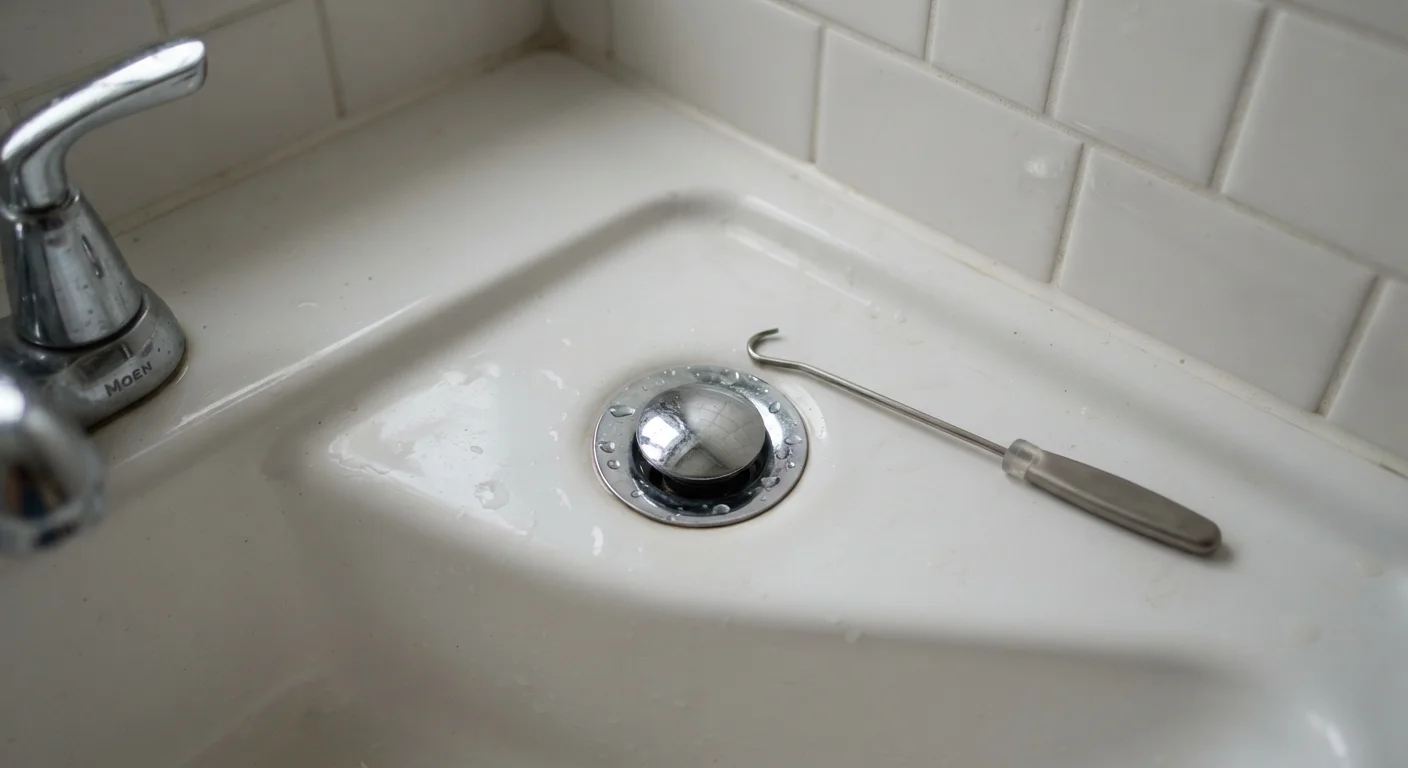
Most bathroom sinks have a pop-up stopper you can lift straight out, or unscrew by turning counterclockwise. Tub drains often have a strainer held by one screw. Remove it, set it aside, and scrub off any visible soap scum or hair buildup using an old toothbrush. This alone sometimes restores decent flow.
Try a boiling-water flush for mild slowdowns
Boil a full kettle of water. Slowly pour it down the drain in two or three stages, waiting about 30 seconds between pours. Hot water melts soap fat and grease that partially obstructs the pipe. This method works best on bathroom sinks and kitchen drains that are slow but not fully blocked.
Use the baking soda and vinegar method
Pour half a cup of baking soda directly into the drain, followed immediately by half a cup of white vinegar. The fizzing reaction helps break up soft organic buildup. Cover the drain opening with a rag or stopper to push the reaction downward rather than upward. Wait 15 minutes, then flush with hot water.
Use a zip-it tool to pull out hair and debris
Put on your rubber gloves. Insert the zip-it tool (a flexible plastic strip with small barbs along its sides) into the drain opening as far as it will go — usually 18–24 inches. Twist it slowly as you push, then pull it back out. The barbs grab hair and soap clumps. Dispose of what comes out directly into a trash bag. Repeat two or three times until nothing more comes up.
Plunge the drain if the clog persists
Fill the sink or tub with just enough water to cover the cup of the plunger. Press the plunger firmly over the drain so it seals completely, then push and pull in short, quick strokes for about 20–30 seconds. Lift the plunger sharply on the final pull. The pressure should dislodge the blockage into the pipe where water can carry it away. Run hot water to confirm flow has returned.
Flush and confirm the drain is clear
Run the hot tap for a full minute to flush any loosened debris through the pipe. Watch the drain — water should empty quickly with no pooling. Reattach the stopper or drain cover. If flow is still slow after all these steps, the blockage may be deeper in the pipe and your landlord should be notified.
Don't Use Chemical Drain Cleaners
Liquid drain cleaners sold in stores contain highly caustic chemicals that can damage older pipes, irritate skin and eyes, and leave hazardous residue in your sink. They are also hard to dispose of safely. Stick to the mechanical and natural methods described in this guide — they are safer for you, your pipes, and your landlord's plumbing.
When to Stop and Call Your Landlord
Tenants are generally responsible for clogs caused by normal use, such as hair in the shower or food scraps in the kitchen sink. Deeper structural or pipe-level problems are typically the landlord's responsibility. If the drain remains blocked after completing all the steps above, or if you notice any of the warning signs below, stop and report it.
Deeper Clogs May Be a Landlord Issue
If water is backing up in multiple fixtures at once — for example, the toilet gurgles when you drain the tub — this signals a blockage further down the main line. That is beyond a tenant's responsibility to fix. Contact your landlord or property manager promptly so a licensed plumber can investigate.
Taking on work beyond your skill level — or using methods that damage pipes — could make you liable for repair costs. The same principle applies to other maintenance tasks: for example, our article on fixing a running toilet explains clearly where the tenant–landlord boundary sits for plumbing issues. Similarly, if you're preparing for a move-out inspection, see our guidance on patching small holes in walls for another common renter DIY task.
Prevention Takes Less Than a Minute
Place a mesh drain strainer over your shower or tub drain — they cost almost nothing and catch hair before it enters the pipe. Removing accumulated hair from the strainer after each shower is the single most effective way to prevent repeat clogs. It is a habit worth building in week one of living independently.
The content provided on our blog site traverses numerous categories, offering readers valuable and practical information. Readers can use the editorial team’s research and data to gain more insights into their topics of interest. However, they are requested not to treat the articles as conclusive. The website team cannot be held responsible for differences in data or inaccuracies found across other platforms. Please also note that the site might also miss out on various schemes and offers available that the readers may find more beneficial than the ones we cover.