

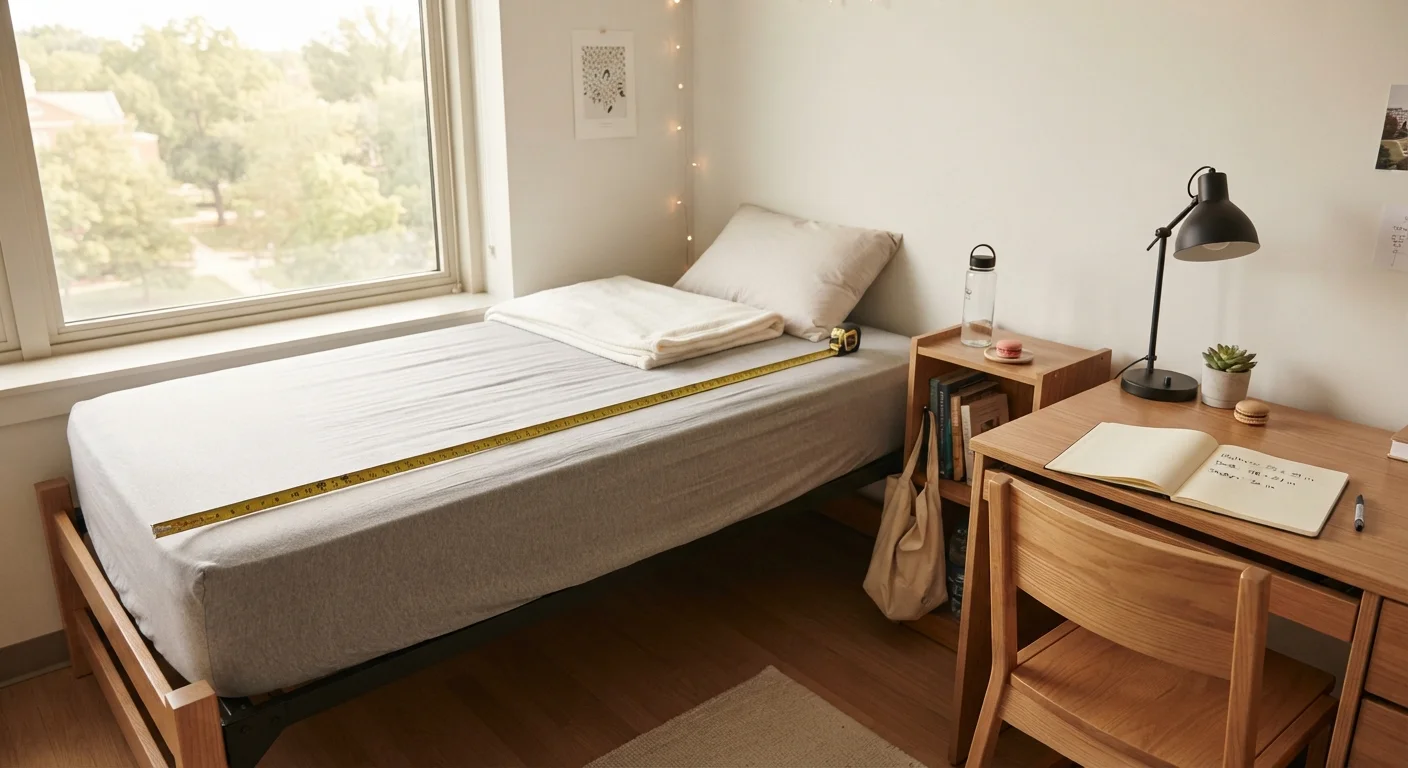
Why Measurements Matter Before You Buy
Buying a storage cube, a rug, or a mini fridge without knowing your room's dimensions is one of the most common and expensive mistakes first-year students make. Dorm rooms are significantly smaller than a typical bedroom — most single rooms in US residence halls range from roughly 100 to 200 square feet, and double occupancy rooms split that space between two people. What looks compact in a store can become an obstacle course in your actual room.
Before you shop for anything — bedding, storage, furniture, or lighting — get the numbers first. Contact your housing office or check your school's housing portal. Many universities publish room dimensions and floor plans for each residence hall. If you can visit the room before move-in, bring a tape measure. If you can't, request measurements in writing from your RA or housing coordinator.
For a broader picture of what to expect when you arrive, see what a typical dorm room looks like before you start planning purchases.
Key Dimensions You Need to Know
The following measurements come up most often when students are furnishing a dorm. Use these as general reference points — always verify against your specific room.
Bed Size
Most dorm beds are extra-long twin (Twin XL): 38 inches wide by 80 inches long. This is 5 inches longer than a standard twin mattress. Buying standard twin sheets will leave the foot of the mattress exposed, so check the label before purchasing. Some older halls still use standard twin beds (38 × 75 inches), so confirm with housing before buying bedding.
Desk and Chair
Built-in dorm desks typically measure around 48 inches wide by 24 inches deep, with a surface height near 30 inches. If you plan to add a monitor stand, desk organizer, or lamp, measure the desk surface first. Standard desk chairs fit well, but oversized gaming chairs can be too wide for the narrow aisle beside the desk.
Closet and Wardrobe
Dorm closets are often shallow — roughly 24 inches deep — and the rod height may be lower than you expect. If your closet has a single hanging rod, consider whether a closet doubler rod would work. Measure the interior height from rod to floor before purchasing any hanging organizer.
Door Width and Clearance
Exterior dorm room doors are commonly 32 to 36 inches wide. Measure yours before ordering a large item like a mini fridge or a storage ottoman. Also account for hallway width — narrow corridors make maneuvering bulky furniture extremely difficult on move-in day.
Ceiling Height and Wall Space
Standard ceiling height in dorm rooms is typically 8 feet, though older buildings may be lower. This matters for lofted beds, floor lamps, and adhesive wall hooks rated for a specific height. Wall space between built-in furniture is often limited; measure any clear wall sections before ordering a shelf or command strip pegboard. Learn more in our guide to space-planning basics for small dorm rooms.
Twin XL
An extra-long twin mattress measuring 38 inches wide by 80 inches long. It is the standard size used in most US college dorm beds and requires specifically labeled Twin XL bedding.
Clearance
The open floor space between two objects, required for comfortable movement. In small rooms, a minimum of 18–24 inches of clearance between furniture pieces is generally recommended.
Lofted bed
A bed frame raised on legs or a platform to create usable floor space underneath. Many dorms offer lofting kits, but ceiling height and roommate arrangements affect whether this is practical.
Footprint
The floor area an object occupies, measured by its width and depth. A piece of furniture's footprint determines how much floor space it consumes, separate from its height.
Practical Tips for Shopping Smart
Once you have your measurements, use them actively rather than just keeping them in a notebook. Write the key dimensions on a sticky note and keep it in your wallet or save a photo of your notes on your phone so you have them when you're browsing in a store or online.
- Check product dimensions in the listing — width, depth, and height are all equally important, not just footprint.
- Account for clearance — leave at least 18–24 inches of walkway between any two pieces of furniture so the room stays navigable.
- Measure doorways at the narrowest point — hinges and door frames often reduce the usable opening by an inch or two on each side.
- Check your school's prohibited items list before buying appliances. Many schools restrict microwaves above a certain wattage or mini fridges above a set cubic-footage limit.
For a comprehensive list of what to bring and what to skip, pair this reference with the dorm room move-in checklist. And if you're concerned about lighting options within ceiling height and wall constraints, our guide to dorm lighting covers what works safely in small spaces.
Always Verify With Your Housing Office
The dimensions listed in this article are general reference ranges based on common US dorm configurations. Room sizes, bed types, closet depths, and door widths vary considerably between universities, buildings, and even floors within the same hall. Before making any significant purchase, request the specific measurements for your assigned room from your housing office or check the published floor plans on your school's housing portal.
The content provided on our blog site traverses numerous categories, offering readers valuable and practical information. Readers can use the editorial team’s research and data to gain more insights into their topics of interest. However, they are requested not to treat the articles as conclusive. The website team cannot be held responsible for differences in data or inaccuracies found across other platforms. Please also note that the site might also miss out on various schemes and offers available that the readers may find more beneficial than the ones we cover.