

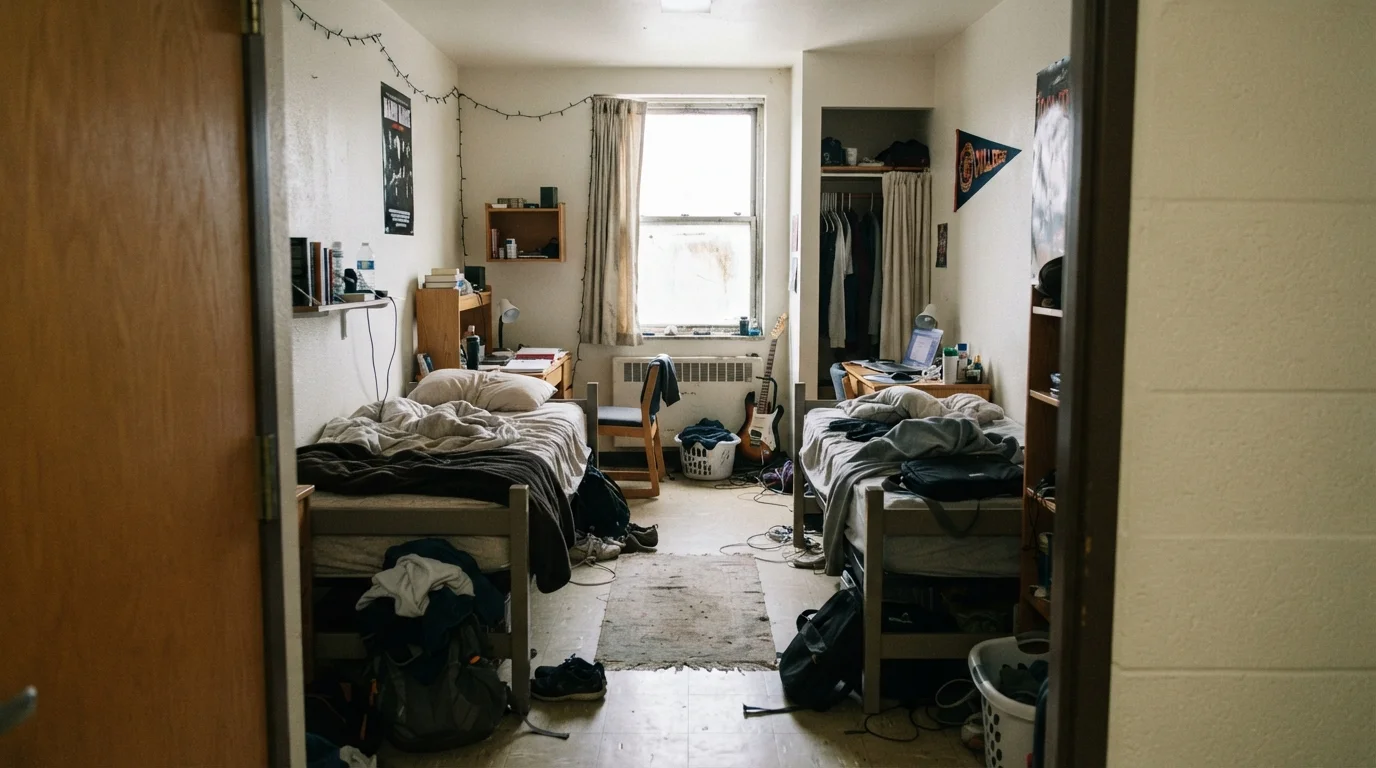
Why Dorm Expectations So Often Miss the Mark
Social media, college brochures, and older siblings all feed a picture of dorm life that rarely matches room 214 on a Tuesday in late August. The photographs are styled, the siblings edited their memories, and the brochures selected the nicest rooms on campus. First-year students who arrive with uncorrected assumptions spend the first weeks of college managing disappointment instead of settling in.
This article walks through the most persistent misconceptions — about space, storage, comfort, appliances, and roommate logistics — and replaces each one with a more accurate, actionable picture. If you want a fuller overview of what a typical dorm room actually looks and functions like, What to Expect Before Move-In Day is a good starting point.
Myth
The dorm room will have plenty of storage — there's a closet, a desk, and drawers, so I'll be fine.
Fact
Built-in storage in most dorms is minimal. A single wardrobe, small desk drawers, and a narrow shelf rarely hold a semester's worth of belongings.
Students frequently arrive with a carload of items only to discover the closet is shallower than a coat and the desk has two small drawers. Most traditional double rooms provide each resident roughly one shelf of wardrobe space, one desktop, and one or two drawers total. The gap between expectation and reality is why renter-friendly storage ideas — such as under-bed risers, over-door organizers, and cube shelving — have become standard student purchases. Plan for vertical and under-bed storage before you arrive, not as an afterthought.
Myth
My room will feel like home pretty quickly — I just need to throw up a few posters.
Fact
Most students report it takes several weeks, not days, before a dorm room feels genuinely comfortable and personal.
A bare, institutional room with fluorescent overhead lighting and someone else's furniture layout is a difficult starting point. Posters help, but comfort comes from layered decisions: adjustable lighting, a bedding setup that suits your sleep habits, a desk arrangement that works for studying, and a negotiated routine with your roommate. Layered lighting alone makes a measurable difference to how livable a room feels. Give yourself a few weeks of iteration rather than expecting an instant transformation.
Myth
I can bring my mini-fridge, air fryer, coffee maker, and hot plate — it's my room.
Fact
Most universities restrict or outright prohibit open-coil appliances and limit the number of permitted electrical devices per room.
Housing contracts typically include an approved-appliance list. Open-coil devices (hot plates, toasters, most air fryers) are commonly banned as fire hazards. Mini-fridges may be permitted but are often subject to wattage limits or must meet specific energy-efficiency standards. Violations can result in confiscation and fines. Before you pack a single kitchen gadget, download your housing office's policy document and read the appliance section carefully. When in doubt, contact the housing office directly — staff answer this question constantly and are accustomed to it.
Myth
The room dimensions listed online are close enough — I don't need to measure anything before I buy furniture.
Fact
Published room dimensions are averages and vary by building, floor, and room type. Buying furniture without exact measurements frequently leads to expensive mismatches.
A lofted bed that fits in room 204 may not clear the ceiling in room 312. A bookshelf listed as fitting a "standard dorm" might block the only electrical outlet in your actual room. Key measurements to collect include bed frame dimensions (most dorms use Twin XL, not Twin), desk height, ceiling height if you plan to loft, and door width for any large items. If your school publishes a room layout tool or allows early room visits, use them before purchasing anything oversized.
Myth
My roommate and I can work out the room setup after we both arrive on move-in day.
Fact
Move-in day is loud, rushed, and emotionally charged. Decisions made under that pressure often create friction that lasts the whole semester.
Arriving with a furniture plan already discussed — who lofts their bed, whose desk goes by the window, how lighting zones will be split — dramatically reduces the chance of an awkward standoff in front of both sets of parents. Reach out to your assigned roommate a few weeks before move-in. A brief conversation about layout preferences and any items you plan to share (rug, lamp, power strip) sets a collaborative tone early. See how to coordinate a shared dorm layout for a practical framework.
Turning Accurate Expectations Into a Move-In Plan
Knowing what a dorm room actually is — small, under-stored, institutional, shared — puts you in a position to prepare intelligently rather than react on arrival day.
~150 sq ft
Typical double dorm room size per two students
Many university housing offices list standard double rooms between 120 and 180 square feet total — that's shared between two people, their furniture, and all their belongings.
Twin XL
Standard dorm mattress size at most US universities
Twin XL mattresses are 5 inches longer than a standard Twin, meaning standard Twin bedding will not fit — a detail that surprises a significant number of incoming students.
Start with a clear inventory of what your school provides (bed frame, mattress, desk, chair, wardrobe) so you know exactly what you need to supplement. Then build your packing list around verified dimensions and a confirmed appliance policy. A room-by-room move-in checklist can help you work through bedding, storage, tech, and toiletries without forgetting essentials. And if the spatial planning side feels overwhelming, space-planning basics for small rooms covers how to map and arrange a tiny footprint so it actually functions. Finally, resist the urge to overpack — the overpacking trap catches nearly every first-year student and is almost entirely avoidable with a bit of advance thought.
Read Your Housing Contract Before You Pack
Your school's housing agreement is a binding document that specifies permitted appliances, wall-hanging rules, guest policies, and damage liability. Violations can result in fines or confiscation on move-in day itself. Download it from your housing portal, read the full document, and flag anything unclear before you load the car.
The content provided on our blog site traverses numerous categories, offering readers valuable and practical information. Readers can use the editorial team’s research and data to gain more insights into their topics of interest. However, they are requested not to treat the articles as conclusive. The website team cannot be held responsible for differences in data or inaccuracies found across other platforms. Please also note that the site might also miss out on various schemes and offers available that the readers may find more beneficial than the ones we cover.