

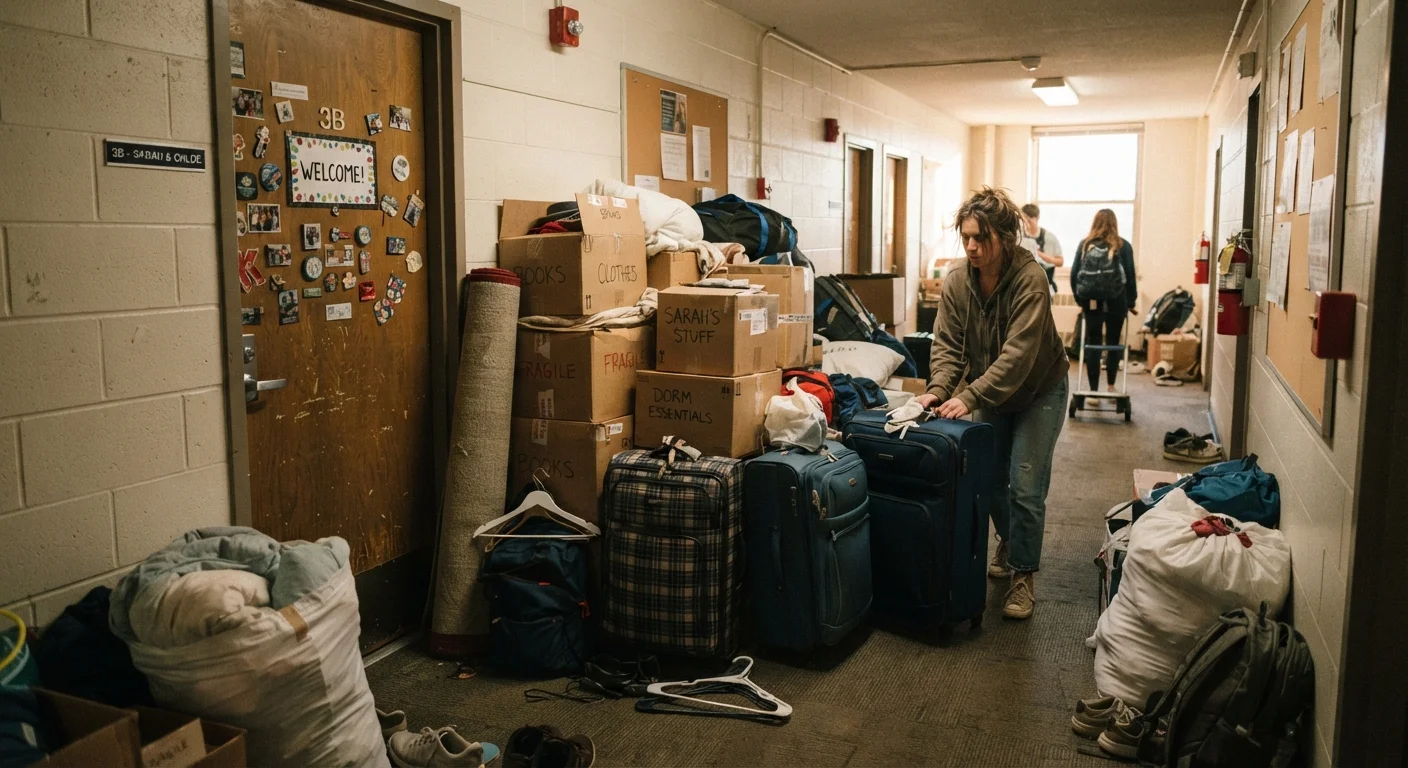
Why Overpacking Happens to Almost Everyone
Packing for your first dorm room feels high-stakes. You're leaving home — maybe for the first time — and the instinct is to bring everything that makes you feel comfortable, prepared, and settled. That instinct is completely understandable, and it's exactly why so many first-years roll up to move-in day with a minivan stuffed to the ceiling.
The core problem is a mismatch between expectation and reality. Before you've seen your actual room, it's easy to imagine a manageable blank canvas. In reality, the average double-occupancy dorm room is roughly 130 to 150 square feet — shared between two people, two sets of furniture, and two lives' worth of stuff. Check out what a typical dorm room actually looks like before you start loading boxes so your expectations match reality.
The mistakes below are the ones students mention most often when asked what they wish they'd left at home.
Bringing a full-sized or oversized piece of furniture from home.
Why it happens: Students want their room to feel cozy and personal, so they pack armchairs, bean bags, or large bookshelves without accounting for shared square footage.
Packing a full wardrobe for every season at once.
Why it happens: The anxiety of being far from home leads students to pack everything they own "just in case," including winter coats in August and summer clothes in January.
Bringing large kitchen appliances that are often prohibited or redundant.
Why it happens: Students picture cooking their own meals and load up on toasters, coffee makers, hot plates, and rice cookers — many of which violate fire codes in residence halls.
Hauling hobby and sports equipment that needs storage the room can't provide.
Why it happens: Students don't want to give up activities they love, so they pack full sets of art supplies, musical instruments, workout equipment, or sports gear.
Packing duplicate items without coordinating with your roommate.
Why it happens: When you haven't met your roommate yet, it feels safer to bring your own version of everything — a printer, power strip, mini-fridge, fan — rather than rely on a stranger.
Ignoring what the school already provides and doubling up.
Why it happens: Without reading the housing guide carefully, students assume the room will be bare and bring items — desk lamps, trash cans, hangers, even mattress pads — that the school already supplies.
A Smarter Strategy: What to Do Instead
The antidote to overpacking isn't arriving with nothing — it's arriving with the right things. Start by requesting your school's official list of provided furniture and amenities. Most residence halls supply a bed frame, mattress, desk, desk chair, and dresser at minimum. Bringing duplicates of these wastes space before you've even unpacked.
~150 sq ft
Typical shared dorm room size
Many US university housing offices publish floor plans showing double rooms averaging between 130 and 180 square feet before furniture is added.
2–3 boxes
Items most students wish they'd left home
Informal surveys by college residence life offices frequently find that first-years return at least two to three boxes of unused items after their first semester.
Next, measure before you commit. Your school's housing office typically publishes room dimensions, and many post 360-degree photos or virtual tours. Cross-reference those against any large items — rugs, storage ottomans, mini-fridges — before you pack them. See the move-in checklist every first-year needs to identify what's genuinely essential versus what feels essential.
Adopt a "ship or buy local" mindset for anything borderline. Campus towns almost always have drugstores, dollar stores, and general retailers nearby. Waiting two weeks to buy a floor lamp you might actually need is far less painful than hauling one across three states that ends up in the hallway because the room has nowhere to put it.
Check the Prohibited Appliances List Early
Many residence halls prohibit appliances with open heating elements — including certain coffee makers, toasters, and hot plates — due to fire safety regulations. Violations can result in confiscation or fines. Always verify your school's approved appliance list before packing anything that plugs in and generates heat.
Finally, coordinate with your roommate before move-in. A quick conversation can eliminate duplicates — two mini-fridges, two printers, two sets of the same board games — and free up meaningful floor space for both of you. A crowded room isn't just inconvenient; research on student housing consistently links cluttered, cramped spaces to disrupted sleep and reduced concentration, both of which affect academic performance. Overpacking your room is a bit like overcommitting your schedule — the costs aren't always obvious until you're already buried.
The content provided on our blog site traverses numerous categories, offering readers valuable and practical information. Readers can use the editorial team’s research and data to gain more insights into their topics of interest. However, they are requested not to treat the articles as conclusive. The website team cannot be held responsible for differences in data or inaccuracies found across other platforms. Please also note that the site might also miss out on various schemes and offers available that the readers may find more beneficial than the ones we cover.