

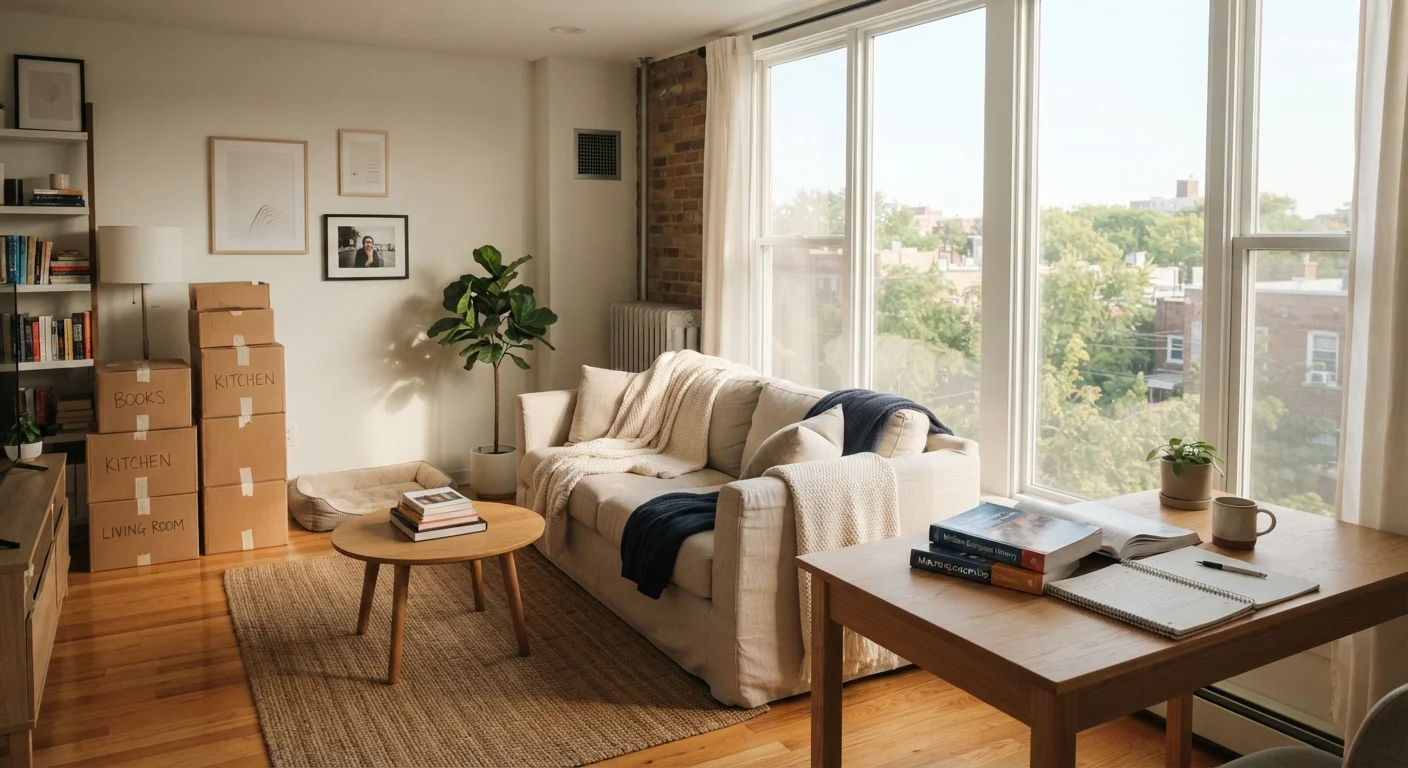
Before your walkthrough, create a simple room-by-room checklist and photograph every wall, floor, fixture, and appliance — even areas that look fine. Timestamps on photos are your best evidence if the landlord disputes deductions at move-out.
Security deposit disputes are one of the most common conflicts between tenants and landlords. Dated visual documentation created at move-in is the most effective way to counter unfair deductions.
Send all communications with your landlord by email or text rather than phone calls, so you have a written record of every request, permission, or agreement.
Verbal agreements are difficult to prove. A written record protects you if a landlord later claims they never gave permission for something or denies a maintenance request was ever made.
Why Renting Is Different From Dorm Life
Moving into your first apartment is genuinely exciting — but it comes with a different set of rules than campus housing. In a dorm, most logistics are handled for you: maintenance requests go to facilities, utilities are bundled into your fees, and an RA is nearby if something goes wrong. Renting an apartment puts those responsibilities squarely on you.
As a tenant, you enter a legal agreement with a landlord. You are responsible for paying rent on time, maintaining the space in good condition, and understanding what your lease permits. This independence is one of the main draws of off-campus living, but it requires preparation that many first-time renters underestimate.
If you are weighing whether to rent at all, our article on renting vs. living in student halls offers a balanced comparison to help you decide. If you are already committed to renting, read on — this guide walks you through the full process from search to move-out.
Start Your Search Earlier Than You Think
In many college towns, the best apartments near campus are leased months before the academic year begins. Starting your search at least three to four months in advance gives you more options and less pressure to rush a decision. Set up alerts on listing sites and schedule viewings promptly when you find something promising.
Choosing the Right Type of Apartment
Before you search listings, spend time thinking about what kind of space actually fits your life and budget. The three most common options for students are studios (one open room combining sleeping and living areas), one-bedroom apartments (a separate bedroom plus a living area), and shared apartments (multiple bedrooms rented by housemates who split costs).
Each option involves real trade-offs. Studios tend to be cheaper but offer little separation between work, sleep, and relaxation. Shared apartments dramatically reduce per-person rent but require compatible housemates and clear agreements about shared responsibilities. For a deeper look at how to weigh these factors, see our guide on studio, one-bedroom, or shared apartment options.
Also consider proximity to campus, access to public transit, and whether parking is available or included. A cheaper apartment that requires an expensive commute may cost more overall.
Understanding the Rental Application Process
Once you find a promising listing, you will need to submit a rental application. Landlords use this to assess whether you are likely to pay rent reliably and care for the property. Typical application components include:
- Proof of income or funding — pay stubs, a financial aid award letter, or a bank statement showing sufficient funds
- Credit history — many landlords run a credit check; students with no credit history may need a co-signer (a parent or guardian who agrees to be legally responsible if you cannot pay)
- References — a previous landlord, RA, or employer who can speak to your reliability
- Government-issued ID
Application fees are common and are usually non-refundable, so only apply to apartments you seriously intend to rent. If a landlord asks for payment in cash only or pressures you to decide immediately, treat those as warning signs.
A Co-Signer Takes On Real Legal Risk
If you ask a parent or guardian to co-sign your lease, they are legally responsible for your rent if you cannot pay. This is not a formality — it is a binding financial obligation. Make sure your co-signer fully understands what they are agreeing to before they sign anything.
Reading a Lease Before You Sign
A lease is a legally binding contract. Once you sign it, you are agreeing to every clause inside — so reading it carefully is not optional. Key sections to review include:
- Lease term
- Most student leases run 12 months. Breaking a lease early typically involves financial penalties, so confirm you can commit to the full term.
- Rent amount and due date
- Confirm the exact monthly amount, which day it is due, and what late fees apply.
- Security deposit
- This is money held by the landlord to cover damage beyond normal wear and tear. State laws govern how and when it must be returned — typically within 14 to 30 days after move-out.
- Guest and subletting policies
- Many leases restrict overnight guests or prohibit subletting (renting your apartment to someone else). Violating these clauses can lead to eviction.
- Pet policy and fees
- Pet deposits or monthly pet fees are separate from your security deposit.
If any clause is unclear, ask the landlord for clarification in writing — email works well for this. You can also contact your campus student legal services office if one is available; many offer free lease reviews.
“A lease is not a formality — it is a contract that defines the rights and obligations of both parties for the entire tenancy. Tenants who read and understand their lease before signing are far better positioned to protect themselves if disputes arise.”
— National Housing Law Project, Nonprofit legal organization focused on tenant rights and housing law
Budgeting for More Than Just Rent
One of the most common financial surprises for first-time renters is discovering how much the actual monthly cost exceeds the listed rent. Before signing, identify which utilities are included and which you pay separately. Common additional costs include:
- Electricity and gas
- Water and trash (sometimes covered by landlord)
- Internet service
- Renter's insurance (a policy that covers your belongings — generally affordable and often required by landlords)
- Laundry, parking, or storage fees
Add these figures to your rent to get a realistic monthly housing number. For a structured approach to mapping out all your recurring costs, our article on building your first monthly budget as a renter walks through the process step by step.
~30%
Recommended rent-to-income ratio
A common financial guideline suggests keeping housing costs at or below 30% of gross monthly income or funding to maintain a manageable budget.
14–30 days
Typical security deposit return window
Most U.S. states require landlords to return security deposits within 14 to 30 days of move-out; the exact deadline varies by state law.
1–2 months
Typical security deposit amount
Landlords commonly require a security deposit equal to one or two months' rent, though state laws often cap the maximum allowable amount.
Moving In and Settling Responsibly
On or before your move-in date, conduct a thorough walkthrough of the apartment and document every existing issue — scuffs, stains, broken fixtures, and anything that was present before you arrived. Take dated photos or video and share a copy with your landlord in writing. This move-in inspection protects your security deposit when you eventually move out.
Once settled, set up automatic rent payments if possible to avoid accidental late fees. Introduce yourself to neighbors; a cordial relationship often makes it easier to resolve noise or shared-space issues without involving the landlord.
If you are moving from a dorm, our dorm room setup hub may give you a useful baseline for organizing a small space, even though the scale is different.
Basic Maintenance and Move-Out Expectations
Tenants are generally responsible for keeping the apartment clean and reporting maintenance issues promptly. Allowing a small problem — a slow drain, a dripping faucet — to escalate into a larger one can result in costs being charged to you. Report issues to your landlord in writing and keep a record of your communications.
You do not need to be handy, but a basic toolkit makes everyday tasks easier. Our guide to basic tools every student renter should own covers the essentials worth having. For broader upkeep skills, the Home Maintenance 101 hub is a practical starting point.
When your lease ends, clean the apartment thoroughly, repair any damage you caused, and return all keys. Compare the apartment's condition to your move-in inspection photos. Your landlord must return your security deposit (minus any legitimate deductions) within the timeframe required by your state's landlord-tenant law — look up that deadline before you move out.
This article is for general informational and educational purposes only and does not constitute legal or financial advice. Rental laws and landlord-tenant regulations vary by state and locality. Consult a qualified legal professional or your campus student legal services office for guidance specific to your situation.
The content provided on our blog site traverses numerous categories, offering readers valuable and practical information. Readers can use the editorial team’s research and data to gain more insights into their topics of interest. However, they are requested not to treat the articles as conclusive. The website team cannot be held responsible for differences in data or inaccuracies found across other platforms. Please also note that the site might also miss out on various schemes and offers available that the readers may find more beneficial than the ones we cover.