

Start here
How the Engine Actually Works
Next
The Systems That Support the Engine
Then
Power, Stopping, and Steering
Also important
Electrical and Exhaust Systems
Wrap up
What This Means for You as a New Owner
How the Engine Actually Works
The engine is the heart of the car - it converts the energy stored in gasoline into the rotational force that eventually turns your wheels. Most passenger cars use a four-stroke internal combustion engine, meaning each cylinder goes through four phases to produce power.
- Intake: The piston moves down, drawing in a mixture of air and fuel.
- Compression: The piston moves back up, compressing the mixture into a small space.
- Combustion: A spark plug ignites the compressed mixture, creating a controlled explosion that forces the piston down.
- Exhaust: The piston rises again, pushing spent gases out toward the exhaust system.
This cycle repeats thousands of times per minute across multiple cylinders. The up-and-down motion of the pistons is converted into rotation by the crankshaft, which is the mechanical link between combustion energy and vehicle movement.
Internal combustion engine
An engine that generates power by burning a fuel-air mixture inside sealed chambers called cylinders. The resulting pressure drives pistons that ultimately turn the wheels.
Crankshaft
A rotating shaft that converts the up-and-down movement of pistons into the rotational force needed to move the car.
Transmission
The system that transfers power from the engine to the wheels, using different gear ratios to keep the engine running efficiently at varying speeds.
Coolant
A liquid (often called antifreeze) that circulates through the engine to absorb heat and prevent overheating. It cycles through the radiator to release that heat into the air.
Catalytic converter
A component in the exhaust system that converts harmful combustion byproducts into less toxic gases before they exit through the tailpipe.
Alternator
A generator driven by the running engine that continuously recharges the battery and supplies electricity to the car's electrical systems.
The Systems That Support the Engine
The engine can't run safely on its own - it relies on three key support systems working simultaneously.
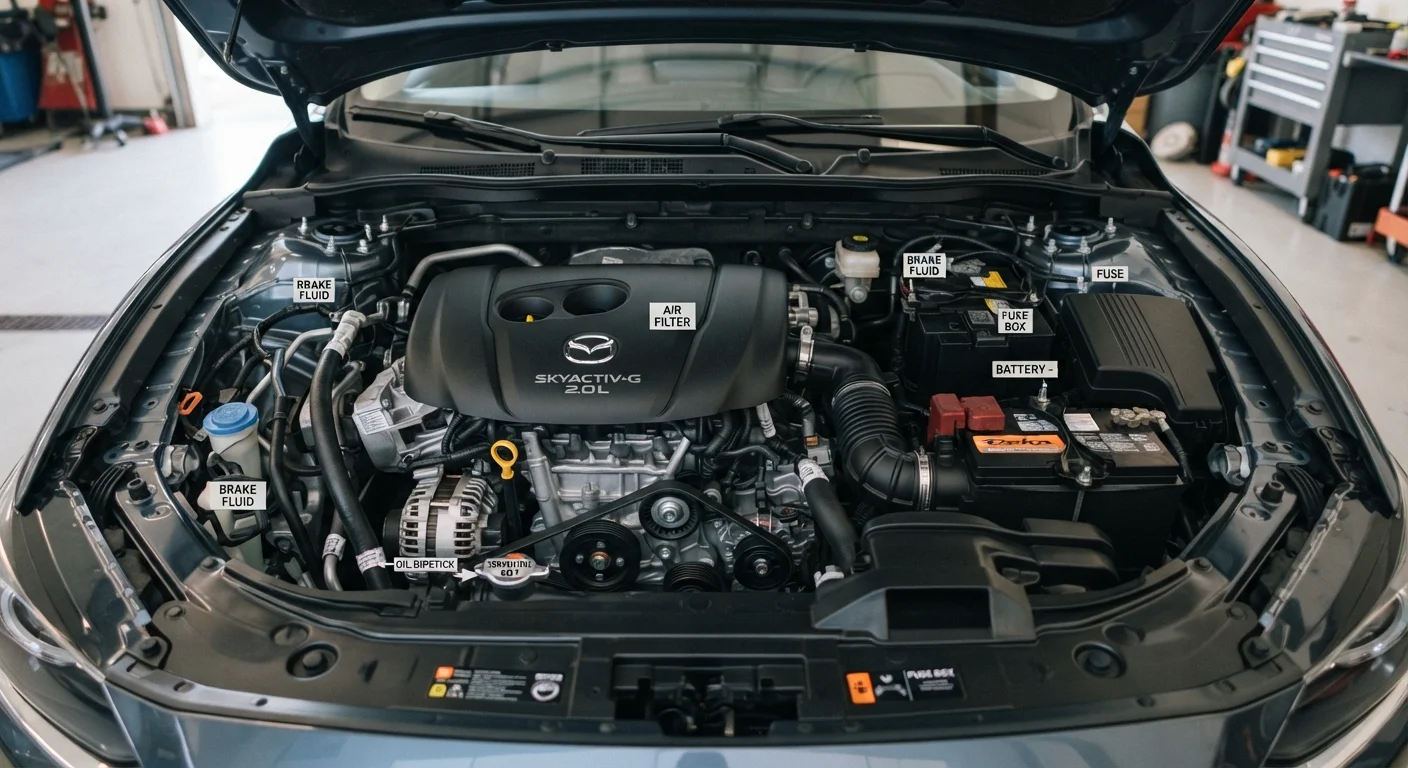
- Lubrication system: Engine oil coats moving metal parts to reduce friction and heat. Without adequate oil, components grind against each other and fail quickly. See our fluid check routine guide for a practical walkthrough on monitoring oil levels.
- Cooling system: Coolant (also called antifreeze) circulates through the engine block, absorbing heat and releasing it through the radiator. Overheating is one of the most damaging things that can happen to an engine.
- Fuel system: The fuel pump draws gasoline from the tank, and the fuel injectors spray a precise mist into each cylinder. A clogged fuel filter or failing fuel pump can cause the engine to stall or run poorly.
Check Fluids Regularly - It Takes Minutes
Most fluid checks can be done with the engine off and a clean rag. Oil, coolant, and brake fluid all have clearly marked reservoirs with min/max indicators. Making this a monthly habit is one of the simplest ways to extend your car's life and avoid preventable breakdowns.
Power, Stopping, and Steering
Once the engine produces rotational force, the transmission manages how that power reaches the wheels. It shifts between gear ratios automatically (in an automatic transmission) or manually (in a manual or stick-shift car) to keep the engine operating efficiently at different speeds.
The braking system uses hydraulic pressure - generated when you press the brake pedal - to push brake pads against rotors (discs) on each wheel, creating friction that slows the car. Brake fluid is the fluid that carries this pressure; if it leaks or degrades, braking performance suffers. This is a safety-critical system, and any spongy pedal feel or grinding noise warrants immediate professional inspection.
The suspension system absorbs bumps and keeps the tires in contact with the road, while the steering system translates your input at the wheel into directional changes. Both systems affect vehicle handling and tire wear, and problems with either should not be deferred.
For a deeper look at individual components, the anatomy of a car guide covers parts from the alternator to the suspension in plain terms.
Never Delay on Brake or Steering Issues
Unusual brake pedal feel - such as sponginess, excessive travel, or grinding sounds - should be inspected by a qualified mechanic immediately. The same applies to pulling to one side while steering or excessive vibration in the wheel. These are safety-critical systems, and waiting can significantly increase both risk and repair cost.
Electrical and Exhaust Systems
Modern cars are full of electronics, and it all starts with two components working together: the battery and the alternator. The battery stores electrical energy and powers the car when the engine is off (including the ignition). Once the engine is running, the alternator recharges the battery and powers everything else - lights, climate control, infotainment, and safety systems.
The exhaust system routes combustion gases safely away from the engine and out through the tailpipe. Along the way, the catalytic converter chemically reduces harmful pollutants, and the muffler reduces noise. A damaged exhaust can allow carbon monoxide - a colorless, odorless gas - to enter the cabin, making exhaust leaks a serious safety concern.
The car's onboard diagnostic (OBD) system monitors sensors throughout the vehicle and triggers the check engine light when it detects a fault. A mechanic can plug a scanner into the OBD port to read the specific code and identify the problem.
What This Means for You as a New Owner
You don't need to become a mechanic - but understanding what each system does gives you practical advantages. You'll recognize warning signs sooner, explain symptoms more accurately to a mechanic, and feel less vulnerable to unnecessary upsells.
Common habits that quietly cause damage - like ignoring tire pressure or skipping scheduled servicing - are covered in our guide on things new drivers frequently get wrong. And if you've heard conflicting advice about how often to change your oil or whether to warm up your engine in winter, separating maintenance myths from real mechanic advice addresses the most common misconceptions.
Running a car also carries real financial weight. Our introduction to car ownership costs breaks down what to budget for across every major category - from insurance and fuel to maintenance and unexpected repairs.
The more you understand about how your car works, the better positioned you are to keep it running reliably - and to know when it's time to hand a problem off to a professional.
Frequently Asked Questions
Unchecked fluid levels, worn belts, and other hidden issues can cause breakdowns or expensive damage over time. Regular visual checks take only a few minutes and can help you catch problems early. Consult your owner's manual for the recommended inspection schedule.
You don't need expert knowledge, but understanding the basics helps you communicate with mechanics, recognize warning signs, and avoid being overcharged. Even a general sense of each system's purpose makes you a more confident owner.
The check engine light signals that the car's onboard diagnostic system has detected a fault somewhere - it could be minor, like a loose gas cap, or more serious. You should not ignore it. Have a mechanic read the diagnostic code as soon as possible.
When you turn the key or press the start button, the battery sends power to the starter motor, which cranks the engine. The ignition system then fires spark plugs, which ignite the air-fuel mixture in the cylinders and start the combustion cycle.
A gasoline car uses an internal combustion engine that burns fuel to create motion. An electric car uses a battery pack to power one or more electric motors directly, with no combustion. Electric vehicles have fewer moving parts and generally require less routine maintenance.
Take your car in for any warning light, unusual noise, vibration, or fluid leak - and for scheduled maintenance per your owner's manual. When in doubt, a professional inspection is always the safer choice over waiting to see if the problem resolves itself.
The content provided on our blog site traverses numerous categories, offering readers valuable and practical information. Readers can use the editorial team’s research and data to gain more insights into their topics of interest. However, they are requested not to treat the articles as conclusive. The website team cannot be held responsible for differences in data or inaccuracies found across other platforms. Please also note that the site might also miss out on various schemes and offers available that the readers may find more beneficial than the ones we cover.