

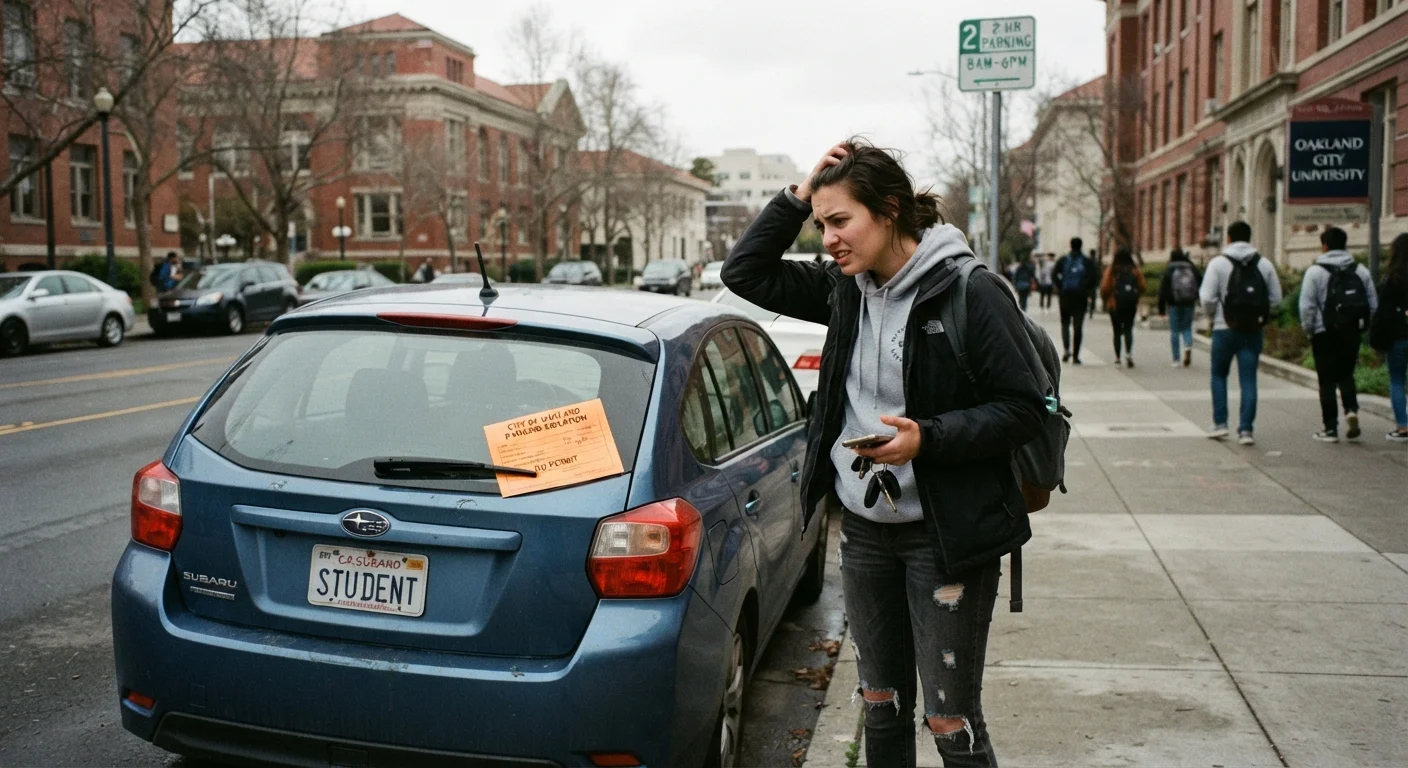
Why Parking Myths Persist on Campus
Parking rules are one of those areas where rumor travels faster than fact. A story about someone who argued their way out of a ticket, or who parked in a restricted zone for a semester without consequence, spreads through a residence hall and becomes accepted wisdom. The problem is that those stories are rarely representative - they're memorable precisely because they're exceptions.
Campus parking systems are operated by dedicated departments with their own regulations, enforcement schedules, and escalation procedures. They are largely independent of municipal parking rules, which means off-campus intuitions about how enforcement works may not apply at all. For students managing tight budgets and demanding schedules, the cost of acting on bad information can be real and measurable. The sections below address the most common parking misconceptions - and what's actually true.
Common Parking Myths - Corrected
The myths below are drawn from beliefs that regularly circulate among student drivers. Each one sounds plausible, which is exactly what makes it dangerous.
Myth
There's always a grace period before a ticket is issued, so a few extra minutes don't matter.
Fact
Most campus parking officers are not required to observe any grace period - enforcement begins the moment a violation exists.
This is one of the most expensive beliefs a student driver can hold. Parking enforcement on university campuses is typically governed by the institution's own regulations, not general traffic law, and those regulations rarely include a mandated grace period. Enforcement officers record the time a meter expires or a time limit is reached, and a citation can be issued immediately. Assuming a five- or ten-minute buffer is safe is a gamble that frequently doesn't pay off. If you need to be somewhere on time, build that margin into your parking plan - not into your risk tolerance.
Myth
Appealing a parking ticket almost always works, especially for first-time offenders.
Fact
Appeal success rates vary widely and are not guaranteed, particularly when the violation is clearly documented.
Appeals processes exist for legitimate errors - an officer who noted the wrong vehicle, a broken meter that wasn't flagged, or a sign that was obscured. However, appeals based solely on being a first-time offender or simply not wanting to pay are routinely denied. Many campus parking offices use photographic evidence and timestamped records. Filing a weak appeal doesn't erase the deadline on the original fine, and at some institutions a failed appeal can result in an administrative fee on top of the original amount. Reserve appeals for genuine disputes, and file them with documentation - not just a personal explanation.
Myth
Having a valid parking permit means you'll always find a spot in your zone.
Fact
A permit grants you permission to park in a zone - it does not guarantee an available space.
Universities routinely sell more permits than there are spaces, operating on the assumption that not every permit holder will arrive simultaneously. This is standard practice across many institutions. Arriving late to a high-demand lot and finding it full is a common and frustrating experience for students who paid for a permit and expected a reserved space. Understanding how permits actually work is essential before you commit your commute plan around them. The campus parking permits guide explains zone tiers, waitlists, and what your permit actually entitles you to.
Myth
Parking enforcement only operates on weekdays during regular business hours.
Fact
Many campuses enforce parking rules on evenings, weekends, and even during academic breaks.
Enforcement schedules differ by institution, but the assumption that rules don't apply after 5 p.m. or on Saturdays leads to a significant number of citations. Special events, residential areas, and restricted lots often have extended or continuous enforcement. Before you park anywhere outside your standard schedule, check the posted signs and your institution's parking services website. Signs that show enforcement hours - such as "No Parking 7am-9pm" - mean exactly what they say. The guide to reading campus parking signs walks through exactly how to interpret timed-zone and permit-only signage.
Myth
A small parking fine isn't worth worrying about - it's cheaper to just risk it.
Fact
Fines, late fees, and administrative consequences can multiply a single ticket into a much larger financial problem.
Students sometimes treat a $25 or $40 citation as an acceptable cost of convenient parking. But unpaid tickets don't stay static - most campus systems add late payment fees after a set deadline, and repeated violations escalate in price. Beyond the fine itself, vehicles with multiple unpaid tickets can be booted or towed, generating additional fees that dwarf the original amount. The real total cost of commuting by car includes these risks, as outlined in the overlooked car costs for students article. Treating parking strategically - not casually - protects your budget.
Myth
If your car gets towed, you have several days to retrieve it without extra charges.
Fact
Most tow lots charge daily storage fees that begin accumulating immediately after towing.
When a vehicle is towed from campus, the student is responsible not only for the towing fee but for any storage costs that accrue per day at the impound lot. Delays in retrieval - even over a weekend - can add up quickly. Always contact campus parking services and the towing company as soon as you discover your vehicle is missing. Bring identification, your vehicle registration, and payment capability. Don't wait to see if the situation resolves itself. Being informed about campus car fees beyond the sticker price helps students understand why these costs are real line items, not rare emergencies.
Unpaid Tickets Can Freeze Your Registration
At many universities, unpaid parking fines are reported to the registrar's office. Accumulating unresolved tickets can result in a hold that prevents you from registering for next semester's classes, requesting transcripts, or even graduating. Treat every ticket as a financial obligation that needs prompt attention - don't assume it will simply expire.
Beyond fines and towing, your commute also carries ongoing costs that are easy to underestimate. See the full breakdown of commuting costs - including fuel, wear, and permit fees - to get an accurate picture of what driving to campus really adds up to.
How to Avoid Parking Problems Before They Start
The most effective strategy is prevention. Here's what actually helps:
- Read the posted signs carefully every time. Signs can change between semesters, and event-specific restrictions are often temporary additions. Check the rules for drop-off zones and short-stay areas if you're unsure about any specialty lane.
- Know your permit's actual terms. Understand which zones are included, what hours apply, and whether your permit is transferable to another vehicle. The campus parking permits explained article is a practical starting point.
- Pay fines promptly if you receive one. Even if you plan to appeal, check whether paying stops the late fee clock - some systems allow this; others don't.
- Budget for parking realistically. Permit costs, occasional fines, and potential towing are legitimate line items in a student car budget. Account for them in advance rather than treating them as surprises.
Staying informed is the single most cost-effective thing a student driver can do. Campus parking isn't arbitrary - it follows documented rules. The gap between those rules and what students believe is where most of the avoidable costs live.
The content provided on our blog site traverses numerous categories, offering readers valuable and practical information. Readers can use the editorial team’s research and data to gain more insights into their topics of interest. However, they are requested not to treat the articles as conclusive. The website team cannot be held responsible for differences in data or inaccuracies found across other platforms. Please also note that the site might also miss out on various schemes and offers available that the readers may find more beneficial than the ones we cover.