

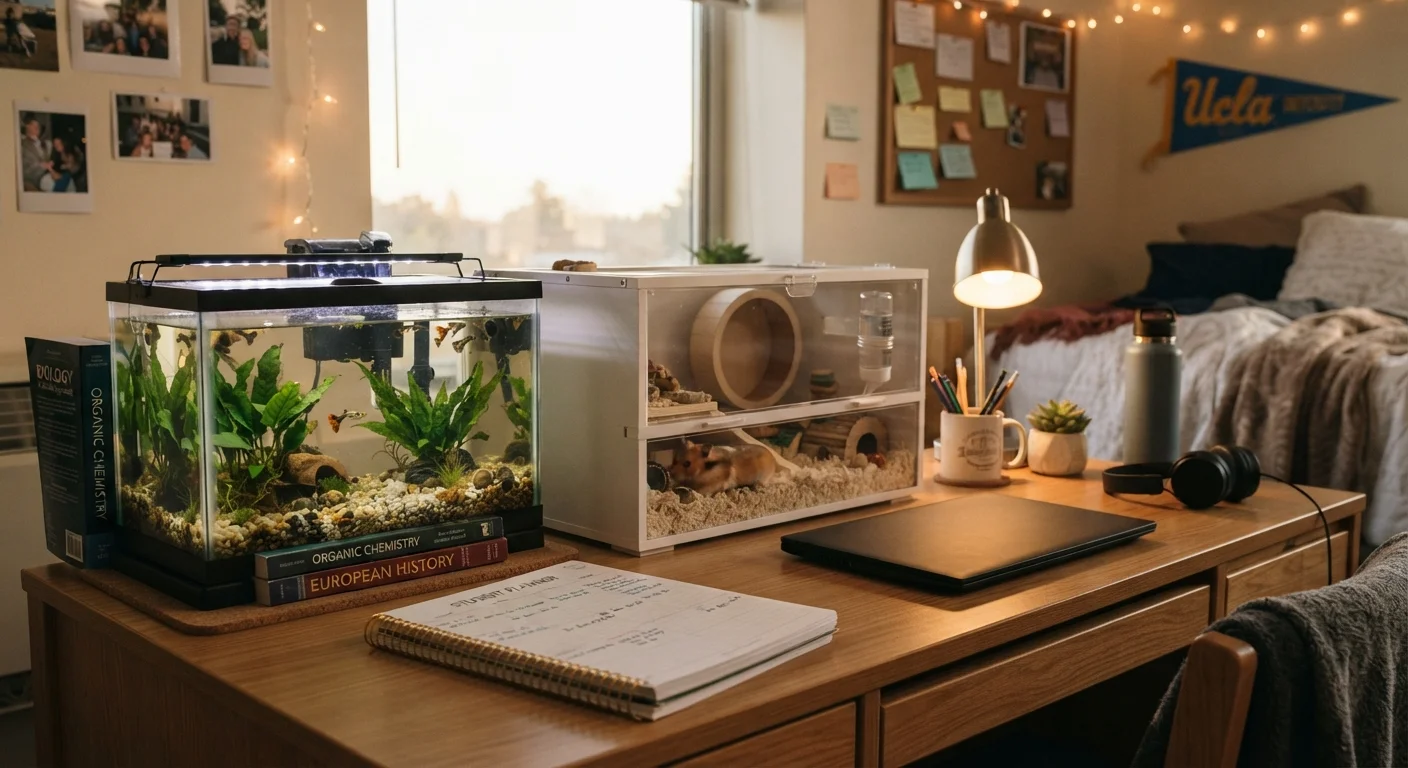
The 'Low-Maintenance' Label Is Relative - Not Absolute
When students search for dorm-friendly pets, "low-maintenance" comes up constantly. It's a useful shorthand - some animals genuinely do demand less time and space than dogs or cats. But the phrase gets misread as meaning no maintenance, and that misreading leads to animals being neglected or surrendered.
Every pet, no matter how small or quiet, has baseline needs that must be met consistently. The difference between low-maintenance and high-maintenance pets is a matter of degree - not presence versus absence of care. Understanding this distinction before you adopt is one of the most important steps you can take. For a side-by-side comparison of how care demands differ across popular choices, see how small pet care demands really compare.
Myth
Fish are effortless pets - you just feed them and they take care of themselves.
Fact
Fish require weekly partial water changes, regular filter maintenance, and daily feeding at consistent intervals.
The idea that fish are passive decorations is one of the most common pet misconceptions. A betta fish, for example, needs a cycled tank with stable water parameters, a working filter, appropriate water temperature, and feeding once or twice daily. Partial water changes of roughly 25-30% are typically recommended weekly to keep ammonia and nitrite levels safe. Skipping these tasks doesn't just cloud the water - it degrades water chemistry in ways that stress or kill fish. See what betta fish care actually looks like before deciding a fish fits your schedule.
Myth
Hamsters are ideal for busy students because they sleep all day and need almost nothing.
Fact
Hamsters are nocturnal but still require daily feeding, fresh water, and regular cage cleaning every one to two weeks.
Hamsters do sleep during the day, but their needs don't disappear. Fresh food and water must be provided daily, and a hamster's habitat should be spot-cleaned frequently with a full bedding change every one to two weeks. Ammonia buildup from soiled bedding causes respiratory issues. Hamsters also need environmental enrichment - wheels, tunnels, and foraging opportunities - or they can develop stress behaviors like bar-chewing. The care is manageable, but it isn't optional.
Myth
Small pets cost almost nothing to keep once you've bought the initial setup.
Fact
Ongoing costs for food, bedding, and veterinary care can add up to hundreds of dollars per year even for small animals.
The upfront cage or tank is often the most visible expense, but recurring costs accumulate quickly. Bedding, food, filter media, water conditioner, and occasional vet visits are regular line items. For a realistic picture of what these expenses look like month to month, the real monthly cost of keeping a small dorm pet breakdown is worth reviewing before you commit.
Myth
If a pet is allowed in dorms, any small animal qualifies without checking further.
Fact
Most residence halls that allow pets specify exactly which species or types are permitted - usually only fish, and only in tanks below a certain size.
"Pet-friendly" language in housing policies is rarely as broad as students assume. A policy that permits fish in a 10-gallon tank does not automatically permit hamsters, geckos, or birds. Housing rules vary significantly by institution and even by residence hall. Before acquiring any animal, read the specific policy document and confirm with your resident advisor or housing office in writing. The myths about keeping pets in college housing article covers other policy misconceptions worth knowing.
Myth
You can leave a small pet alone over a long weekend or winter break without making arrangements.
Fact
Most small pets need daily feeding and monitoring; leaving them unattended for more than a day or two is unsafe without a caretaker in place.
Semester breaks are one of the most overlooked challenges of dorm pet ownership. A hamster left without food for four or five days faces serious health risk. Fish can go slightly longer without feeding, but tank equipment can malfunction without anyone noticing. Planning for your pet's care during extended absences should happen before you adopt - not when you're booking flights home.
What Daily and Weekly Care Actually Looks Like
Concrete time estimates help more than vague warnings. Here's a realistic snapshot of what routine care involves for the animals most commonly kept in dorms:
- Betta fish: Daily feeding (1-2 minutes), weekly 25-30% water change and equipment check (15-20 minutes), periodic filter media replacement.
- Hamsters: Daily food and water refresh, spot-check of bedding, and a brief health observation. Full cage cleaning every one to two weeks.
- Leopard geckos: Daily feeding (for juveniles) or every other day (adults), fresh water, spot-cleaning the enclosure. Monthly deep cleans.
None of these tasks are overwhelming individually, but they must happen on schedule - not just when it's convenient. Midterms and finals weeks are exactly when pet care most often slips. Building a routine now, before stress peaks, is the approach outlined in keeping a dorm pet healthy when you're busy with classes.
Don't Skip the Vet Just Because It's a Small Pet
Many students assume small animals like hamsters or fish never need veterinary attention. In reality, illness in small animals can progress rapidly, and delayed care often leads to worse outcomes. Locate an exotic or small-animal vet near campus before you need one - not after your pet shows signs of distress.
If you're weighing which animal realistically fits your schedule, small pets that fit real dorm life offers practical guidance grounded in actual care requirements rather than marketing labels.
Neglect Has Real Consequences
Inadequate care for small pets isn't just inconvenient - it causes genuine suffering and can shorten an animal's life significantly. Before adopting any pet, honestly assess whether your schedule allows for daily feeding, habitat maintenance, and health monitoring. If it doesn't right now, waiting is the responsible choice.
The content provided on our blog site traverses numerous categories, offering readers valuable and practical information. Readers can use the editorial team’s research and data to gain more insights into their topics of interest. However, they are requested not to treat the articles as conclusive. The website team cannot be held responsible for differences in data or inaccuracies found across other platforms. Please also note that the site might also miss out on various schemes and offers available that the readers may find more beneficial than the ones we cover.