

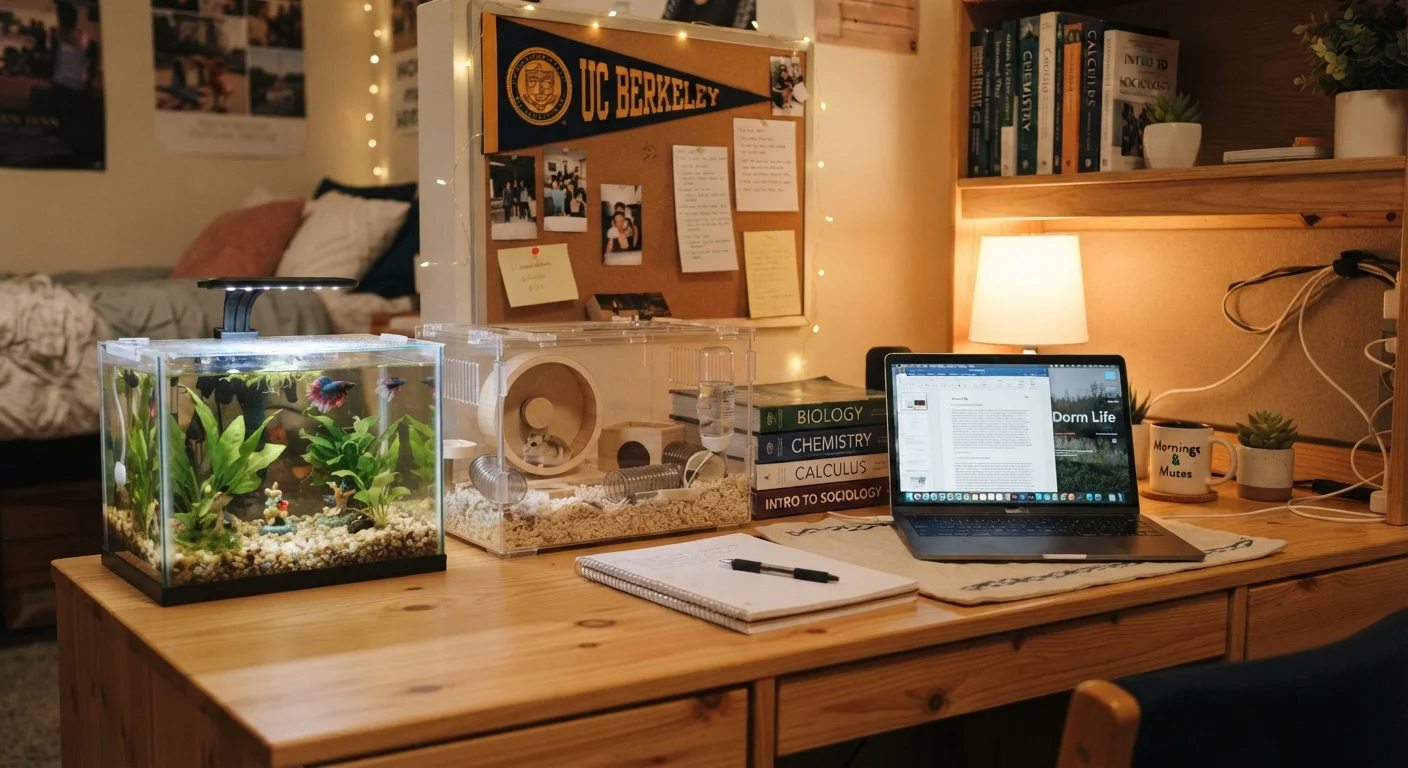
Why Dorm Pet Health Starts With the Right Species Match
The foundation of keeping a dorm pet healthy isn't a product or a schedule app - it's an honest assessment of how much time and attention you can reliably provide. Before worrying about care routines, students should make sure the animal they're keeping is genuinely compatible with a packed academic life. Our first-time dorm pet guide covers this compatibility question in depth, and it's worth reading before committing to any animal.
Low-maintenance doesn't mean low-responsibility. It means the care tasks are manageable and predictable, which makes consistency - the real driver of animal health - achievable even during a difficult semester.
Choose a species whose care requirements genuinely match your daily schedule.
Many health problems in dorm pets stem from a mismatch between the animal's needs and the owner's availability. A fish, a betta, or a pair of gerbils require far less active daily interaction than a dog or a rabbit. Selecting a species suited to your class load prevents neglect-related stress in the animal.
Anchor feeding and cleaning tasks to existing parts of your daily routine.
Irregular feeding schedules disrupt an animal's digestive rhythm and can cause stress-related health issues over time. Tying pet care to habits you already have - brushing teeth, making coffee, returning from class - makes it far harder to forget.
Monitor your pet's behavior and appearance briefly every day.
Early detection of illness dramatically improves outcomes for small animals. Because pets cannot communicate discomfort verbally, changes in appetite, activity level, coat or skin condition, posture, or elimination habits are the primary signals. A daily 60-second visual check costs little time but catches problems early.
Feed species-appropriate food in correct portions - not just what's convenient.
Overfeeding, underfeeding, or substituting inappropriate foods are common causes of preventable health problems in small pets. Each species has specific nutritional requirements; meeting them consistently is one of the highest-impact things a student owner can do.
Keep the habitat clean on a reliable schedule, not just when it looks dirty.
Ammonia buildup in aquariums and soiled bedding in small-mammal enclosures can cause respiratory illness and skin conditions even before visible filth is obvious. A written or phone-reminder schedule removes the guesswork.
Plan specifically for exam periods, breaks, and unexpected absences.
Semester breaks and exam crunch periods are when pet care most commonly lapses. Arranging a reliable backup caretaker or automatic feeder in advance prevents animals from going without food, water, or habitat maintenance.
Building Care Routines That Survive a Busy Schedule
The most common reason dorm pets suffer health setbacks isn't a lack of concern - it's irregular care. Feeding at inconsistent times, skipping habitat cleaning during exam week, and forgetting daily visual checks all accumulate into real welfare problems. The fix is structural: attach pet care tasks to existing habits so they don't rely on willpower or memory alone.
For a deeper look at how to structure feeding, enrichment, and cleaning around lectures and study sessions, see our guide to daily pet care routines that work around a class schedule.
Nutrition, Behavior Monitoring, and Knowing When to Call a Vet
Consistent nutrition and daily observation are the two most powerful tools a student pet owner has. Feeding species-appropriate food in correct portions - not whatever is cheapest or easiest to grab - is a fundamental health decision. Feeding your pet well on a student budget is genuinely achievable with some planning.
Equally important is knowing what normal looks like for your specific animal so that changes register quickly. Small pets often hide illness instinctively, so behavioral shifts - reduced appetite, unusual stillness, changes in droppings - are frequently the first visible sign that something is wrong. For a detailed breakdown of what to watch for, see why your pet's behavior might be telling you something is wrong.
This Is General Pet Care Information
The guidance in this article covers general principles of small-pet care and is not a substitute for advice from a licensed veterinarian. Individual animals vary in their health needs. If your pet shows signs of illness or distress, contact a vet promptly.
If you notice persistent changes in your pet's behavior or physical condition, contact a veterinarian rather than waiting to see if things improve on their own. Identifying a local clinic before an emergency arises - not during one - is one of the most practical steps a new student pet owner can take.
“The single biggest welfare risk for pets owned by busy people isn't malice - it's inconsistency. Routine is protective.”
— American Veterinary Medical Association, Professional veterinary guidance organization
Planning Ahead for Breaks and High-Stress Periods
Exam weeks and semester breaks are predictable challenges - which means they can be planned for. Students who arrange backup care, automatic feeders, or clearly documented routines for a trusted caretaker before a break are far less likely to face a health crisis on return. This is especially important for fish and small mammals, which can deteriorate quickly when feeding or habitat cleaning lapses for several days.
For a practical look at how students navigate extended absences, see what happens to your pet over winter break. And if you haven't yet confirmed your campus's pet policies or built out your full care plan, our pre-arrival readiness checklist is a useful next step.
This article provides general pet care information for educational purposes and is not a substitute for guidance from a licensed veterinarian. Always consult a qualified vet for concerns about your pet's specific health needs.
The content provided on our blog site traverses numerous categories, offering readers valuable and practical information. Readers can use the editorial team’s research and data to gain more insights into their topics of interest. However, they are requested not to treat the articles as conclusive. The website team cannot be held responsible for differences in data or inaccuracies found across other platforms. Please also note that the site might also miss out on various schemes and offers available that the readers may find more beneficial than the ones we cover.