

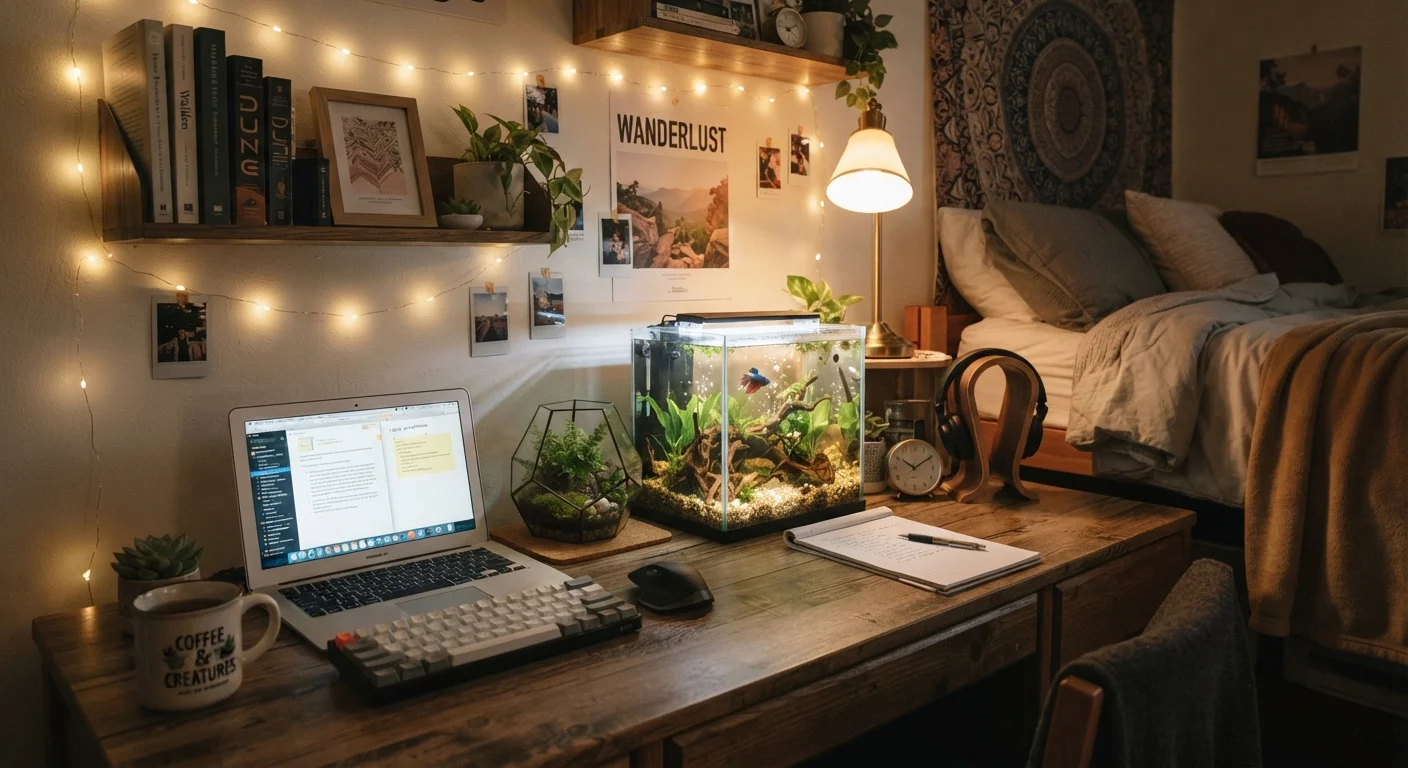
Choosing a Pet That Actually Works in a Dorm
Most residence halls have strict rules about animals - and for good reason. Shared walls, limited ventilation, and communal living create real constraints. The pets that tend to work best in dorms share a few traits: they're quiet, contained in a small footprint, unlikely to trigger allergies in neighbors, and permitted under most aquatic or small-animal policies.
Before selecting any pet, read your specific housing contract carefully. Many schools permit fish in tanks up to 10 gallons, and some allow small reptiles or invertebrates. Fewer allow mammals. When in doubt, email your residential advisor - a written response protects you later.
Once you know what's allowed, the next question is honest self-assessment. How often are you in your room? Do you travel for breaks? Can you afford both setup and monthly upkeep? Our breakdown of realistic monthly pet costs can help you run those numbers before committing.
Betta Fish
Betta fish are among the most widely permitted dorm pets, partly because most schools that allow animals at all include fish in small aquariums. A single betta thrives in a filtered tank of at least 5 gallons - smaller containers are often marketed but don't support stable water conditions or good fish health.
Bettas need a heater to maintain water temperature between roughly 76-82°F, a gentle filter, and weekly partial water changes of about 25-30%. Feeding is simple: a few pellets once or twice daily. They're visually engaging, silent, and require no social interaction from you to stay healthy. Just keep them alone - bettas are aggressive toward other bettas and incompatible with many tank mates.
A filtered 5-gallon tank keeps a betta healthy - smaller containers rarely maintain stable conditions.
Leopard Gecko
Leopard geckos are docile, slow-moving reptiles that are active primarily in the evening - a schedule that happens to align well with many students' routines. They require a 20-gallon tank with a thermal gradient: a warm side around 88-92°F and a cooler side around 75°F, created with an under-tank heater or low-wattage heat lamp. No UV lighting is strictly required, though some keepers provide it.
Their diet consists of live insects - primarily crickets and mealworms - dusted with calcium and vitamin D3 supplements. This is a genuine commitment: you'll need to source live feeders regularly and cannot skip feedings the way you might a plant. That said, they don't vocalize, produce little odor when enclosures are cleaned weekly, and typically live 10-20 years with appropriate care.
Verify that reptiles are permitted in your housing agreement before purchasing any setup. Many schools distinguish between reptiles and fish in their policies.
Leopard geckos are quiet and evening-active, but they require live insects and a thermal gradient.
African Dwarf Frogs
African dwarf frogs are fully aquatic - they never leave the water - making them genuinely low-footprint pets. A pair can comfortably live in a 10-gallon tank with a gentle filter and a heater maintaining temperatures around 72-80°F. They're small (typically under 1.5 inches), nearly silent, and pose minimal allergy risk.
Feeding involves small amounts of frozen bloodworms or sinking pellets a few times per week. Unlike bettas, they're social and do better in pairs or small groups of the same species. Weekly partial water changes keep conditions stable. They're not interactive in the way a mammal would be, but they're genuinely interesting to observe - and far less demanding than most people expect.
Fully aquatic and under 1.5 inches, African dwarf frogs are among the quietest, smallest dorm pets available.
Hermit Crabs
Land hermit crabs have a reputation as low-effort pets, but that reputation is somewhat misleading. They require a humid, warm environment (ideally 70-80°F, with relative humidity around 70-80%), multiple shell sizes to move into as they grow, and a varied diet including fresh foods, proteins, and calcium sources. Many hermit crabs sold in mall kiosks are kept in conditions that shorten their lives significantly.
When properly kept in a 10-gallon or larger tank with a deep substrate for molting, hermit crabs can live for years and are fascinating to watch. They're odorless when their habitat is maintained, quiet, and permitted at many schools that allow small invertebrates. The learning curve is higher than most people expect, but the care is manageable once the setup is right.
Hermit crabs need humidity, warmth, and room to molt - the setup investment pays off in longevity.
Snails (Freshwater Aquarium Species)
Mystery snails and nerite snails are increasingly popular as low-demand dorm pets - and for good reason. They fit in small, established aquariums, consume algae and leftover food, and require almost no direct care beyond stable water parameters. A single mystery snail can live comfortably in a 5-gallon planted tank.
They're completely silent, move at a pace that's oddly calming to watch, and are unlikely to appear on any prohibited animals list. They do need a secure tank lid - mystery snails in particular will escape if given the opportunity. Water temperature should stay between 68-82°F, and like any aquatic animal, they're sensitive to ammonia and nitrite spikes, so a cycled tank is essential.
For students who want the visual appeal of an aquarium without the complexity of fish behavior or disease management, a snail-focused planted tank is a genuinely underrated option. See how aquarium pets compare more broadly in our care demand comparison for small dorm pets.
A cycled planted tank with mystery snails offers aquarium appeal with minimal daily intervention.
Making Your Choice Stick
The pets listed above represent some of the most realistic options for dorm life - but the fit depends on your specific room, schedule, and housing policy. A betta fish suits a student who enjoys a calm visual presence without daily interaction. A leopard gecko suits someone curious about reptiles and willing to handle live insects. Hermit crabs and African dwarf frogs occupy a middle ground worth exploring - our dorm pet face-off between the two walks through what each actually involves.
Whatever you choose, resist the idea that "small" automatically means "easy." Each of these animals has genuine needs. Low-maintenance doesn't mean no maintenance, and the students who thrive as dorm pet owners are those who plan ahead rather than improvise. Start with a species that matches your current lifestyle - not the lifestyle you hope to have.
Plan for Breaks and Busy Periods
Midterms, holidays, and travel weekends happen every semester. Before acquiring any pet, have a clear plan for who will care for it when you're away - even for a weekend. Fish and reptiles can go longer between feedings than mammals, but water changes and temperature monitoring can't be indefinitely postponed. Arrange a trusted backup caregiver before you need one, not after.
The content provided on our blog site traverses numerous categories, offering readers valuable and practical information. Readers can use the editorial team’s research and data to gain more insights into their topics of interest. However, they are requested not to treat the articles as conclusive. The website team cannot be held responsible for differences in data or inaccuracies found across other platforms. Please also note that the site might also miss out on various schemes and offers available that the readers may find more beneficial than the ones we cover.