

Why Monthly Costs Matter More Than the Sticker Price
Most students focus on the upfront cost of getting a pet - the animal itself plus an initial cage or tank setup. But the ongoing monthly expenses are what genuinely test a student budget. Food, fresh bedding, occasional vet care, and replacement supplies accumulate steadily, and they rarely stay flat from month to month.
Before committing to any animal, it helps to map out what you'd realistically spend every 30 days. The Pet Rules & Costs hub is a good starting point for understanding both policy and budget considerations together. This article focuses specifically on the recurring cost side.
| Lowest monthly ongoing cost (fish) | Approximately $5-$15/month (General estimate; varies by tank size and water chemistry needs) |
| Typical hamster monthly range | $13-$30/month (Bedding and food; excludes vet visits) |
| Guinea pig food costs alone | $25-$50/month (Hay, pellets, and fresh vegetables combined) |
| Small-animal vet visit (average range) | $35-$100+ (Varies by region, species, and clinic) |
| Recommended emergency supply buffer | $15-$20 reserve (For broken equipment or unexpected supply needs) |
Common Monthly Expenses by Pet Type
Costs vary considerably depending on the species. Here's a practical breakdown of what students typically spend each month on the most dorm-common small pets. These figures are general estimates; actual costs will vary by region, brand, and individual animal needs.
Bettas and Small Fish
Fish are often the most affordable ongoing pet. Expect roughly $5-$15 per month covering food, water conditioner, and occasional filter media. Emergency vet care is uncommon but fish medications can add $10-$20 when illness arises. A tank light bulb replacement or filter cartridge is an irregular cost of around $5-$10 every few months.
Hamsters and Gerbils
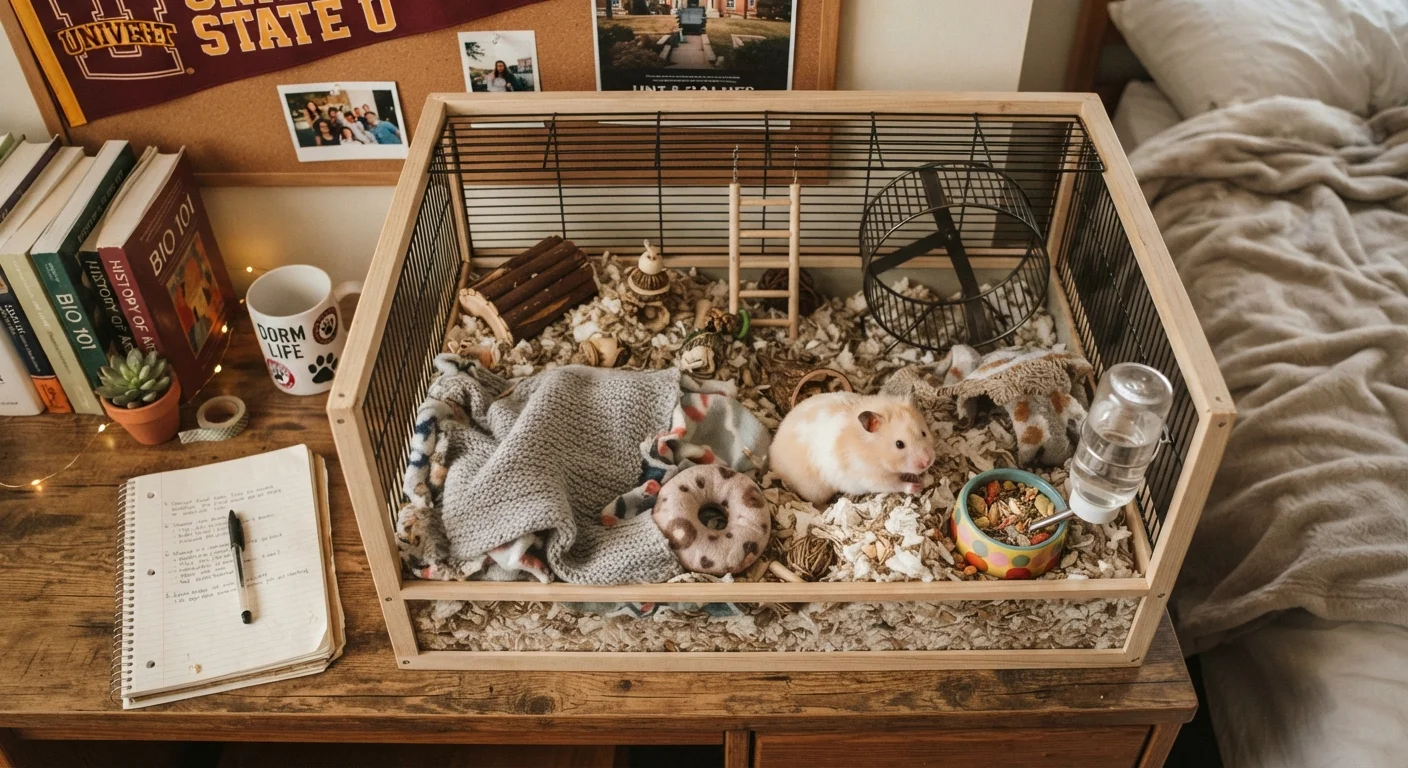
Bedding is the biggest recurring cost here. A bag of quality paper bedding used every one to two weeks runs $8-$18 per month depending on cage size and how often you spot-clean. Add $3-$6 for food mix and $2-$5 for occasional treats or chews. Monthly total typically lands between $13-$30, not counting vet visits.
Guinea Pigs
Guinea pigs eat more and produce more waste than smaller rodents. Fresh hay (a daily dietary essential), pellets, and fresh vegetables can add up to $25-$50 per month on food alone. Bedding costs are comparable to hamsters or slightly higher due to cage size. Guinea pigs also need annual vet checkups, which average $40-$70 per visit when spread across the year.
Budgies and Small Birds
Seed or pellet mixes, fresh food supplements, and cage liners typically cost $15-$30 per month. Birds need regular enrichment toys, which wear out and need replacing - budget roughly $5-$10 per month for this. Avian vets can be harder to find and tend to charge more per visit than standard small-animal clinics.
For a side-by-side comparison across species, see a detailed cost comparison across common dorm-friendly pets.
$13-$50
Typical monthly range for common small dorm pets
Based on food, bedding, and basic supplies across hamsters, guinea pigs, fish, and birds; excludes vet care.
$40-$70
Annual wellness exam cost for small mammals
General estimate for a routine checkup at a small-animal veterinary clinic in the US.
~$100+
Typical avian vet visit cost
Avian specialists are less common and tend to charge more than standard small-animal clinics.
Hidden and Irregular Costs Students Often Miss
Monthly averages can mask the irregular expenses that catch new pet owners off guard. A few categories worth building into your budget:
- Vet care: Even healthy small pets benefit from an annual wellness exam. Costs range from roughly $35 for a basic small-animal visit to over $100 for exotic species like birds or reptiles. Illness or injury can mean much higher unplanned bills.
- Emergency supplies: A broken water bottle, cracked tank, or worn-out wheel needs immediate replacement. Keeping a small reserve - even $15-$20 - prevents scrambling.
- Housing fees: Some dorms charge a pet deposit or pet fee before you even move in with your animal. These are separate from care costs but part of the true financial picture. Understanding the difference between a pet deposit and a pet fee can save you from a surprise at move-out.
Students frequently underestimate these irregular costs, which is why building a small buffer into your monthly pet budget from the start is genuinely useful practice.
If you want a structured way to track everything, a monthly pet budget template sized for student finances can help you see the full picture at a glance.
Recurring cost
An expense that repeats on a regular schedule - weekly, monthly, or annually. For pets, this includes food, bedding, and scheduled vet care.
Spot-cleaning
Removing soiled bedding or waste from a specific area of a cage without replacing everything. Done frequently between full cage changes to control odor and bacteria.
Exotic species
Pets that fall outside common domesticated animals like cats or dogs. In a vet context, birds, reptiles, and small mammals like guinea pigs are often classified as exotic, which can mean higher examination costs and fewer available specialists.
Pet deposit
A refundable sum paid to a landlord or housing authority before moving in with a pet. Returned at the end of your stay if no pet-related damage has occurred.
Wellness exam
A routine veterinary checkup with no specific illness as the reason. It allows a vet to assess overall health, catch early problems, and update any needed treatments.
The content provided on our blog site traverses numerous categories, offering readers valuable and practical information. Readers can use the editorial team’s research and data to gain more insights into their topics of interest. However, they are requested not to treat the articles as conclusive. The website team cannot be held responsible for differences in data or inaccuracies found across other platforms. Please also note that the site might also miss out on various schemes and offers available that the readers may find more beneficial than the ones we cover.