

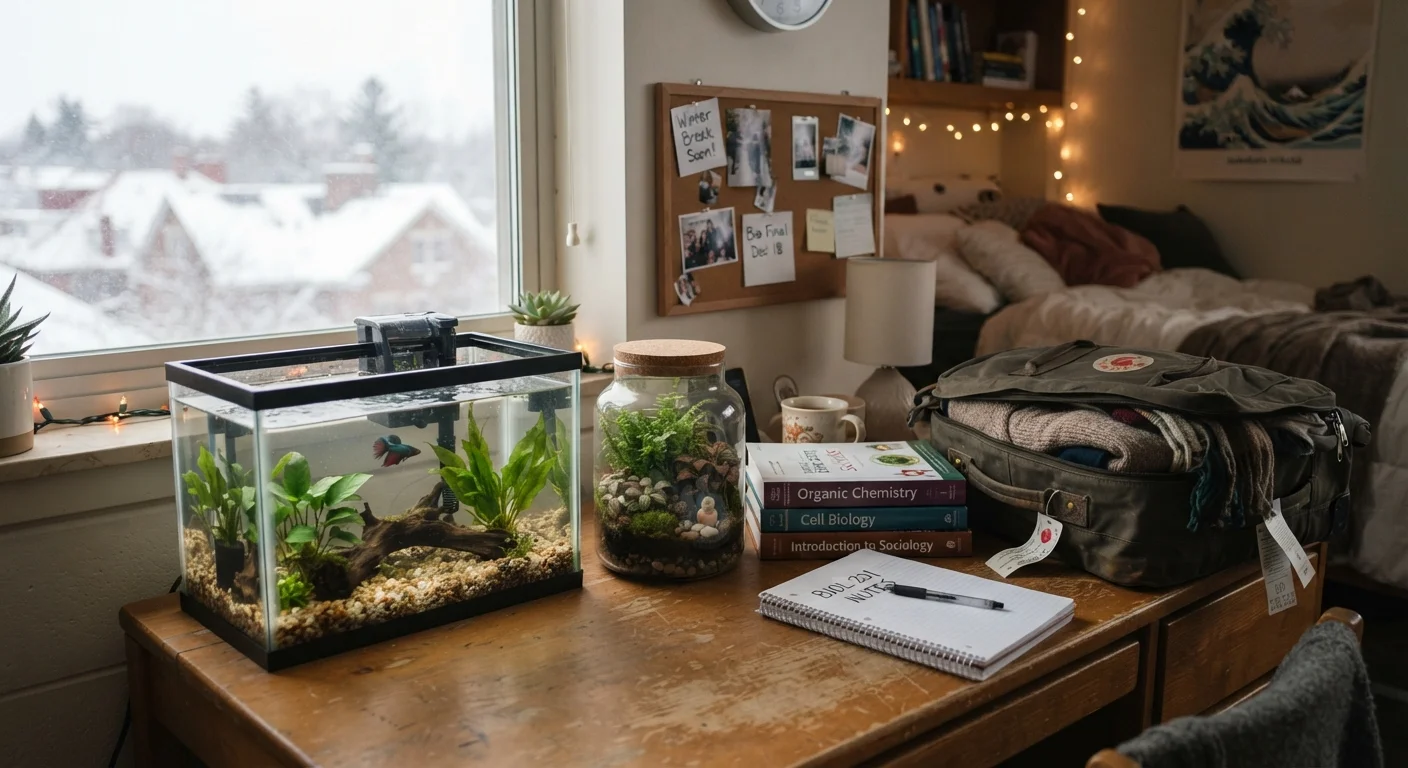
Why Winter Break Is a Defining Test for Dorm Pet Owners
Owning a pet in a dorm is manageable during the semester - you're nearby, following a routine, and able to respond quickly to problems. Winter break changes all of that. Most breaks run three to six weeks, and every dorm pet, regardless of how self-sufficient it seems, has needs that don't pause for your travel schedule.
This challenge is one of the core trade-offs explored in Bringing a Pet to College: Weighing the Trade-offs. Before adopting any animal, students should map out not just daily care but also what happens during every scheduled absence from campus - including breaks, long weekends, and finals travel.
The good news is that with early planning, most students can find a workable solution. The difficulty lies in underestimating how much advance preparation is actually required.
The Three Main Options Students Use
Most student pet owners rely on one of three approaches when leaving for winter break:
- Taking the pet home. This works well for hardy, travel-tolerant species and when the family home environment is suitable. Fish tanks are usually impractical to transport; small rodents or certain reptiles may travel more easily. Always verify your housing contract's removal policy and research any applicable transport rules for your species before packing anything up.
- Arranging a trusted caretaker on or near campus. A classmate, a resident advisor, or a friend staying local can check in regularly. This is often the most cost-effective option, but it requires clear written instructions, emergency contact information for a vet, and enough supplies left behind to cover the full break period.
- Hiring a pet sitter or using a boarding service. Professional sitters and small-animal boarding facilities are available in most college towns. Costs vary significantly, so it's worth researching local options well before the semester ends - reliable providers tend to fill up quickly in late November and early December.
See our holiday pet care planning checklist for a step-by-step walkthrough of what to prepare before you leave campus.
Start Your Break Search Early
Begin looking for a caretaker or boarding option at least six weeks before winter break starts. Trusted friends and professional services fill up quickly in late November. Leaving instructions, emergency vet contact details, and ample supplies in writing - not just verbally - greatly reduces the chance of problems while you're away.
How Species Choice Affects Your Break Options
The animal you choose to keep is the single biggest factor in how manageable break coverage will be. This is why the topic of break planning belongs in any honest conversation about selecting a dorm pet - not just as an afterthought once the animal is already home.
3-6 weeks
Typical length of a college winter break
Most U.S. colleges observe winter recesses ranging from approximately three to six weeks, far longer than most dorm pets can go without regular care.
Daily
Minimum care frequency for small mammals
Animals such as hamsters, guinea pigs, and rabbits generally require feeding, water changes, and a welfare check every single day - no exceptions over break.
Fish in an established, well-cycled tank can sometimes be covered with an automatic feeder for absences of up to about a week, with a friend stopping by to check water conditions. Longer breaks almost always require a knowledgeable caretaker. Small mammals like hamsters or guinea pigs need daily feeding, water changes, and cage checks - they are not candidates for any unattended stretch. Reptiles often have strict temperature and lighting requirements that need consistent monitoring.
As noted in Why 'Low-Maintenance' Doesn't Mean 'No Maintenance' for Dorm Pets, the label "low-maintenance" describes relative care demands during normal days - it does not mean a pet can be left unattended for weeks at a time.
Building Break Planning Into Your Pet Budget
Break care is a recurring cost, not a one-time surprise. Students who factor it into their annual pet budget before adopting are far better positioned than those who scramble for solutions in December. Depending on the species, caretaker arrangement, and break length, costs can range from a small amount for a friend's help to more substantial fees for professional boarding.
For a broader look at the financial realities of campus pet ownership, the Pet Rules & Costs hub covers typical expense categories and policy considerations. And for students still weighing whether pet ownership fits their lifestyle, Pet Ownership in College: What No One Tells You Before You Commit offers an honest, practical overview of the full commitment involved.
Ultimately, winter break is not a reason to avoid owning a dorm pet - but it is a reason to choose your animal thoughtfully, plan months in advance, and treat break coverage as a non-negotiable part of responsible pet ownership.
Frequently Asked Questions
Most fish cannot safely go three to six weeks without feeding, water quality checks, or temperature monitoring. Automatic feeders can help for short absences of a week or less, but an extended break typically requires a caretaker to check on the tank at least a few times per week.
It depends on your housing contract, the pet species, and whether anyone at home has allergies or objects to the animal. Some residence halls require written notice before a pet is removed. Always confirm local transport regulations for the species - some reptiles and exotic animals have interstate movement restrictions.
Bettas and other hardy fish in a well-cycled tank are among the most manageable, as an auto-feeder and a knowledgeable friend checking in can cover short breaks. However, no species is truly 'set and forget' for multi-week absences.
Look into professional pet-sitting services, campus community boards, or trusted classmates. Some veterinary clinics also offer boarding for small animals. Start searching well before break - reliable caretakers book up quickly around the holidays.
It often does. Pet-sitting fees, boarding costs, and supplies for a caretaker can add meaningfully to your annual pet budget. Factor these costs in before adopting, as they are a recurring and sometimes overlooked expense of dorm pet ownership.
Some campuses have student community boards, resident advisor networks, or biology-department contacts who can help connect owners with experienced caretakers. Check with your residence life office and campus organizations early in the semester.
The content provided on our blog site traverses numerous categories, offering readers valuable and practical information. Readers can use the editorial team’s research and data to gain more insights into their topics of interest. However, they are requested not to treat the articles as conclusive. The website team cannot be held responsible for differences in data or inaccuracies found across other platforms. Please also note that the site might also miss out on various schemes and offers available that the readers may find more beneficial than the ones we cover.