

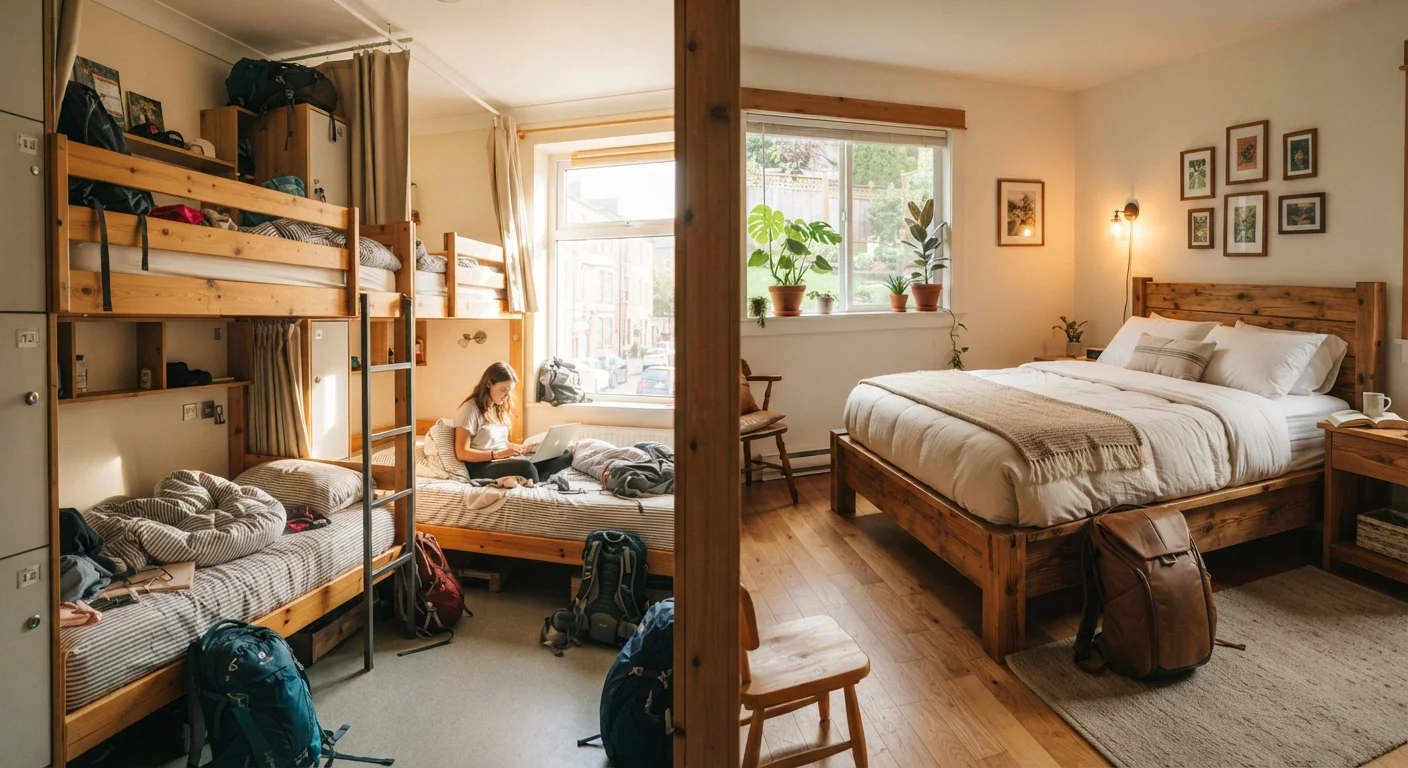
Option A
City Hostels
The social, ultra-low-cost choice for solo or group travellers.
Best for: Students who want to cut accommodation costs to the minimum and meet other travellers along the way.
Option B
Guesthouses
The quieter, more private alternative that still keeps costs manageable.
Best for: Students who want a private room, a local experience, and a calmer environment without paying hotel prices.
What Each Option Actually Is
Before comparing costs or amenities, it helps to understand what these two accommodation types actually are — because they're often confused or lumped together.
A city hostel is a lodging facility designed around shared sleeping spaces, commonly called dormitories or dorm rooms. You book a bed — often a bunk — in a room shared with anywhere from four to twenty other guests. Bathrooms are typically shared too. Hostels usually have common areas like kitchens, lounges, or bars where guests socialise. The trade-off for low cost is reduced privacy.
A guesthouse is a smaller, often family-run property where guests rent individual private rooms. Think of it as a small bed-and-breakfast without the formality of a hotel. Bathrooms may be en-suite or shared between just a few rooms. Guesthouses are common across Europe, Southeast Asia, Latin America, and many domestic destinations. They tend to feel more personal and locally rooted than chain accommodations.
For a broader look at how accommodation choices connect to overall trip affordability, see why cheap destinations aren't always what they seem before you book.
Cost Comparison: What You're Actually Paying For
Price is the first thing most students check — but the sticker rate doesn't tell the whole story.
| Criterion | City Hostels | Guesthouses |
|---|---|---|
| Room type | Shared dormitory (4–20+ beds) | Private room (usually 1–2 guests) |
| Typical nightly cost | Lower (dorm bed rate) | Moderate (full room rate) |
| Bathroom | Shared with dorm or floor | En-suite or shared between few rooms |
| Privacy level | Low | High |
| Social atmosphere | High — common areas, events | Low to moderate — quieter |
| Local/personal feel | Variable — often commercial | Often high — family-run properties |
| Best group size | Solo or small group | Pairs or those valuing privacy |
| Hidden fees risk | Lockers, linen, towels | Breakfast add-ons, tourist taxes |
Hostel dormitory beds in major US and European cities often run between $25 and $55 per night, while private rooms in the same hostels (yes, many offer them) can push closer to $70–$100. Guesthouse rates vary more by region: in Southeast Asia they can fall under $20 per night for a private room; in Western Europe a modest guesthouse private room might cost $60–$90.
Watch for fees that aren't in the headline rate. Some hostels charge separately for linen, lockers, or towels. Some guesthouses include breakfast; others charge for it. These additions can shift which option is genuinely cheaper for your specific trip. Hidden travel costs are one of the most common ways student trip budgets fall apart, so factor these in early.
~40%
Hostel users aged 18–30 globally
Hostelworld has reported that the majority of its user base consistently falls in the 18–30 age bracket, reflecting hostels' core appeal to younger, budget-conscious travellers.
2–4x
Budget hotel vs. hostel dorm cost difference
Travel industry analysis generally shows budget hotel private rooms costing two to four times more per night than hostel dormitory beds in comparable city locations.
$30–$55
Average hostel dorm rate in major US cities
Rates vary significantly by city and season; this range reflects commonly observed pricing in cities like New York, Chicago, and Los Angeles based on publicly available booking data.
Privacy, Comfort, and Practical Differences
Beyond price, how you actually experience each night matters — especially on longer trips.
In a hostel dormitory, you share your sleeping space with strangers. Lights-out times aren't always enforced, people arrive at different hours, and noise is a genuine concern. Many hostels have improved dramatically with privacy curtains, individual reading lights, and power outlets at each bunk — but you're still in a shared room. Valuables need to go in a locker (sometimes at extra cost).
Guesthouses offer a private room you can close the door on. That baseline of privacy matters when you're tired, sick, or just need to decompress after a long travel day. The tradeoff is you're less likely to spontaneously meet other travellers, which for some students is a feature, not a bug.
For students weighing how different accommodation setups affect daily life and comfort, the thinking in choosing between studio, one-bedroom, or shared apartment translates surprisingly well to travel lodging decisions too.
If you want a fuller comparison that also brings budget hotels into the picture, what students actually get from hostels versus budget hotels is worth reading alongside this guide.
How to Choose Based on Your Trip
Neither option is universally better — the right choice depends on your specific travel style, group size, and priorities.
- Solo, short stays, very tight budget: A hostel dormitory is usually the practical call. The social environment can also make solo travel feel less isolating.
- Travelling with one other person: Split a guesthouse private room — the per-person cost can rival or beat a hostel dorm bed while giving you both privacy.
- You need reliable sleep: Guesthouses win here. Dorm environments are unpredictable no matter how well-reviewed the hostel is.
- You want local knowledge: Guesthouse hosts in smaller properties often give destination advice that's more current and honest than anything on a generic travel platform.
Whatever you choose, always read reviews from the past three to six months — both hostels and guesthouses can change ownership or quality quickly. Check cancellation policies before paying any deposit, and confirm what's actually included in the rate.
For tips on making the most of student travel broadly, explore the Student Travel Hacks hub for practical strategies that go beyond accommodation.
Safety and Security: What to Verify
Neither hostels nor guesthouses are inherently unsafe, but due diligence matters. For hostels, check whether lockers are provided and whether they require your own padlock. For guesthouses, confirm the room has a working lock and that the property is in a well-reviewed neighbourhood. Always register your accommodation details with someone you trust at home, and verify entry requirements and any local safety advisories through official government travel resources before your trip.
The content provided on our blog site traverses numerous categories, offering readers valuable and practical information. Readers can use the editorial team’s research and data to gain more insights into their topics of interest. However, they are requested not to treat the articles as conclusive. The website team cannot be held responsible for differences in data or inaccuracies found across other platforms. Please also note that the site might also miss out on various schemes and offers available that the readers may find more beneficial than the ones we cover.