

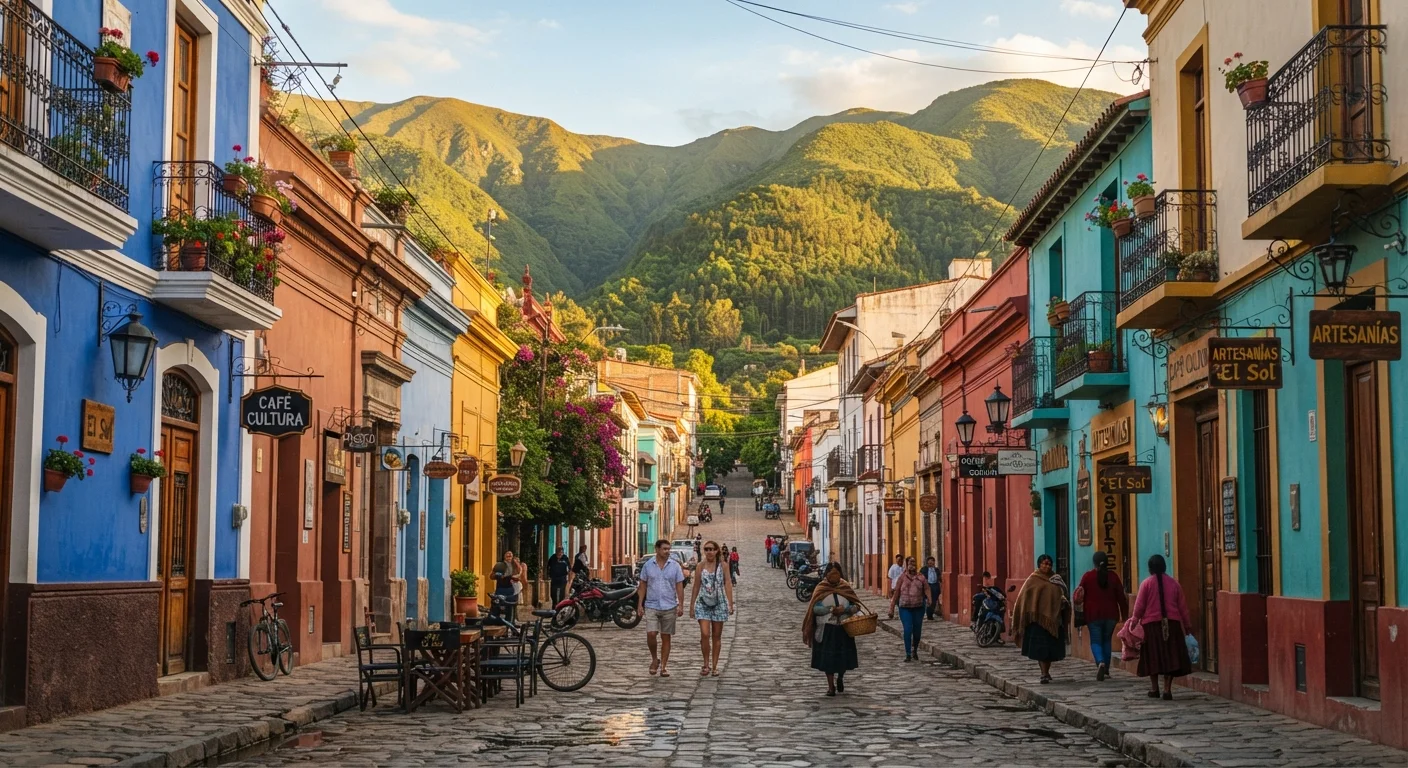
Why Latin America Works for Student Budgets
Latin America has long attracted independent travelers on tight budgets, and for college students, the region offers a compelling mix of low daily costs, accessible overland routes, and genuinely immersive experiences. Favorable exchange rates in several countries mean your dollars can stretch considerably — but that's only part of the equation.
Before diving into specific destinations, it's worth understanding what affordable actually means in practice. As we cover in our piece on why 'cheap destination' doesn't always mean what you think, low sticker prices can obscure real costs like internal transport, tourist fees, and safety-driven detours. And if you're weighing international options against staying stateside, our guide to affordable U.S. cities for college students is worth reading first.
With that context set, here are seven Latin American destinations that consistently come up as genuinely student-accessible — not just in theory, but in daily practice.
Medellín, Colombia
Once known primarily for its troubled past, Medellín has become a reference point for urban transformation and is now a hub for budget travelers. The city's metro system is one of the most efficient in South America and costs very little per ride. Neighborhoods like El Poblado and Laureles have dense hostel options across a range of price points, and the local food scene — particularly set-lunch menú del día meals — can cost well under $5 USD. Free cultural spaces, public libraries, and outdoor escalators in hillside neighborhoods make Medellín genuinely walkable and explorable without spending much.
Medellín's set-lunch menus and efficient metro make it one of the most practical cities for student travelers in South America.
Guatemala City and Lake Atitlán, Guatemala
Guatemala is one of the most cost-effective countries in Central America for student travel. The villages around Lake Atitlán — including Panajachel, San Marcos, and San Pedro — are accessible by inexpensive ferries and offer budget guesthouses for very low nightly rates. Local markets sell fresh produce and traditional meals at prices that make self-catering straightforward. Guatemala City provides an entry point with budget accommodation and onward connections by chicken bus (local public transport) to most of the country. Note that altitude and weather vary significantly by region, so pack accordingly.
Lake Atitlán's village guesthouses and local ferries make Guatemala one of Central America's most cost-accessible stops.
Cartagena vs. the Colombian Coast — Knowing the Difference
Cartagena's walled city is stunning, but it's significantly more expensive than the rest of Colombia — tourist pricing is standard in the historic center. Students who want Colombia's Caribbean coast on a tighter budget often head to Santa Marta or the Taganga fishing village nearby, where accommodation and food costs drop considerably. From Santa Marta, the Tayrona National Park and the Lost City trek are accessible, though both carry entrance fees worth budgeting for separately. The lesson here: even within one country, destination choice within that country matters enormously for daily costs.
Within Colombia, Santa Marta offers Caribbean access at a fraction of Cartagena's tourist-zone prices.
Bolivia — Particularly Sucre and Potosí
Bolivia consistently ranks among the least expensive countries in South America for travelers. Sucre, the constitutional capital, is a manageable, walkable city with a large student population and low accommodation costs. Spanish-language schools here are notably affordable for students who want to pair travel with study. Potosí, a UNESCO World Heritage city, sits at high altitude (over 4,000 meters) and offers insight into Bolivia's silver-mining history. Altitude sickness is a real consideration — acclimatize carefully before engaging in strenuous activity, and consult a healthcare professional if you have underlying health concerns.
Bolivia's Sucre combines low daily costs with Spanish-language study options — a practical combination for student travelers.
Oaxaca, Mexico
Oaxaca state is one of Mexico's most culturally layered regions and is considerably more affordable than Mexico City or coastal resort areas. The city of Oaxaca de Juárez has a walkable historic center, renowned food markets where a full meal can cost just a few dollars, and free access to many public plazas, murals, and community events. Surrounding villages accessible by collectivo (shared minivan) expand the experience at minimal cost. Mexico requires no visa for U.S. citizens for stays under 180 days, though verify current entry conditions through official sources. Solo travelers should research neighborhood safety before arriving.
Oaxaca's food markets and collectivo connections make it one of Mexico's most rewarding stops for students watching their budget.
Cusco and the Peruvian Highlands
Cusco serves as the gateway to Machu Picchu and is a budget travel hub in its own right. Hostels in the city are plentiful and range from dormitory-style to private rooms at reasonable rates. The main cost consideration is the Machu Picchu entrance fee, which has increased in recent years and requires advance reservation — factor this into your trip budget early. The Sacred Valley and surrounding Andean communities can be explored relatively cheaply by local bus and offer markets, hiking, and agricultural sites. As with Bolivia, altitude is significant here — allow a day or two to acclimatize on arrival in Cusco.
Cusco's hostel scene is strong, but Machu Picchu entrance fees require early budget planning — don't leave them as an afterthought.
Nicaragua — León and Granada
Nicaragua is among the most affordable destinations in Central America, and its colonial cities — León and Granada — offer dense historical sites, active volcanoes, and lake access at low daily costs. Budget accommodation, local comida corriente (everyday local food), and inexpensive inter-city buses are widely available. Students should review U.S. government travel advisories for Nicaragua before planning, as political and safety conditions can shift. When the situation permits travel, daily costs here are genuinely low, making it worth keeping on a longer-term radar as conditions are monitored.
Nicaragua's colonial cities offer some of Central America's lowest daily costs, though checking current travel advisories before booking is essential.
Planning Your Latin America Trip on a Student Budget
Picking an affordable destination is step one. Making your money last once you're there is step two. Street food markets, shared dorm hostels, and free walking tours (tip-based) are staples across this region and can dramatically reduce daily spend. Public buses, while slower, are often a fraction of the cost of private shuttles between cities.
Build a Daily Budget Before You Book
Rather than guessing, research the typical cost of a hostel dorm bed, a local sit-down meal, and a day of public transit in each destination you're considering. Add those up before comparing flight prices — accommodation and food often vary more between destinations than airfares do. Our budgeting basics hub has tools to help you structure this kind of pre-trip planning.
Don't overlook the expenses that catch students off guard — border crossing fees, national park entrance costs, travel insurance, and ATM withdrawal charges add up fast. Our article on costs budget travelers forget to plan for walks through exactly what to anticipate. For a broader regional comparison, the region-by-region budget travel reference gives a useful side-by-side look at typical daily costs.
Finally, be aware that very low-cost destinations sometimes involve real trade-offs around infrastructure and accessibility — our piece on the trade-offs of ultra-cheap destinations is an honest look at what those mean in practice. Always check current travel advisories through your government's official travel portal before booking anything.
This article provides general travel information for educational purposes. Prices, conditions, visa requirements, and safety situations change — always verify details through official government sources and service providers before making travel decisions.
The content provided on our blog site traverses numerous categories, offering readers valuable and practical information. Readers can use the editorial team’s research and data to gain more insights into their topics of interest. However, they are requested not to treat the articles as conclusive. The website team cannot be held responsible for differences in data or inaccuracies found across other platforms. Please also note that the site might also miss out on various schemes and offers available that the readers may find more beneficial than the ones we cover.