

Our Verdict
For most everyday issues in a rental, the safest default is to report first and DIY only for minor, clearly cosmetic tasks that don't touch building systems. Landlords bear legal responsibility for habitability, so anything that affects safety, plumbing, electrical, or heating should always be their problem to solve. Build the habit of documenting everything, and you'll protect both your deposit and your rights.
| Best for | Recommended |
|---|---|
| Quick, cosmetic fixes like nail holes or loose cabinet hardware | DIY Repair |
| Anything affecting safety, habitability, or building systems | Wait for Landlord |
| Issues that may worsen quickly if ignored (leaks, broken locks) | Report Immediately, Then Wait for Landlord |
| Unclear or borderline situations | Document and Report First |
The Core Question: Who Is Responsible?
Before picking up a screwdriver, you need to understand the basic framework of rental responsibility. In the United States, landlords are generally required by law to maintain what's called habitability — meaning the unit must be structurally sound, weatherproof, and have functioning plumbing, heating, and electrical systems. These obligations exist regardless of what your lease says.
Tenants, on the other hand, are typically responsible for keeping the unit reasonably clean, avoiding deliberate damage, and handling minor upkeep that falls within normal day-to-day living. The line between the two isn't always obvious, but a useful rule of thumb is: if it affects a building system or safety, it's the landlord's job.
For a deeper look at which specific problems fall into each category, see our guide on what to report and how.
When DIY Makes Sense
There is a narrow but practical category of fixes that are safe, low-risk, and appropriate for renters to handle independently. Generally, DIY is sensible when all of the following are true:
- The fix is cosmetic — it affects appearance, not function or safety.
- It requires no specialized tools, permits, or skills.
- The repair is easily reversible — meaning you can restore the original condition without professional help.
- Your lease does not explicitly prohibit it.
Common examples include replacing a burnt-out lightbulb, tightening a loose cabinet hinge, unclogging a slow-draining sink with a basic plunger, or filling a small nail hole. If you're moving out and need to address minor wall damage, our step-by-step wall-patching guide walks you through the process safely.
Always Tell Your Landlord, Even for Small Fixes
A quick email or text noting that you replaced a lightbulb or tightened a hinge creates goodwill and protects you. If the landlord later disputes the condition of something, your documented communication shows you were proactive and transparent throughout your tenancy.
Even when you do handle a small repair yourself, it's good practice to let your landlord know. A brief message shows good faith and ensures you're not blamed for something that was pre-existing.
When to Wait — and Report
The following situations should always be reported to your landlord rather than addressed independently:
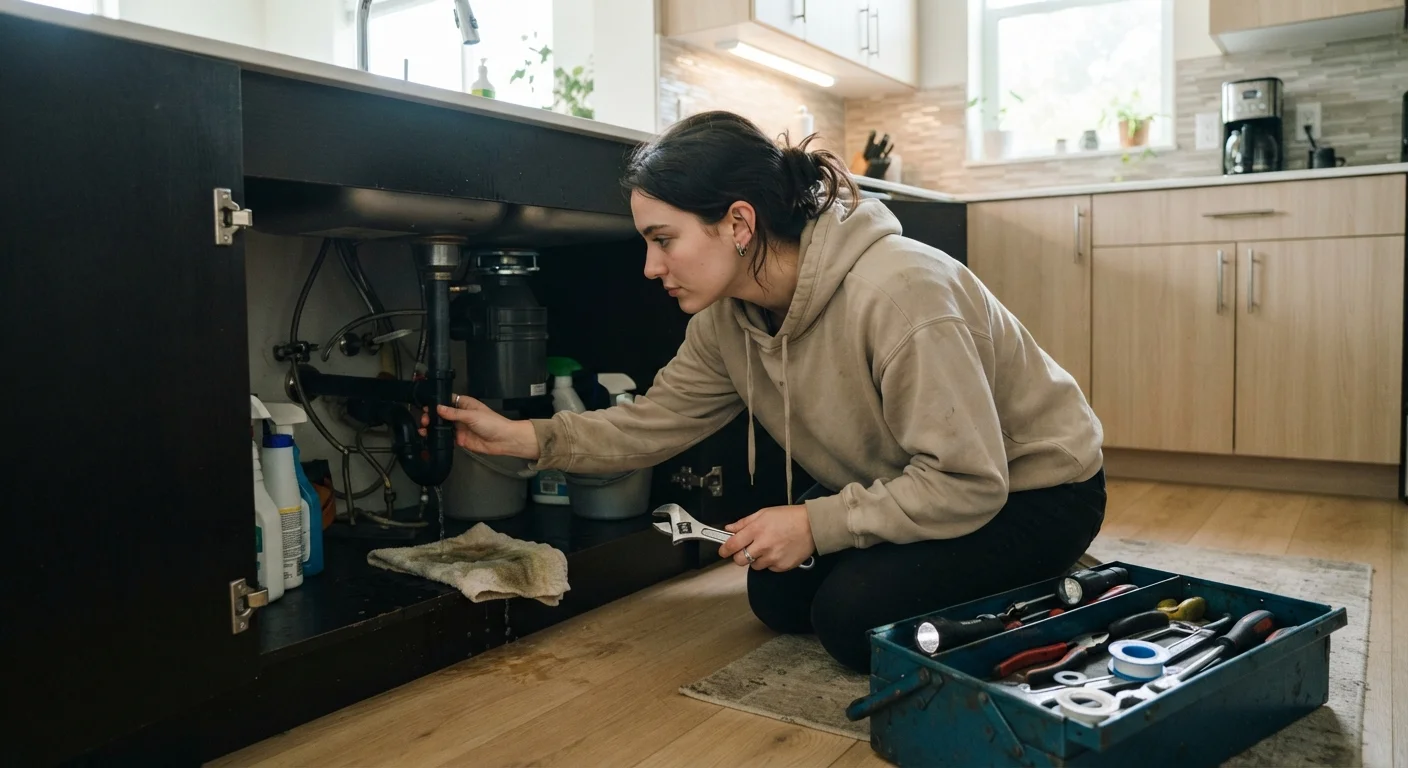
- Plumbing issues beyond a simple clog — running toilets, water under sinks, or anything involving pipes inside walls.
- Electrical problems — flickering lights connected to wiring, tripping breakers, or non-functioning outlets. Never attempt electrical work yourself; it is dangerous and typically requires a licensed electrician.
- Heating or cooling failures — HVAC systems are complex, and repairs may require permits.
- Structural damage — cracks in walls or ceilings, doors that won't close, or signs of water intrusion.
- Pest infestations — these often signal deeper building issues and are generally a landlord responsibility.
- Broken locks or security hardware — a safety issue that must be addressed immediately and professionally.
Never Attempt Electrical, Gas, or Structural Work
DIY electrical or gas work is illegal without proper licensing in most U.S. states and poses a serious risk of injury or fire. If you perform unauthorized work that causes damage, you may be held financially liable and could lose renter's insurance protection. When these systems are involved, always report to your landlord and wait for a licensed professional.
Attempting repairs on electrical, gas, or structural systems without proper licensing is illegal in most jurisdictions and could seriously injure you. Your landlord's insurance — and your renter's insurance — may also be invalidated if unauthorized work causes damage.
Once you've reported an issue, keep a record. Our article on reporting maintenance issues the right way explains exactly how to document and follow up effectively.
The Decision Framework at a Glance
Use the comparison below to quickly assess any repair situation you encounter.
| DIY Repair | Report to Landlord | |
|---|---|---|
| Examples | Nail holes, loose hinges, slow drain with plunger | Leaks, electrical faults, broken locks, HVAC failure |
| Skill level required | Basic, no license needed | Often requires licensed professional |
| Safety risk | Minimal when done correctly | High if attempted without expertise |
| Lease implications | Low risk if cosmetic and reversible | Risk of lease violation if unauthorized |
| Documentation needed | Notify landlord as courtesy | Written request with date and details |
| Deposit impact | Neutral or positive if done well | Protected if properly reported |
Regardless of where a repair falls, developing consistent habits around your rental is the single best way to reduce problems in the first place. For preventive strategies that keep your apartment in good shape year-round, explore our guide on habits that prevent common maintenance problems. And for a broader foundation in managing your first apartment, the Apartment Basics hub is a useful starting point.
This article provides general educational information for renters and is not legal advice. Tenant rights and landlord obligations vary by state and locality. Consult a local tenant rights organization or attorney if you have questions about your specific situation.
The content provided on our blog site traverses numerous categories, offering readers valuable and practical information. Readers can use the editorial team’s research and data to gain more insights into their topics of interest. However, they are requested not to treat the articles as conclusive. The website team cannot be held responsible for differences in data or inaccuracies found across other platforms. Please also note that the site might also miss out on various schemes and offers available that the readers may find more beneficial than the ones we cover.