

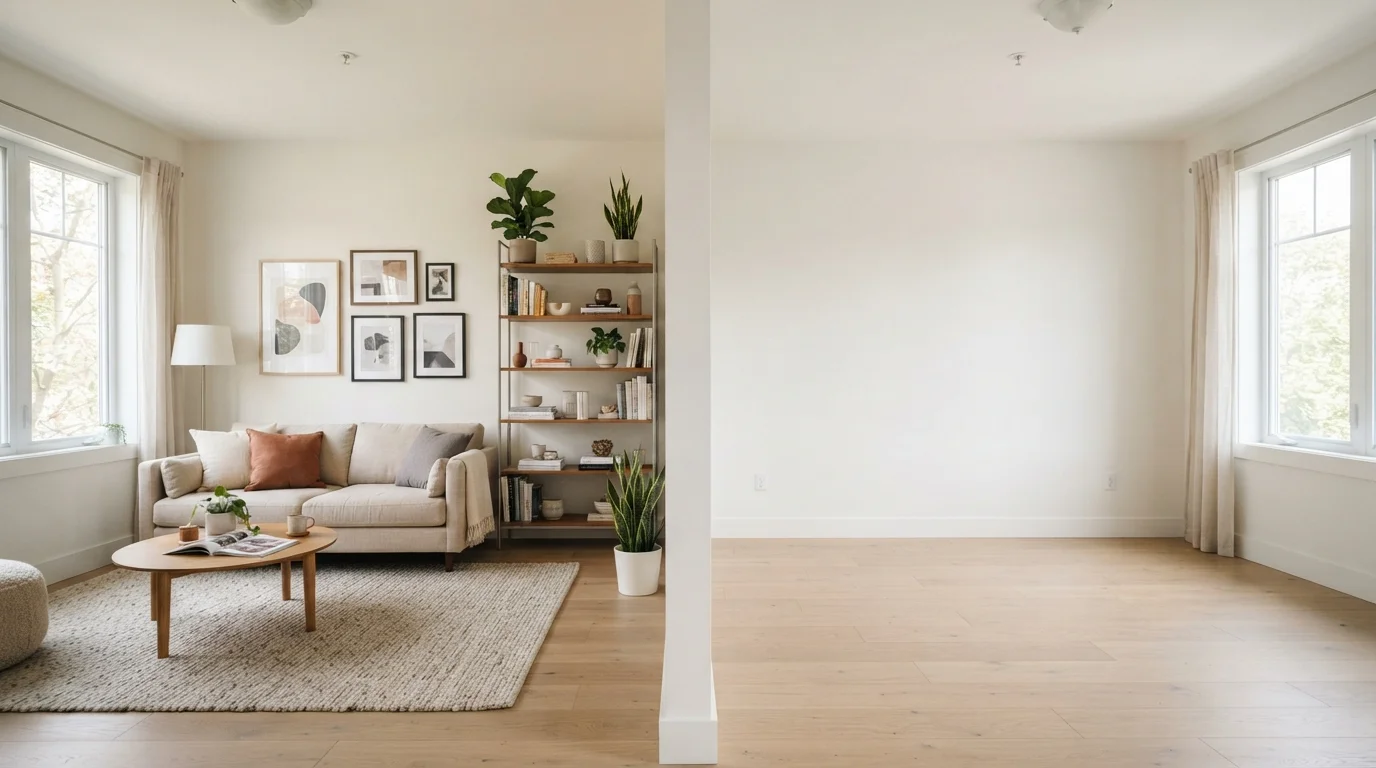
Our Verdict
Neither option is universally better — the right choice depends on your timeline, budget, and how settled you want to feel. Furnished apartments make sense when convenience and flexibility matter most, while unfurnished units reward students who plan to stay longer and want a space that genuinely feels like their own.
Students moving to a new city for a single semester or year will likely find furnished rentals the most practical, while those committing to a multi-year lease or who already own furniture will usually get more value from an unfurnished unit.
What the Two Options Actually Mean
A furnished rental comes equipped with the core items you need to live in it — typically a bed frame and mattress, sofa, dining table and chairs, and sometimes appliances like a microwave or washer. An unfurnished rental is delivered empty: four walls, built-in fixtures, and nothing else. Some units fall in between, described as "partially furnished," which might mean kitchen appliances are included but no bedroom furniture.
Before comparing the two, it helps to understand that "furnished" is not a standardised term. What one landlord calls furnished may be a full set of quality pieces; another might offer a worn-out futon and a scratched desk. Always ask for a complete inventory in writing before signing. For a broader look at what to evaluate when apartment hunting, see our complete introduction to apartment renting for students.
The Case for Furnished Rentals
No large upfront furniture spending required
Moving into a furnished apartment means you avoid spending hundreds of dollars on beds, sofas, and dining sets before your first paycheck or loan disbursement arrives.
Faster and simpler move-in process
Without furniture to transport, you can move in with personal bags alone — ideal for students travelling from another state or country.
Lower risk of furniture waste at lease end
You won't need to sell, donate, or haul away heavy items when you move out, which saves time and reduces stress at the end of the academic year.
Often easier to find near university campuses
Landlords in student-dense areas frequently offer furnished units because they understand the transient nature of student tenancies.
Furnished apartments are especially appealing for students moving to a new city with limited time, limited transport, or limited funds for upfront furniture purchases. You can move in with just your personal belongings — a significant advantage when you're flying across the country or relying on a car rather than a moving truck.
They also suit shorter lease terms well. If you're only staying for one semester, buying a bed frame you'll have to sell or store at the end makes little sense. The flexibility of furnished units often aligns with academic schedules, which is why they're common near university campuses.
What to Document on Move-In Day
Whether furnished or not, always walk through the unit and photograph every existing mark, stain, or damaged item before unpacking. Send these photos to your landlord in writing — email works well — so there is a timestamped record. This protects your security deposit when you eventually move out. Check your lease to see whether a formal move-in checklist is required.
The Case for Unfurnished Rentals
Higher monthly rent than comparable unfurnished units
Landlords typically charge a premium for furnishings, which can add $100–$300 or more per month depending on the market — a real cost over a full lease term.
Limited control over style and layout
You're living with the landlord's aesthetic choices and existing furniture placement, which can make it harder to feel at home in the space.
Potential liability for pre-existing furniture damage
If damage to a sofa or mattress isn't documented before move-in, you may face deposit deductions for wear you didn't cause.
Furniture quality is often unknown or inconsistent
"Furnished" is not a regulated standard, so the actual quality of items varies widely — some landlords provide durable pieces, others offer worn or uncomfortable basics.
Unfurnished apartments tend to carry lower monthly rent than their furnished counterparts. Over a 12-month lease, that difference can add up to a meaningful saving — sometimes enough to offset the cost of buying basic furniture secondhand.
The bigger draw for many students is control. You choose everything: the layout, the style, the quality. You're not working around someone else's oversized couch or living with a mattress of unknown age. If you're staying for two or three years, building your own space becomes more worthwhile. Check out our student apartment hunting priorities guide for tips on weighing cost against other key factors.
~30%
Premium furnished units often command over unfurnished
Real estate industry estimates suggest furnished rentals in urban markets can cost roughly 20–30% more per month than comparable unfurnished units in the same area.
$1,000+
Typical cost to furnish a one-bedroom from scratch
Consumer spending surveys indicate that outfitting a basic one-bedroom apartment with new furniture commonly costs over $1,000, though buying secondhand can reduce this significantly.
Key Questions to Ask Before Deciding
Use these questions to clarify which option suits your situation:
- How long is your lease? Leases under 12 months generally favour furnished; longer leases often favour unfurnished.
- Do you already own furniture? If you have pieces in storage or at home, an unfurnished unit lets you use them rather than paying for duplicates.
- What is the rent difference? Calculate the monthly premium for furnished, then compare it to what basic furniture would cost you secondhand.
- What condition is the existing furniture in? Inspect and photograph everything on move-in day. Damage you didn't cause can become a deposit dispute.
- Are you sharing with roommates? Shared apartments sometimes make furnished units even more practical since everyone benefits from shared pieces without negotiating who buys what. Our guide to choosing the right apartment type explores this dynamic further.
The content provided on our blog site traverses numerous categories, offering readers valuable and practical information. Readers can use the editorial team’s research and data to gain more insights into their topics of interest. However, they are requested not to treat the articles as conclusive. The website team cannot be held responsible for differences in data or inaccuracies found across other platforms. Please also note that the site might also miss out on various schemes and offers available that the readers may find more beneficial than the ones we cover.