

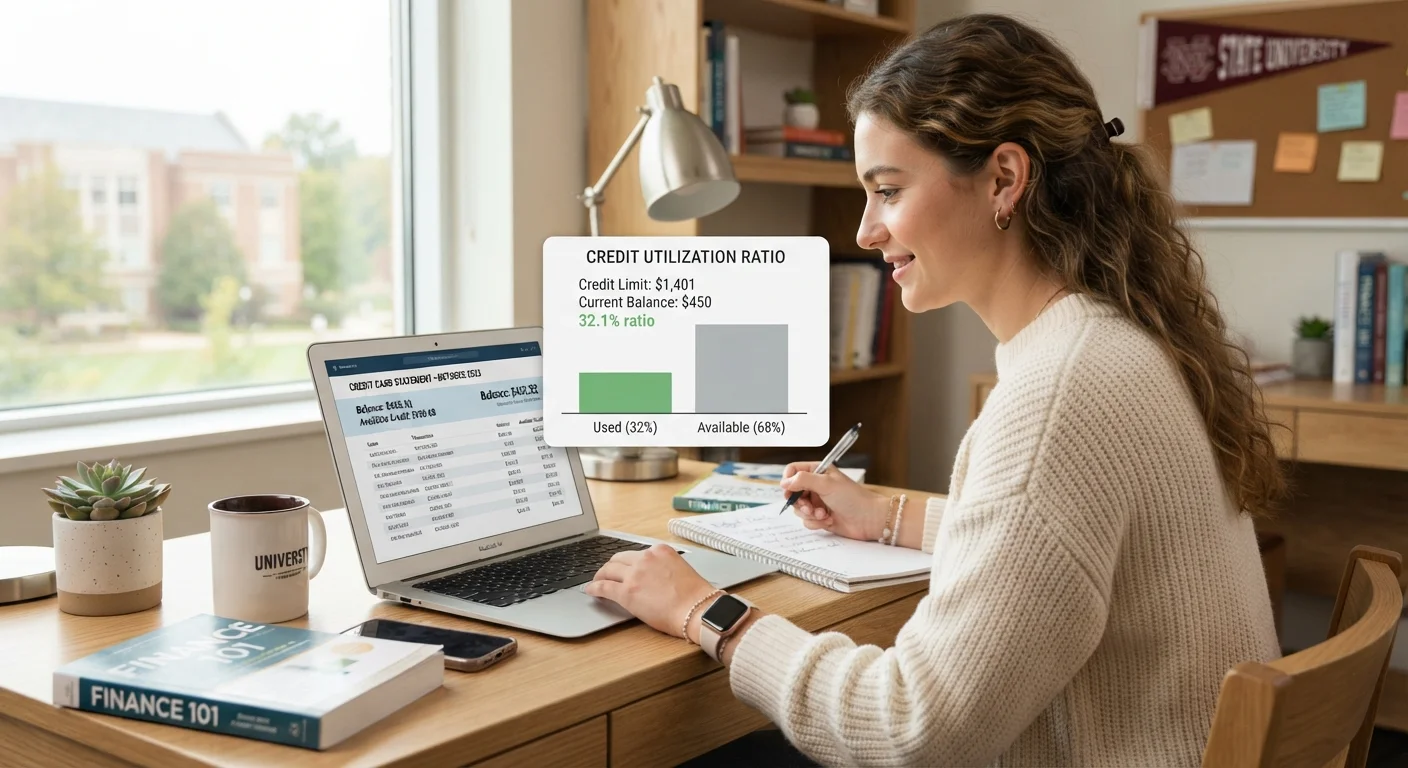
Why Utilisation Carries So Much Weight
When lenders look at your credit profile, they want to understand not just whether you pay on time, but how much of your available credit you're actively drawing on. Credit utilisation answers that question directly. According to FICO, amounts owed — of which utilisation is the primary driver — account for approximately 30% of your score, making it the second-most influential factor after payment history. For a deeper look at how these factors interact, see how your credit score is calculated.
From a lender's perspective, consistently high utilisation can signal financial stress or overreliance on credit, even if you never miss a payment. Conversely, low utilisation signals that you're using credit deliberately and have room to absorb unexpected expenses — both qualities that translate into a stronger score.
~30%
FICO score weight for amounts owed
FICO's published score factor breakdown identifies amounts owed — heavily driven by credit utilisation — as contributing roughly 30% to a FICO score.
<10%
Utilisation typical among highest scorers
FICO data shows that consumers with scores in the exceptional range (800+) carry average revolving utilisation well below 10%.
30%
Commonly cited upper threshold for healthy utilisation
Credit educators and consumer finance resources widely reference 30% as a practical ceiling to avoid negatively impacting your score, though lower is generally better.
How the Ratio Is Calculated — and Where Students Get Tripped Up
The formula itself is straightforward: divide your total outstanding credit card balances by your total credit limits, then multiply by 100. But students often miss two important nuances.
Per-card utilisation matters. Scoring models assess utilisation on each individual card, not just the combined figure. If you have one card maxed out and another with zero balance, the maxed card still pulls your score down — even if your overall ratio looks acceptable.
Balances are reported, not just paid. Your issuer reports your balance to the bureaus at the end of your statement cycle, not after you make a payment. Charging a large amount and paying it off before the due date still results in a high reported balance if you pay after the statement closes.
Pay Before the Statement Closing Date
Your payment due date and your statement closing date are not the same thing. The closing date is when your issuer tallies your balance and reports it to the credit bureaus — usually a few weeks before your bill is due. Making a payment before the closing date, rather than before the due date, can result in a lower balance being reported, which directly lowers your reported utilisation for that cycle.
These mechanics catch many first-time cardholders off guard. Understanding them early gives you a meaningful advantage. You can also explore common credit misconceptions students hold to avoid compounding these mistakes.
Practical Ways to Keep Utilisation Low on a Student Budget
Managing utilisation doesn't require a high income — it requires awareness and a few deliberate habits.
- Pay before your statement closes. If you know a large charge will land on your statement, make a mid-cycle payment to bring the balance down before it's reported.
- Make multiple small payments per month. Two or three small payments throughout the billing cycle keep your running balance lower at any given reporting point.
- Request a credit limit increase without increasing spending. If your issuer offers a limit increase and you don't raise your spending proportionally, your utilisation ratio automatically drops. Check whether the request triggers a hard inquiry first — see how hard and soft inquiries differ.
- Avoid closing cards you don't actively use. Keeping a card open preserves its limit in your total available credit. Closing it shrinks that pool and can spike your ratio. Learn more in ways students quietly damage their credit.
Pairing these habits with a clear spending plan helps ensure you're only charging what you can realistically pay. Budgeting basics for students is a useful companion resource if you're building that foundation.
Building good utilisation habits now also sets the stage for long-term credit health. The habits that protect a young credit profile over time are largely extensions of the discipline you build as a student.
This article is for general educational purposes only and does not constitute personalised financial or credit advice. For guidance specific to your situation, consider speaking with a certified financial counselor or your institution's financial aid office.
Frequently Asked Questions
Most credit experts suggest keeping utilisation below 30% as a general baseline. However, people with the highest scores typically carry utilisation closer to 10% or below. As a student with a modest credit limit, paying your balance in full each month is the most reliable way to stay within a healthy range.
Not necessarily. Credit card issuers typically report your balance to the credit bureaus once a month, usually on your statement closing date — not your payment due date. Your reported balance may reflect what you owed at that point, even if you paid it off in full afterward. Paying before the statement closes, not just before the due date, can result in a lower reported balance.
Yes. With a small credit limit, even modest spending can produce a high utilisation percentage. A $200 purchase on a $500-limit card results in 40% utilisation. This is one reason student cards often pose more risk to utilisation than higher-limit cards held later in life.
Utilisation is recalculated every time your lender reports a new balance — typically monthly. Unlike late payments, which can linger on your report for years, a high utilisation ratio can improve relatively quickly once balances are paid down. The effect is visible in the next reporting cycle.
Yes — closing a card removes that card's credit limit from your total available credit, which can raise your overall utilisation ratio even if your balances stay the same. This is one reason financial educators caution against closing credit accounts without thinking through the consequences first.
The content provided on our blog site traverses numerous categories, offering readers valuable and practical information. Readers can use the editorial team’s research and data to gain more insights into their topics of interest. However, they are requested not to treat the articles as conclusive. The website team cannot be held responsible for differences in data or inaccuracies found across other platforms. Please also note that the site might also miss out on various schemes and offers available that the readers may find more beneficial than the ones we cover.