

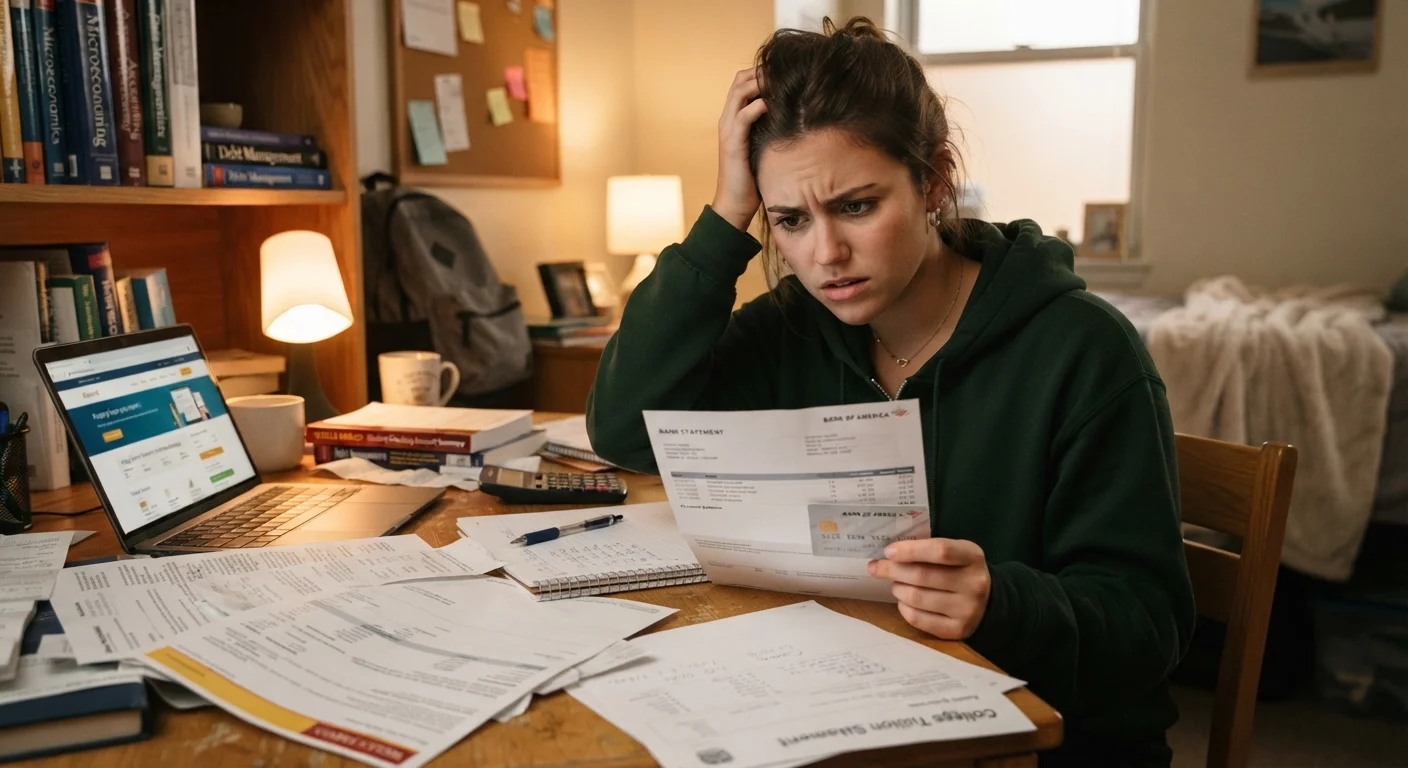
Why These Mistakes Are So Easy to Make
Most credit damage doesn't come from reckless spending. It comes from decisions that seem completely harmless — or even sensible — at the time. Students who are new to credit rarely receive a full explanation of how scoring models actually work, which means well-intentioned actions can quietly erode a score that took months to build.
Understanding the mechanics behind your credit report is the first line of defence. For a plain-language walkthrough of what your report actually contains, see Reading Your First Credit Report Without Getting Overwhelmed.
Closing your oldest credit card account.
Why it happens: Students often close a first card when they upgrade to a new one, assuming they no longer need it. It feels tidy and responsible to reduce the number of open accounts.
Letting a small, forgotten bill go to collections.
Why it happens: A streaming subscription, library fine, or gym membership can slip through when a student moves apartments and forgets to update billing details. Because the amount is small, it doesn't register as urgent.
Co-signing a loan without understanding the full liability.
Why it happens: A friend or family member asks for help qualifying for a car loan or lease, and agreeing feels like a low-risk favour. Many co-signers don't realise they are equally responsible for the debt.
Applying for several credit accounts in a short period.
Why it happens: Students comparison-shop for credit cards or apply for store cards at checkout without realising that each application typically triggers a hard inquiry on their report.
Maxing out a card even when you intend to pay it off immediately.
Why it happens: Students who pay their balance in full each month assume utilisation doesn't matter. In reality, card balances are often reported to credit bureaus on the statement closing date — before the payment is made.
The Numbers Behind the Damage
Credit scoring isn't arbitrary — it's driven by weighted factors, and knowing which ones carry the most influence helps you prioritise your behaviour.
35%
Of your FICO score is payment history
According to FICO's published scoring model breakdown, payment history is the single largest factor in a standard FICO score calculation.
7 years
How long a collections account stays on your report
Under the Fair Credit Reporting Act (FCRA), most negative items — including collections — can remain on a consumer's credit report for up to seven years.
30%
Recommended maximum credit utilisation ratio
Consumer finance educators and credit counsellors generally advise keeping utilisation below 30% of available credit to avoid score penalties, though lower is typically better.
Payment history alone accounts for 35% of a FICO score, making it the single most consequential factor. Even one missed payment at the start of your credit life can take years to age off your report. For a detailed look at exactly what happens after a late payment, read The Real Consequences of a Missed Payment in Your Early Credit Years.
Credit utilisation — how much of your available credit you're using — is the second-largest factor. Keeping that ratio in check takes consistent attention, especially on a student budget. Credit Utilisation: The Ratio That Quietly Shapes Your Score explains how to manage it effectively.
Co-Signing Is a Full Financial Commitment
When you co-sign a loan or lease, you are legally obligated to repay the full debt if the primary borrower does not. Missed payments will appear on your credit report and can damage your score just as if you had missed the payment yourself. This is not a technicality — lenders can pursue you directly for the balance. Never co-sign an account unless you are fully prepared to take on that obligation.
The good news is that mistakes made now are recoverable. Once you understand what to protect, you can build toward a strong credit profile by graduation day.
This article is for general informational and educational purposes only and does not constitute personalised financial or legal advice. Consult a qualified financial professional for guidance specific to your situation.
The content provided on our blog site traverses numerous categories, offering readers valuable and practical information. Readers can use the editorial team’s research and data to gain more insights into their topics of interest. However, they are requested not to treat the articles as conclusive. The website team cannot be held responsible for differences in data or inaccuracies found across other platforms. Please also note that the site might also miss out on various schemes and offers available that the readers may find more beneficial than the ones we cover.