

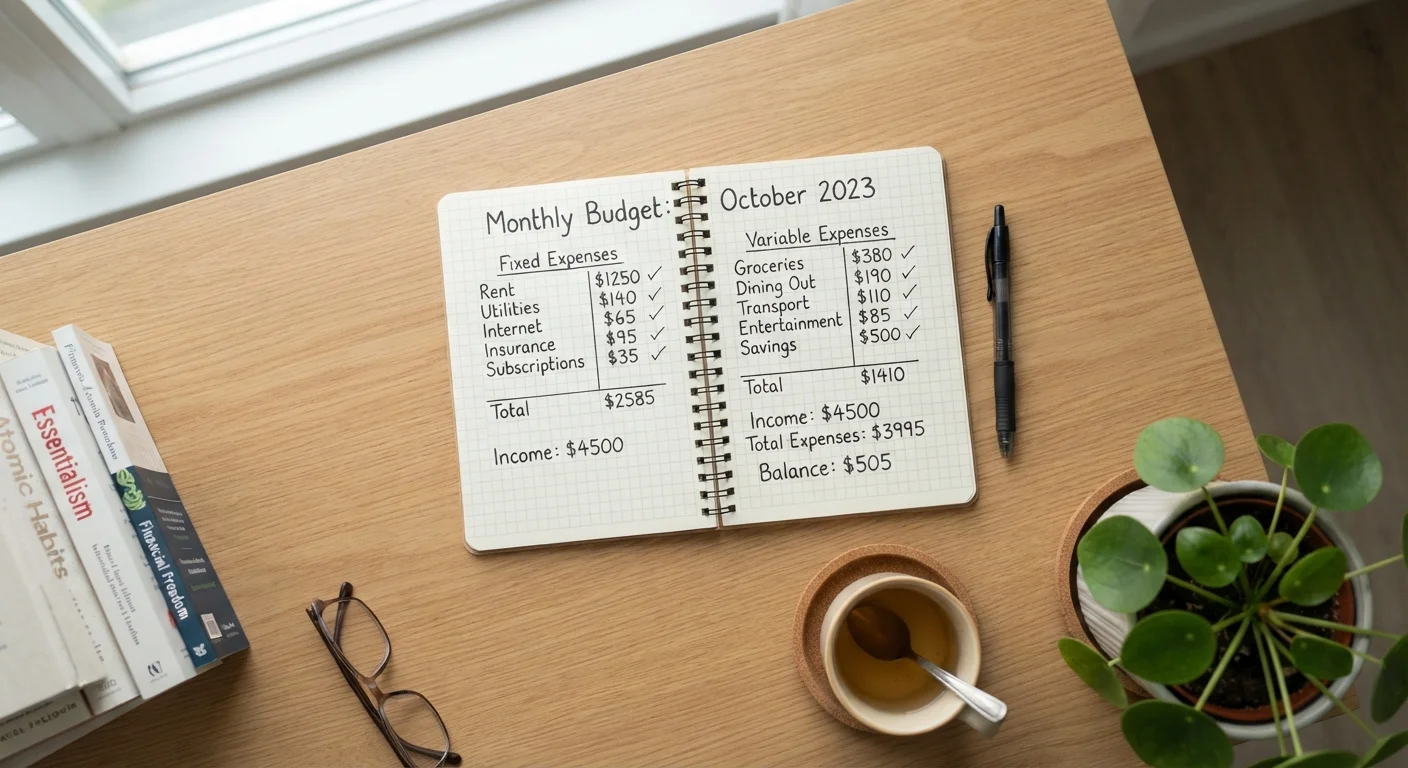
Option A
Fixed Expenses
The predictable, non-negotiable costs you can plan around.
Best for: Building the foundation of any budget because the amounts stay consistent month to month.
Option B
Variable Expenses
The flexible costs that shift based on your choices and circumstances.
Best for: Identifying where you have the most room to adjust spending when money gets tight.
What Makes an Expense Fixed or Variable?
Every dollar you spend falls into one of two broad categories: fixed or variable. The distinction isn't about how important a cost is — it's about how predictable it is.
A fixed expense is one that charges you the same amount on a regular schedule, regardless of how much you use it or what else is happening in your life. Rent is the most common example for students. Whether you spend the month studying at home or traveling every weekend, your rent bill arrives for the exact same amount. Other examples include tuition installment payments, renters insurance premiums, and loan minimum payments.
A variable expense changes in amount from period to period. Groceries, gas, dining out, clothing, and entertainment all fall here. You control — at least partially — how much these cost you each month. A week of cooking at home looks very different from a week of takeout, even though both are spending on food.
Understanding this difference matters because it changes how you plan. See our guide to spending categories for a practical framework for sorting all your costs once you've grasped this distinction.
Fixed vs. Variable: A Side-by-Side Comparison
The table below shows how the two expense types differ across the dimensions that matter most when you're building a budget.
| Criterion | Fixed Expenses | Variable Expenses |
|---|---|---|
| Amount each month | Same every billing cycle | Changes based on usage or choices |
| Examples | Rent, loan payments, insurance | Groceries, gas, dining, clothing |
| Predictability | High — easy to plan around | Low to moderate — requires tracking |
| Control you have | Low once committed | High — can adjust anytime |
| Budget role | Sets your spending floor | Provides flexibility and cut potential |
| Risk of surprise | Low | Higher if not tracked regularly |
One category worth noting is semi-variable expenses — costs that have a fixed component and a usage-based component. A cell phone plan with a base monthly fee is fixed, but data overage charges make part of the bill variable. Utilities often work the same way: a base connection fee is fixed, but how much electricity or gas you use drives the final number. Keep an eye on these hybrid costs, since they can surprise you if usage spikes.
How Each Expense Type Shapes Your Budget Strategy
Once you've sorted your costs, you can use each category differently in your planning.
Work with fixed expenses by listing them first
Add up every fixed expense you owe in a given month. This number is your spending floor — the minimum your income must cover before you make a single discretionary choice. If your income reliably exceeds this floor, you have room to budget for variable costs. If it doesn't, something in your fixed cost structure needs to change (a cheaper apartment, dropping a subscription service, refinancing a loan).
Use variable expenses as your adjustment lever
When money gets tight, you generally can't renegotiate your rent on short notice. But you can cook instead of ordering delivery, use the campus gym instead of a paid membership, or hold off on a clothing purchase. Variable expenses are where real-time financial decisions happen. Tracking them week by week — rather than just month to month — helps you catch overspending before it becomes a problem.
~33%
Average share of student budgets spent on housing
The U.S. Bureau of Labor Statistics consistently finds housing is the largest single expense category for young adults, making it the dominant fixed cost for most students.
3–5x
How much more dining out costs vs. cooking at home
Research from the USDA Economic Research Service estimates restaurant meals cost significantly more per serving than home-prepared food, underscoring why variable food spending is a key budget lever.
Students with irregular or part-time income face a particular challenge because their income floor shifts. Our article on budgeting with irregular income walks through strategies for keeping finances stable when paychecks vary. And if you're deciding on a budgeting method, zero-based budgeting vs. the envelope method compares two approaches that handle fixed and variable costs in very different ways.
This article is for general informational and educational purposes only and does not constitute personalized financial advice. Consider consulting a qualified financial professional for guidance specific to your situation.
The content provided on our blog site traverses numerous categories, offering readers valuable and practical information. Readers can use the editorial team’s research and data to gain more insights into their topics of interest. However, they are requested not to treat the articles as conclusive. The website team cannot be held responsible for differences in data or inaccuracies found across other platforms. Please also note that the site might also miss out on various schemes and offers available that the readers may find more beneficial than the ones we cover.