

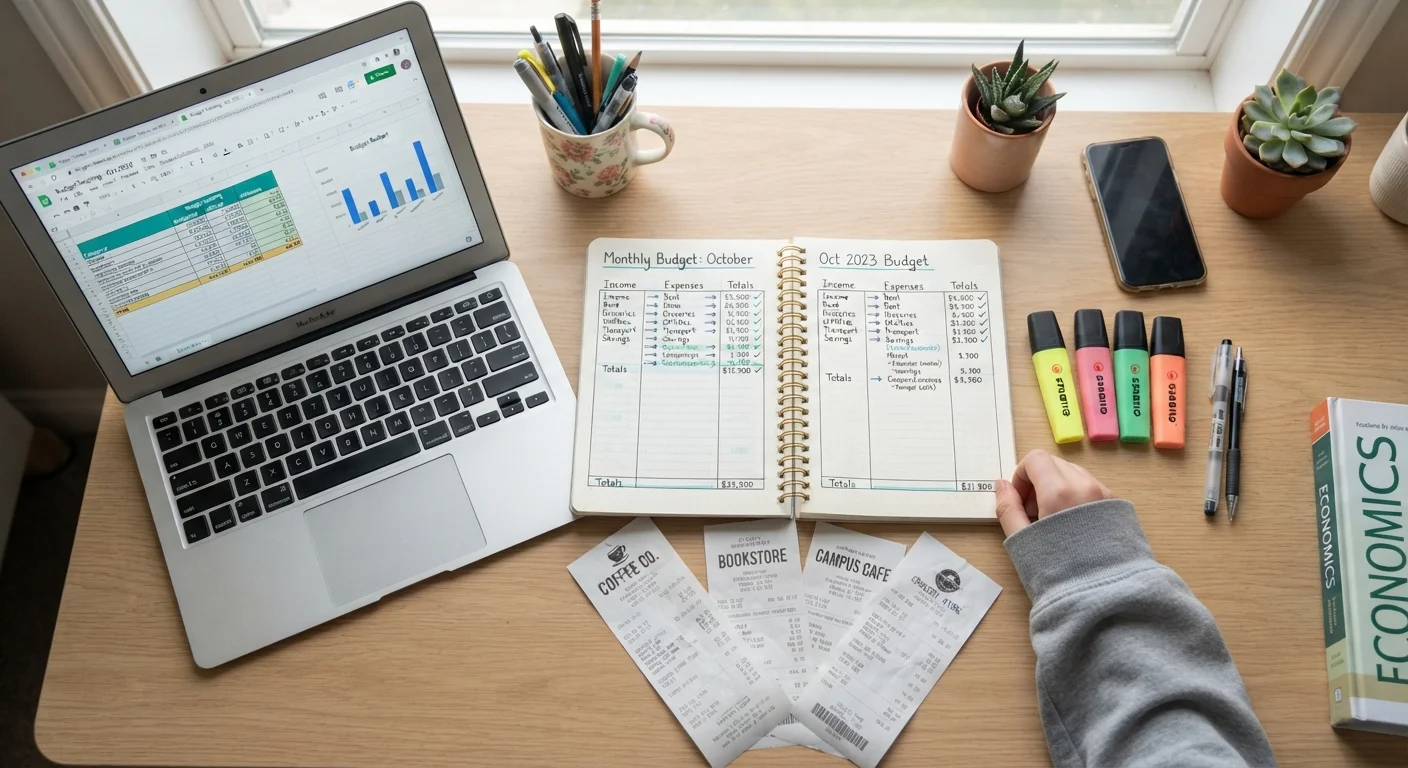
Why Categorizing Expenses Changes Everything
Looking at individual transactions tells you what you bought. Grouping those transactions into categories tells you how you live. Without categories, most people dramatically underestimate what they spend in certain areas — especially on small, frequent purchases like coffee, snacks, or streaming services.
When you label each expense, a month's worth of spending becomes a readable map. You can see at a glance whether housing eats up more than half your income, whether dining out costs more than groceries, or whether subscriptions have quietly multiplied. That visibility is the foundation of every sound financial decision. If you have not yet taken stock of your current finances, the spending audit checklist is a useful place to begin before you start organizing categories.
33%
Of income spent on housing by typical renters
The U.S. Bureau of Labor Statistics Consumer Expenditure Survey consistently finds housing is the single largest expense category for most households, often accounting for roughly a third of spending.
$3,000+
Average annual student food expenditure
According to the Education Data Initiative, college students spend an estimated $3,000 or more per year on food when combining dining hall plans, groceries, and restaurant spending.
60%
Of adults who do not track spending regularly
A NFCC (National Foundation for Credit Counseling) survey found that a majority of U.S. adults do not regularly monitor their spending, making it difficult to identify problem areas.
The Core Spending Categories Most Students Need
While your exact categories should match your life, the following four areas cover the majority of most students' spending:
- Housing: Rent, utilities, renter's insurance, and any shared household costs. This is typically the largest single expense for students living off campus.
- Food: Groceries and dining out are worth tracking separately because they behave differently. Groceries tend to be more predictable; restaurant and delivery spending is where many students find unexpected leakage.
- Transportation: Whether that means a bus pass, gas, car insurance, or occasional rideshare charges, transportation costs add up quickly and vary by location.
- Personal and discretionary: This catch-all covers clothing, entertainment, hobbies, personal care products, and anything that does not fit neatly elsewhere.
Beyond these four, consider adding categories for health and medical (copays, prescriptions, gym fees), education supplies (textbooks, software, lab fees), and savings or debt repayment if those apply to your situation.
Fixed vs. Variable: The Distinction That Shapes Your Budget
Every expense in your budget is either fixed — the same amount each month — or variable — an amount that changes. Rent is fixed. Grocery bills are variable. This distinction matters because fixed costs are largely non-negotiable in the short term, while variable costs are where you actually have room to make adjustments.
When students find themselves short on money mid-month, the instinct is often to look at big-ticket items. But the more actionable move is to examine variable categories: food, entertainment, and personal spending can usually be trimmed without changing your living situation. Understanding needs vs. wants within each category deepens this analysis further.
“A budget is telling your money where to go instead of wondering where it went.”
— Dave Ramsey, Personal finance author and radio host
Building Your Own Category System
There is no universally correct list of spending categories. The goal is a system specific enough to be informative and simple enough to maintain. Here is a practical approach for beginners:
- Collect one month of transactions from your bank account or payment apps.
- Write a category next to each transaction — do not overthink it. Use plain labels like 'groceries,' 'gas,' 'Netflix,' or 'doctor visit.'
- Add up each category and note the total. Look for any number that surprises you.
- Refine for next month. If a category feels too broad, split it. If two categories overlap constantly, merge them.
Once you have your categories, you are ready to build an actual budget around them. The complete student budgeting guide walks through that next step in detail, including how to set realistic spending limits for each category you have identified.
Keeping those categories accurate over time is a habit, not a one-time task — and it is simpler than most students expect. The habits that keep a budget on track article covers low-effort routines that make monthly tracking sustainable.
This article provides general financial education and is not personalized financial advice. For guidance specific to your situation, consider speaking with a qualified financial counselor or your school's student financial services office.
Frequently Asked Questions
Most financial educators suggest starting with five to eight categories — enough to see patterns without becoming overwhelming. Common ones include housing, groceries, dining out, transportation, personal care, and entertainment. You can always add more detail later once the habit of tracking is established.
Fixed expenses are costs that stay the same each month, like rent or a subscription fee. Variable expenses change month to month, such as groceries or gas. Understanding this distinction helps you identify which parts of your budget are flexible when money gets tight.
Yes — if you are currently making payments, loan repayment should be its own category. If your loans are in deferment while you study, it is still worth noting them as a future obligation. For more context, see our explanation of <a href="/student-finance/student-loans">how student loans work</a>.
Pick the category that best represents the primary purpose of the purchase and apply it consistently. For example, a meal delivery app charge could go under 'food' or 'dining out' — either works, as long as you use the same rule every time. Consistency matters more than perfection.
No. A simple spreadsheet or even a handwritten notebook works well for beginners. Many students find that manually logging expenses actually increases their awareness of where money is going, which is the whole point of categorizing in the first place.
The content provided on our blog site traverses numerous categories, offering readers valuable and practical information. Readers can use the editorial team’s research and data to gain more insights into their topics of interest. However, they are requested not to treat the articles as conclusive. The website team cannot be held responsible for differences in data or inaccuracies found across other platforms. Please also note that the site might also miss out on various schemes and offers available that the readers may find more beneficial than the ones we cover.