

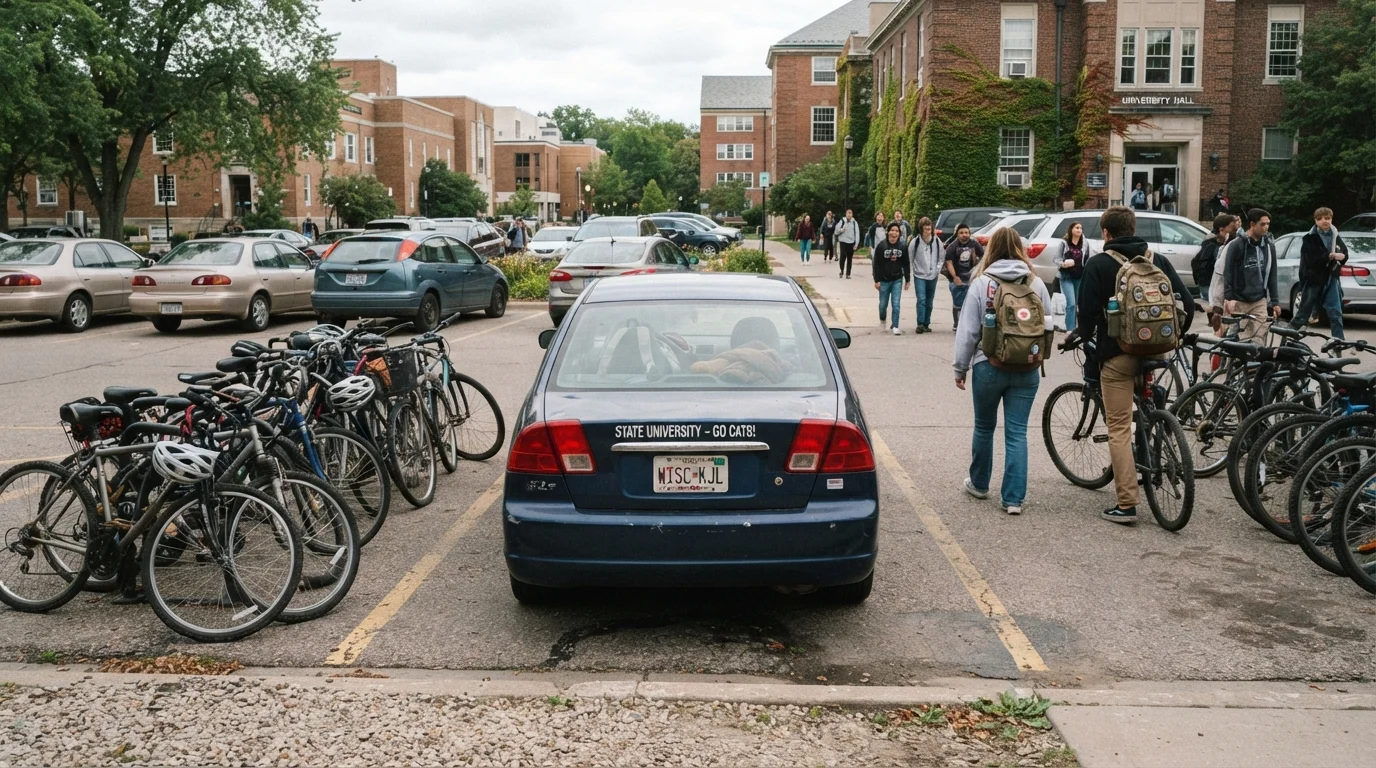
Why the Sticker Price Is Only the Beginning
Many students focus almost entirely on the purchase price when considering a car — but that number represents only a fraction of what you'll actually spend. The ongoing costs of owning and operating a vehicle are substantial, and they don't pause during exam week or winter break.
Before committing, it's worth understanding every cost category. Our introduction to car ownership costs offers a useful starting point. This guide goes deeper, giving you the numbers and frameworks to build a genuinely accurate budget.
$1,000–$3,000+
Estimated annual auto insurance cost for drivers under 25
Young drivers typically pay significantly higher premiums due to statistical risk factors; exact rates vary by state, vehicle, and driving history.
$150–$300
Typical annual cost of a campus parking permit
Permit prices vary widely by institution; some urban universities charge considerably more, while commuter schools may offer lower rates.
$500–$700
Average annual routine maintenance cost for a used vehicle
Includes oil changes, tire rotations, air filters, and other scheduled upkeep; older vehicles may trend higher.
Auto Insurance: Your Biggest Recurring Expense
For most students under 25, auto insurance is the single largest monthly car expense — often more than fuel. Insurers classify young drivers as higher-risk based on statistical claims data, which means premiums are elevated regardless of your individual driving record.
Coverage requirements vary by state, but most experts recommend carrying more than the legal minimum. Liability-only coverage is cheaper but leaves you responsible for your own vehicle damage. Comprehensive and collision coverage add cost but provide meaningful protection, especially if you're financing a vehicle.
Insurance Rates Are Highly Individual
The figures referenced in this article are general ranges drawn from publicly available industry data. Your actual premium depends on your driving record, the specific vehicle, your ZIP code, coverage levels chosen, and the insurer. Always get multiple quotes and read policy documents carefully. This article provides general educational information, not personalized insurance advice — consult a licensed insurance agent for guidance specific to your situation.
Factors that influence your premium include: your age and driving history, the vehicle's make, model, and year, where you park overnight (a campus zip code vs. a home address), and the deductible amount you choose.
Ask your insurer about a 'good student' discount — many providers offer reduced premiums for full-time students maintaining a B average or better.
This discount is widely available but frequently unclaimed because students simply don't know to ask; it can reduce annual premiums by 10–15% in many cases.
Set up a dedicated 'car fund' savings account and auto-deposit a fixed amount each month to cover both predictable maintenance and unexpected repairs.
Having a dedicated buffer means a $300 repair doesn't derail your rent payment — it's the single habit most experienced student car owners wish they'd started earlier.
Fuel Costs: Estimating What You'll Actually Spend
Fuel is your most variable ongoing cost — it fluctuates with gas prices and how much you actually drive. To estimate your monthly spend, use this simple formula: (Miles driven per month ÷ Vehicle MPG) × Local gas price per gallon.
A student driving 600 miles per month in a vehicle getting 30 MPG pays for roughly 20 gallons — about $60–$80 per month at typical prices, though this varies significantly by region and fuel price swings.
If you're weighing how much you'll really drive day-to-day, our full picture of campus commuting breaks down realistic mileage scenarios and helps you decide if daily driving makes financial sense.
Routine Maintenance and Unexpected Repairs
Routine maintenance is predictable and budgetable. Key scheduled items for most vehicles include:
- Oil changes: Every 5,000–7,500 miles for conventional oil; 7,500–10,000 for synthetic (check your owner's manual)
- Tire rotations: Typically every 5,000–7,500 miles
- Air and cabin filters: Annually or per manufacturer schedule
- Brake inspections: At least once per year
Unexpected repairs are harder to predict but statistically inevitable — especially with older, higher-mileage vehicles common in student budgets. A realistic emergency repair fund of $500–$1,000 is a responsible baseline.
Don't Skip Routine Maintenance to Save Money
Delaying oil changes, ignoring tire pressure, or skipping scheduled service may feel like a budget move but routinely leads to much larger repair bills down the line. A $60 oil change skipped can contribute to engine wear that costs thousands to address. When in doubt about a maintenance task, consult a qualified mechanic rather than putting it off.
For a broader look at the costs students frequently overlook, see our companion piece on car costs most students don't budget for.
Use Your Campus Resources
Many universities with automotive or vocational programs offer free or low-cost basic inspections and services like oil changes or tire rotations performed by supervised students. Check with your campus student services office or facilities department — it's a legitimate way to reduce routine maintenance costs.
Parking, Registration, and Hidden Campus Fees
Campus-specific costs catch many students off guard. Depending on your school and city, these can add up to several hundred dollars per year:
- Campus parking permits: Commonly $150–$600+ annually, depending on the institution and permit tier
- Vehicle registration: Varies by state, typically $50–$200 per year
- Emissions or safety inspections: Required annually in many states, usually $20–$100
- Parking tickets: A single fine can erase a week's fuel savings — campus enforcement is often strict
The Campus Commuting hub has practical guidance on navigating permit systems and minimizing parking-related costs at different types of institutions.
Never Drive Uninsured — Even Briefly
Allowing your auto insurance to lapse — even for a few weeks during a semester break — can result in license suspension, fines, and significantly higher premiums when you reinstate coverage. In every U.S. state, driving without at least minimum liability insurance is illegal. If you're going home for summer, talk to your insurer about a storage or reduced-use policy rather than canceling outright.
Building a Realistic Monthly Car Budget
A useful monthly car budget accounts for every category — not just the ones you remember when prices spike. Here's a simple framework:
| Cost Category | Estimated Monthly Range |
|---|---|
| Auto insurance | $85–$250 |
| Fuel | $60–$150 |
| Routine maintenance (averaged) | $40–$60 |
| Parking permit (amortized) | $15–$50 |
| Registration & fees (amortized) | $10–$20 |
| Emergency repair fund | $40–$80 |
Adding these up, a realistic total often falls in the range of $250–$600 per month — a significant portion of a student budget that deserves careful planning before you commit.
For a more detailed category-by-category reference with annual figures, see student car costs at a glance. And if you're still deciding whether a car is the right financial move, our financial case for and against car ownership offers a grounded, balanced perspective.
For long-term strategies to keep costs manageable across all four years, keeping a car affordable through your degree is worth reading alongside this guide.
“The total cost of vehicle ownership is consistently underestimated by first-time buyers, who tend to focus on the purchase price while underweighting insurance, fuel, and maintenance over time.”
— Consumer Financial Protection Bureau, U.S. federal agency providing consumer financial education
This article provides general educational information about vehicle ownership costs and is not personalized financial or insurance advice. Costs vary significantly based on individual circumstances, location, vehicle, and provider. Consult a licensed professional for guidance specific to your situation.
The content provided on our blog site traverses numerous categories, offering readers valuable and practical information. Readers can use the editorial team’s research and data to gain more insights into their topics of interest. However, they are requested not to treat the articles as conclusive. The website team cannot be held responsible for differences in data or inaccuracies found across other platforms. Please also note that the site might also miss out on various schemes and offers available that the readers may find more beneficial than the ones we cover.