

The Costs That Don't Show Up on the Window Sticker
Buying or bringing a car to college feels like the biggest financial hurdle — but for most students, the ongoing fees that follow are what quietly drain a budget. Gas and insurance get most of the attention, yet a cluster of campus-specific charges can easily add several hundred dollars a year to your total cost of ownership.
This list covers the recurring and one-time fees that student drivers most commonly encounter once their car arrives on or near campus. For a broader look at ownership costs beyond parking, see our breakdown of car ownership costs students often miss. Understanding every line item before the semester starts is the most reliable way to avoid a budget shortfall later.
Campus Parking Permits
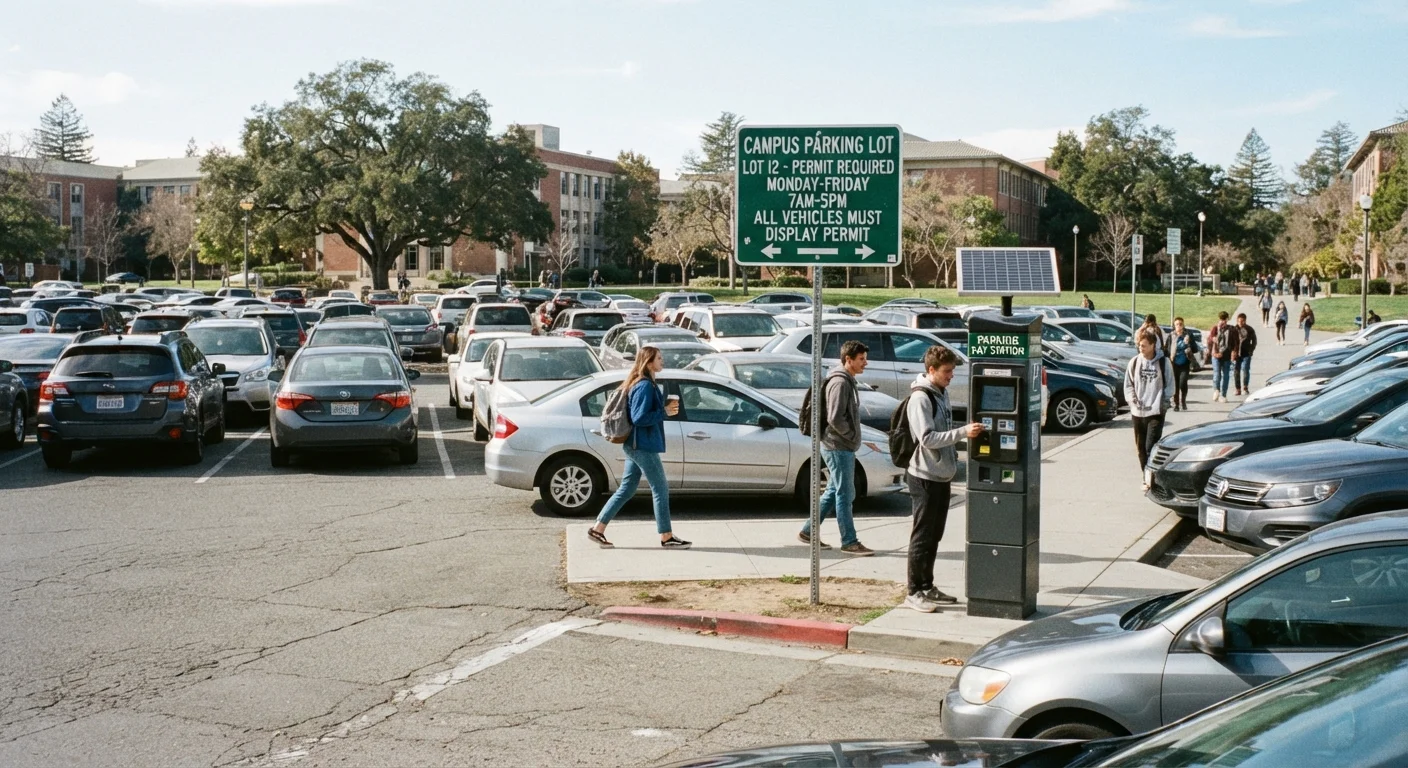
Most colleges and universities require any vehicle parked on campus to display a valid permit. Annual permit costs vary considerably — community college lots may charge under $100 per year, while large research universities in urban areas can charge $500–$900 or more for a standard student permit. Residential students often pay more than commuters, and premium or covered spaces in garages typically cost extra on top of the base permit tier.
Waitlists are common at competitive schools, which means freshmen and even upperclassmen may not be able to secure a permit at all for a given year. For a detailed explanation of how campus permit systems typically work, see campus parking permits explained.
Urban university parking permits can exceed $800 annually — a cost many students don't anticipate.
Campus and Municipal Parking Fines
Parking violations are one of the most common unbudgeted expenses for student drivers. Fines for expired meters, parking in the wrong zone, or missing a posted restriction can range from $25 to well over $100 per ticket, depending on the campus or city. Unpaid fines often accumulate late fees, and many institutions place holds on student accounts — preventing course registration or transcript release — until outstanding parking debt is cleared.
It's also worth noting that common assumptions about campus enforcement, such as grace periods or easy appeals, are frequently incorrect. The parking myths that cost students money article addresses several of these misconceptions directly.
Unpaid campus parking fines can trigger academic holds that block course registration.
City or Neighborhood Residential Parking Permits
Students who live off campus in urban or dense suburban neighborhoods frequently encounter city-issued residential parking permit requirements. These permits allow parking on designated neighborhood streets without a time limit — but they come with their own costs, typically ranging from $25 to $150 per year depending on the municipality. Some cities issue them per vehicle, while others tie them to a home address, which can complicate matters for students renting rooms or sharing houses.
Off-campus students sometimes assume street parking near their apartment is free, only to discover a permit zone requirement after receiving a citation. Check city parking authority websites before assuming any street is unrestricted.
City residential parking permits are a common surprise expense for students living off campus.
Paid Parking Structures and Daily Lots
On days when a student permit doesn't cover a specific lot — or when the permitted lot is full — students often end up paying for hourly or daily parking in a campus garage or metered surface lot. Even at modest rates of $2–$5 per hour, these costs accumulate quickly if a student relies on paid parking even a few times a week throughout the semester.
Some campuses sell a limited number of garage passes or daily-rate books at a discount, which can be worth investigating if paid parking is a regular necessity. Factor this in especially during finals week or other high-demand periods when standard lots fill earlier than usual.
Paying for parking just twice a week at $4 per hour can add over $200 to your semester costs.
Vehicle Registration and Renewal Fees
State vehicle registration is a mandatory annual cost in every U.S. state, and the amount varies widely — from around $30 in some states to over $200 in others, with fees sometimes tied to the vehicle's weight, age, or value. Students who move to a new state for college may also face a one-time re-registration requirement if the vehicle is kept there for an extended period, which can involve additional fees and documentation.
Registration renewal notices sometimes go to a parent's home address, meaning students can accidentally miss the deadline and face late penalties. Update your address with the DMV or arrange for forwarding to stay current.
State vehicle registration can cost $30 to over $200 annually, and missing the deadline adds penalties.
Emissions Testing and State Safety Inspections
Many states require periodic emissions tests and/or safety inspections to keep a vehicle legally registered. These inspections typically cost between $20 and $75 depending on the state and the type of test required. If the vehicle fails — due to a faulty oxygen sensor, worn brake components, or another issue — the repair cost to achieve a passing result can be considerably higher.
Students who buy an older or high-mileage vehicle should factor in the possibility of a failed inspection and budget accordingly. Attempting to drive with an expired inspection sticker is a traffic violation in most states and can result in fines that exceed the cost of the inspection itself.
A failed emissions or safety inspection can turn a $40 test into a costly unplanned repair.
Campus Vehicle Registration or Decal Fees
Separate from the parking permit, some institutions charge an administrative fee simply to register a vehicle with campus security or the parking office. This is different from the state DMV registration — it's an institutional record-keeping charge that may be required regardless of whether the student purchases a parking permit. These fees are typically modest (often $10–$30), but they represent an additional line item that students may not anticipate.
Check your institution's parking office website for the complete list of required registrations, as failing to register a vehicle can result in ticketing even when a valid permit is displayed.
Some schools charge a separate vehicle registration fee on top of the cost of a parking permit.
Building a Realistic Campus Car Budget
When you add up permit fees, potential fines, registration renewals, and city parking costs, the annual total can be surprisingly steep — often rivaling a month of insurance payments. The students who manage campus car costs most effectively tend to do one thing differently: they research the specific fee schedule for their institution before committing to bringing a car.
Request the Full Fee Schedule Before Semester Starts
Most campus parking offices publish their complete fee schedules, zone maps, and permit application timelines online. Review this information before school begins — not after your first ticket. Knowing permit costs, grace period rules, and enforcement hours in advance lets you make an informed decision about whether bringing a car is financially worthwhile for your specific situation.
For a complete picture of what campus driving actually costs month to month, the true cost of commuting by car article walks through fuel, wear, and fees together. And if you want a fast reference for typical annual ranges across all cost categories, the student car costs at a glance reference is a useful starting point for building your own budget.
This article provides general informational guidance only. Fee amounts, permit rules, and registration requirements vary by institution, city, and state. Always verify current costs directly with your campus parking office and relevant government agencies before making financial decisions.
The content provided on our blog site traverses numerous categories, offering readers valuable and practical information. Readers can use the editorial team’s research and data to gain more insights into their topics of interest. However, they are requested not to treat the articles as conclusive. The website team cannot be held responsible for differences in data or inaccuracies found across other platforms. Please also note that the site might also miss out on various schemes and offers available that the readers may find more beneficial than the ones we cover.