

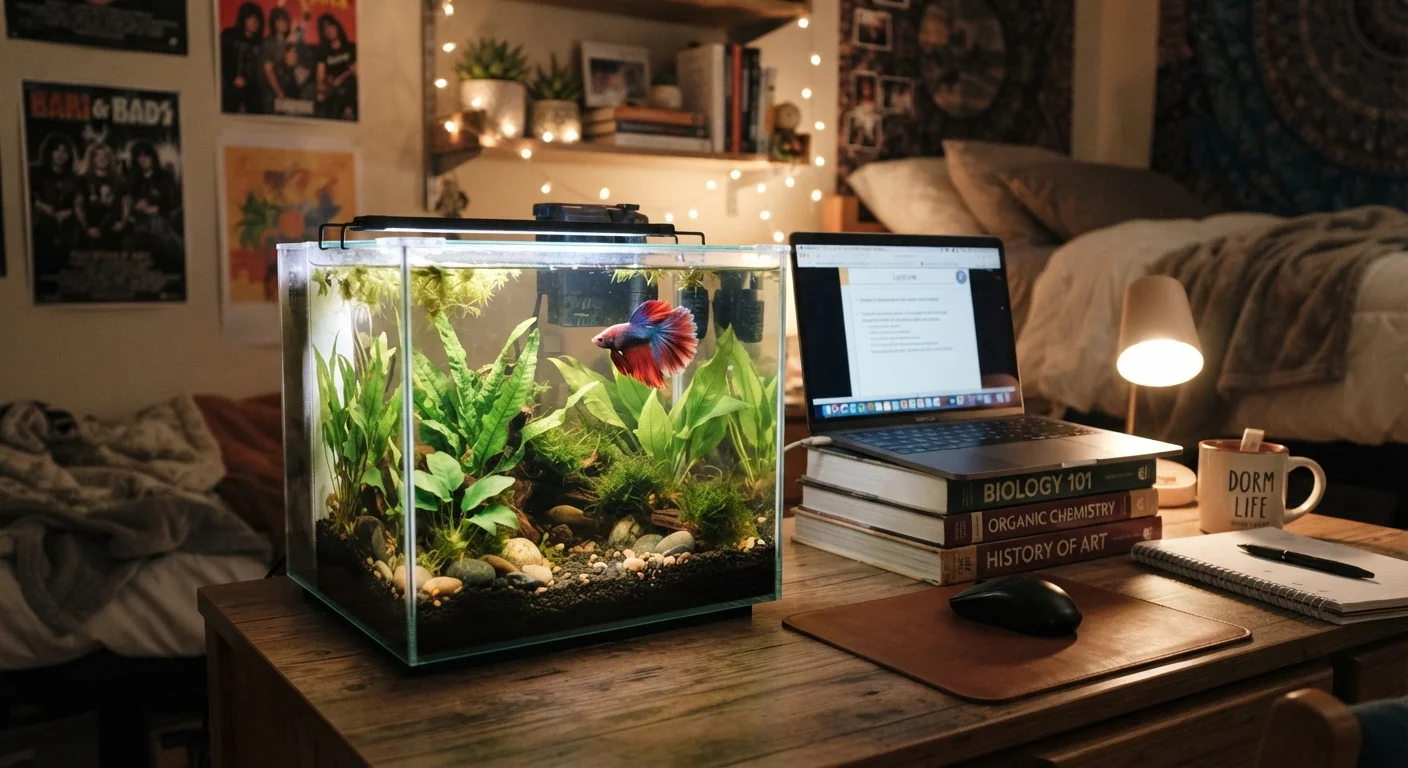
The Betta Myth That Sets Students Up to Fail
Walk into any pet store and you'll likely see bettas displayed in small cups - a retail practice that has unfortunately shaped a widespread myth: that these fish are fine living in tiny, unfiltered containers. They are not. Those cups represent temporary holding conditions, not habitable environments.
The truth is that bettas are active, intelligent fish that can live three to five years with proper care. In a dorm setting, they can be genuinely rewarding pets - but only if you go in with accurate expectations. For students exploring their options, this overview of small pets suited to dorm life is a useful starting point for comparison.
Check Your Housing Policy First
Many colleges allow fish tanks in residence halls, but tank size limits and other restrictions vary widely. Some schools cap aquariums at 10 gallons; others prohibit them in certain buildings. Always review your specific housing agreement or contact your residence life office before purchasing any equipment. Policies are not uniform even within the same university.
What a Proper Betta Setup Actually Requires
A healthy betta habitat is not complicated, but it does involve several non-negotiable components:
- Tank size: A minimum of 5 gallons. Smaller volumes cause rapid water quality swings that stress and weaken fish.
- Filtration: A low-flow filter removes ammonia and waste. Without it, harmful toxins build up within days.
- Heating: A submersible aquarium heater maintains the 76-82°F range bettas need. Dorm rooms fluctuate in temperature, especially near windows or vents.
- Water conditioner: Tap water contains chlorine and chloramines that are toxic to fish. A dechlorinating conditioner must be used with every water change.
- Cycling the tank: Before adding a fish, the tank should go through a nitrogen cycle - a process that establishes beneficial bacteria to process waste. This typically takes two to four weeks.
Setup costs generally fall between $50 and $100 when purchasing equipment individually. For a broader cost comparison across common dorm pets, see this breakdown of dorm pet expenses.
3-5 years
Average betta lifespan with proper care
Bettas kept in appropriate conditions - heated, filtered tanks with regular water changes - commonly live three to five years, significantly longer than those kept in inadequate environments.
5 gallons
Recommended minimum tank size for one betta
Most fish care resources and aquatic veterinarians cite 5 gallons as the practical minimum for maintaining stable water chemistry for a single betta fish.
76-82°F
Ideal water temperature range for bettas
As tropical fish, bettas require consistently warm water; dorm room temperatures alone are rarely sufficient to maintain this range without a dedicated aquarium heater.
Daily and Weekly Care: What Your Schedule Needs to Accommodate
Bettas are sometimes marketed as zero-effort pets. The reality is closer to low-effort - which is meaningfully different. Here's what routine care looks like:
- Daily (5-10 minutes)
- Feed your betta once or twice in small amounts. Observe its behavior and appearance for any changes. Check that the heater and filter are running.
- Weekly (20-30 minutes)
- Perform a 25-30% partial water change using dechlorinated, temperature-matched water. Gently clean the substrate (gravel or sand) with a siphon to remove waste.
- Monthly
- Rinse filter media in old tank water (never tap water, which would kill beneficial bacteria). Check equipment for wear.
This level of commitment is realistic for most students - but it does require consistency, even during exam weeks. Understanding what low-maintenance truly means for dorm pets can help set the right expectations before you commit.
Health Monitoring and When to Seek Help
One of the most valuable habits you can develop as a new fish owner is learning what your betta looks like when healthy - so you notice quickly when something changes. A healthy betta is active, has vibrant color, holds its fins open, and eats readily.
Watch for these warning signs:
- Fins that appear clamped, frayed, or have white edges (possible fin rot)
- Bloating or pinecone-like raised scales (associated with a serious condition called dropsy)
- White spots resembling salt grains (a symptom of ich, a parasitic infection)
- Lethargy, hiding, or loss of appetite
Water quality problems cause the majority of betta health issues. If you notice symptoms, test your water parameters first using an aquarium test kit. A veterinarian with aquatic animal experience should be consulted for persistent or worsening symptoms. Common mistakes first-time dorm pet owners make often center on delayed responses to these early warning signs.
This article provides general pet care information for educational purposes only. It is not a substitute for advice from a qualified veterinarian. If your fish shows signs of illness, consult a professional with aquatic animal experience.
Frequently Asked Questions
Most aquatic veterinarians and fish care organizations recommend a minimum of 5 gallons for a single betta. Smaller containers limit water quality stability and restrict the fish's movement, leading to stress and illness. A 5- to 10-gallon tank is manageable on a dorm desk and provides a much healthier environment.
Yes, both are necessary. Bettas are tropical fish that need water temperatures between 76°F and 82°F, which room temperature alone rarely sustains consistently. A gentle filter helps remove waste and maintain water quality, though it should produce low flow since bettas prefer calmer water.
Feed your betta once or twice a day, offering only what it can consume in about two minutes. Overfeeding is a common mistake and degrades water quality quickly. A fasting day once a week is considered beneficial by many experienced hobbyists.
Short absences of two to three days are generally manageable if the tank is healthy and stable. For longer breaks, you'll need a trusted person to check in, feed the fish, and verify the equipment is running. Automatic feeders can help but are not a substitute for human oversight.
Many colleges permit fish in small aquariums (often capped at 10 gallons), but policies vary significantly by institution and even by residence hall. Always read your specific housing agreement before purchasing a fish or any tank equipment.
Common early warning signs include clamped or frayed fins, lethargy, loss of appetite, faded coloration, bloating, or unusual spots. If you observe these symptoms, water quality should be checked first. Consulting a veterinarian with fish experience is advisable when symptoms persist.
The content provided on our blog site traverses numerous categories, offering readers valuable and practical information. Readers can use the editorial team’s research and data to gain more insights into their topics of interest. However, they are requested not to treat the articles as conclusive. The website team cannot be held responsible for differences in data or inaccuracies found across other platforms. Please also note that the site might also miss out on various schemes and offers available that the readers may find more beneficial than the ones we cover.