

What Actually Happens While You Sleep
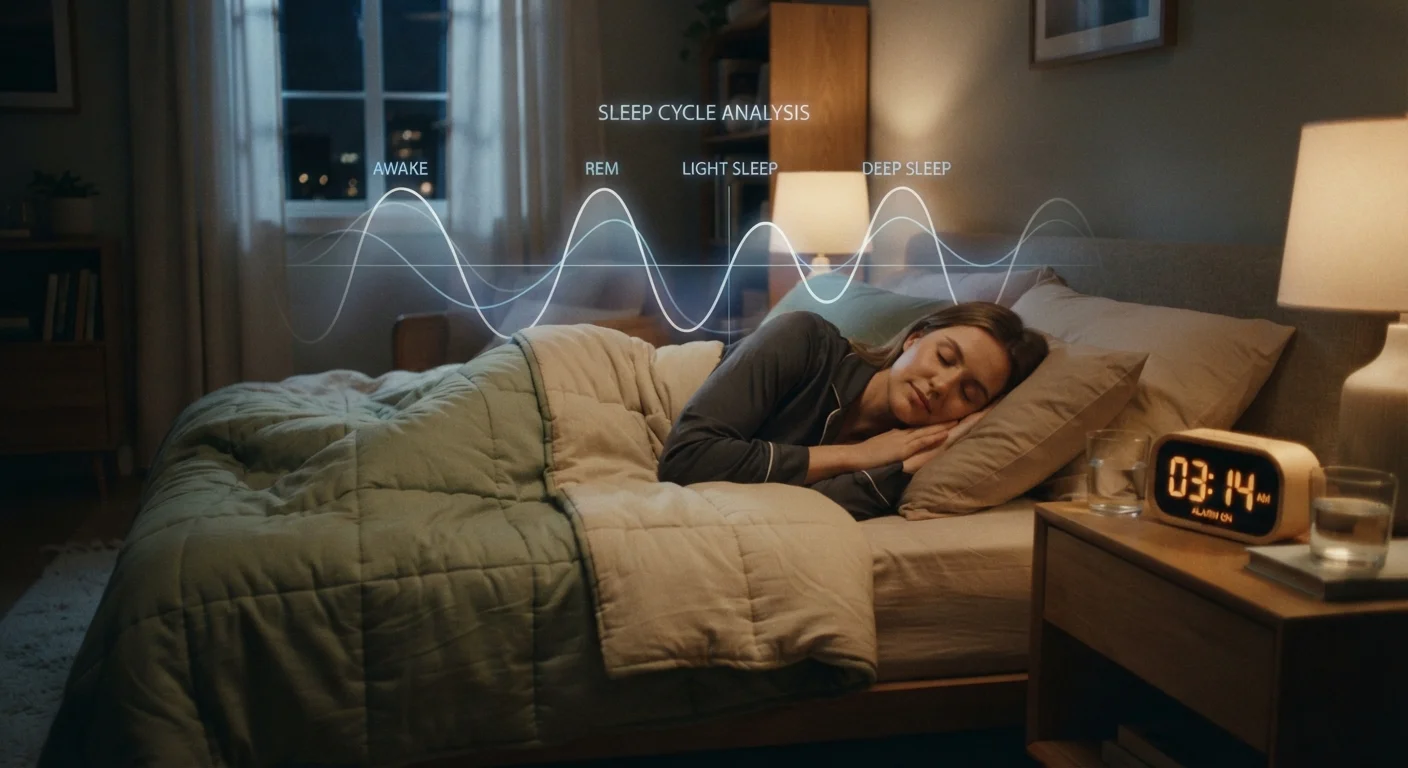
Sleep isn't a simple off switch. From the moment you drift off, your brain cycles through a structured sequence of stages, each serving distinct biological functions. Understanding this architecture is the first step toward actually using your sleep - rather than just surviving it.
Sleep is divided into two broad categories: non-REM (NREM) sleep and REM sleep. NREM contains three stages:
- N1 (light sleep): The transition from wakefulness. Easy to wake from, lasts just a few minutes.
- N2 (intermediate sleep): Heart rate slows, body temperature drops. Your brain produces bursts of activity called sleep spindles, thought to play a role in memory processing.
- N3 (deep or slow-wave sleep): The most physically restorative stage. Tissue repair, immune function, and growth hormone release peak here. This is also the stage that makes waking up feel brutal.
After N3, your brain doesn't jump straight to wakefulness - it cycles back up through lighter stages before entering REM sleep, where most vivid dreaming occurs and emotional memories are processed. One full pass through these stages takes roughly 90 minutes.
“Sleep is not merely a passive state but an active process of restoration - the brain during sleep is doing essential work that the waking brain simply cannot do.”
— Matthew Walker, Professor of Neuroscience and Psychology, University of California, Berkeley; author of research on sleep and memory
Why Grogginess Is a Stage Problem, Not a Hours Problem
That heavy, disoriented feeling when your alarm goes off - called sleep inertia - is almost always the result of being yanked out of deep sleep (N3). Your brain was in a low-arousal state and hasn't had the chance to shift gears. It can take anywhere from a few minutes to over half an hour to fully clear.
This explains why you might feel sharper after six hours than after eight. If a six-hour sleep ends naturally at the close of a cycle while an eight-hour sleep is cut short mid-N3, the shorter sleep may feel better. Total sleep time matters - but so does when in the cycle you wake up.
90 min
Typical length of one complete sleep cycle
The National Sleep Foundation notes that most adults cycle through sleep stages in roughly 90-minute intervals, completing four to six cycles per night.
20-30%
Proportion of sleep typically spent in REM
According to the American Academy of Sleep Medicine, healthy adults spend approximately 20-25% of total sleep time in REM, with that proportion increasing in later cycles.
73%
College students reporting insufficient sleep
The American College Health Association's National College Health Assessment has consistently found that a majority of college students report not getting enough sleep to feel rested.
The practical takeaway: waking at the end of a lighter stage (N1 or N2) tends to feel easier. Some people experiment with timing sleep in 90-minute increments - for example, targeting 6 hours or 7.5 hours rather than exactly 8 - though individual cycle length varies and no single formula works for everyone. What's more reliable is keeping a consistent wake time, which helps your body naturally lighten sleep toward the end of the night.
What REM Sleep Has to Do With Learning
REM sleep is where the night gets academically interesting. During REM, the brain replays and consolidates information absorbed during the day, strengthening neural connections and essentially filing new knowledge into long-term memory. This is why all-nighters before exams tend to backfire - you're skipping the processing phase.
REM is also when the brain handles emotional regulation. Students dealing with stress, anxiety, or difficult social situations may find those feelings harder to manage when REM is chronically cut short. The connection between sleep, mood, and mental health is well-documented. See our overview of how sleep affects your mental state for more on that relationship.
REM periods grow longer across the night - the final cycle before waking can include 45-60 minutes of REM, compared with just 10 minutes in the first cycle. This means sleeping only five or six hours disproportionately cuts into REM, even if the early cycles were complete. It also means that spaced study sessions - rather than late-night cramming - give sleep cycles room to do the memory work. See how that fits with spaced repetition study methods.
Time Your Study Sessions Around REM
Because REM sleep consolidates new learning, studying in the hours before bed - rather than sacrificing sleep entirely - gives your brain the best chance to retain the material. A short review session followed by a full night's sleep is generally more effective than an extended session that cuts into sleep time. This pairs naturally with spaced repetition strategies that distribute learning across multiple days.
Building Sleep Awareness on a Student Schedule
You probably can't control every factor - early morning labs, late-night study sessions, and dorm noise are real. But there are two levers that consistently help: a stable wake time and protecting your final 90-minute cycle.
A fixed wake time anchors your entire sleep architecture. Even if you go to bed later on some nights, waking at the same time keeps your circadian rhythm predictable, which helps your brain reach the right stages at the right times. On nights when sleep is short, a 20-minute nap in the early afternoon can reduce cognitive fog without disrupting nighttime sleep.
If grogginess is a persistent problem, it's worth looking beyond just hours. Irregular sleep timing, caffeine late in the day, and screen light before bed can all fragment cycles. Our explainer on why college sleep schedules collapse covers those disruptions in more detail.
This article is general health education and is not a substitute for personalized medical advice. If sleep problems are significantly affecting your daily functioning, your campus health center is a good first step - a clinician can help rule out underlying conditions like sleep disorders.
This article is for informational purposes only and does not constitute medical advice. Please consult a qualified healthcare professional for concerns about your sleep or health.
Frequently Asked Questions
If your alarm interrupts a deep sleep stage (N3), you'll wake feeling groggy regardless of total hours slept. This is called sleep inertia. Sleeping for a time that aligns with complete 90-minute cycles - say, 6 or 7.5 hours - may sometimes leave you feeling more alert than a longer, poorly timed sleep.
REM sleep is the stage where your brain consolidates memories, processes emotions, and reinforces learning. For students, getting enough REM is closely tied to how well new information is retained. Cutting sleep short typically cuts into REM, which accumulates in the later cycles of the night.
Research suggests you can partially recover from short-term sleep debt, but chronic undersleeping has cumulative effects that a single long sleep may not fully reverse. Maintaining a consistent schedule is generally more effective than sporadic recovery sleep.
Snoozing typically delivers fragmented, shallow sleep rather than completing a useful stage. Most sleep researchers suggest it adds little restorative value and may prolong grogginess. Setting your alarm for when you actually intend to get up tends to produce better results.
Alcohol may help you fall asleep faster, but it disrupts the sleep cycle - particularly suppressing REM sleep in the second half of the night. This leads to lighter, more fragmented rest even if total hours appear normal. This is general information; consult a healthcare provider for personal concerns.
A brief nap of around 20 minutes can reduce sleepiness and improve alertness without causing sleep inertia. Naps longer than 30 minutes risk entering deep sleep, which can leave you groggier than before and may interfere with falling asleep at night.
The content provided on our blog site traverses numerous categories, offering readers valuable and practical information. Readers can use the editorial team’s research and data to gain more insights into their topics of interest. However, they are requested not to treat the articles as conclusive. The website team cannot be held responsible for differences in data or inaccuracies found across other platforms. Please also note that the site might also miss out on various schemes and offers available that the readers may find more beneficial than the ones we cover.