

Our Verdict
Prepaid travel cards offer genuine value for budget-conscious travelers who want to cap spending and avoid carrying large amounts of cash. However, their fee structures and acceptance limitations mean they rarely function well as your only payment method abroad. Used alongside a low-fee debit or credit card and a small cash reserve, they can be a practical budgeting tool rather than a money-saving silver bullet.
Students who struggle with overspending abroad and want a fixed-budget card for day-to-day purchases in a single destination currency.
What Is a Prepaid Travel Card?
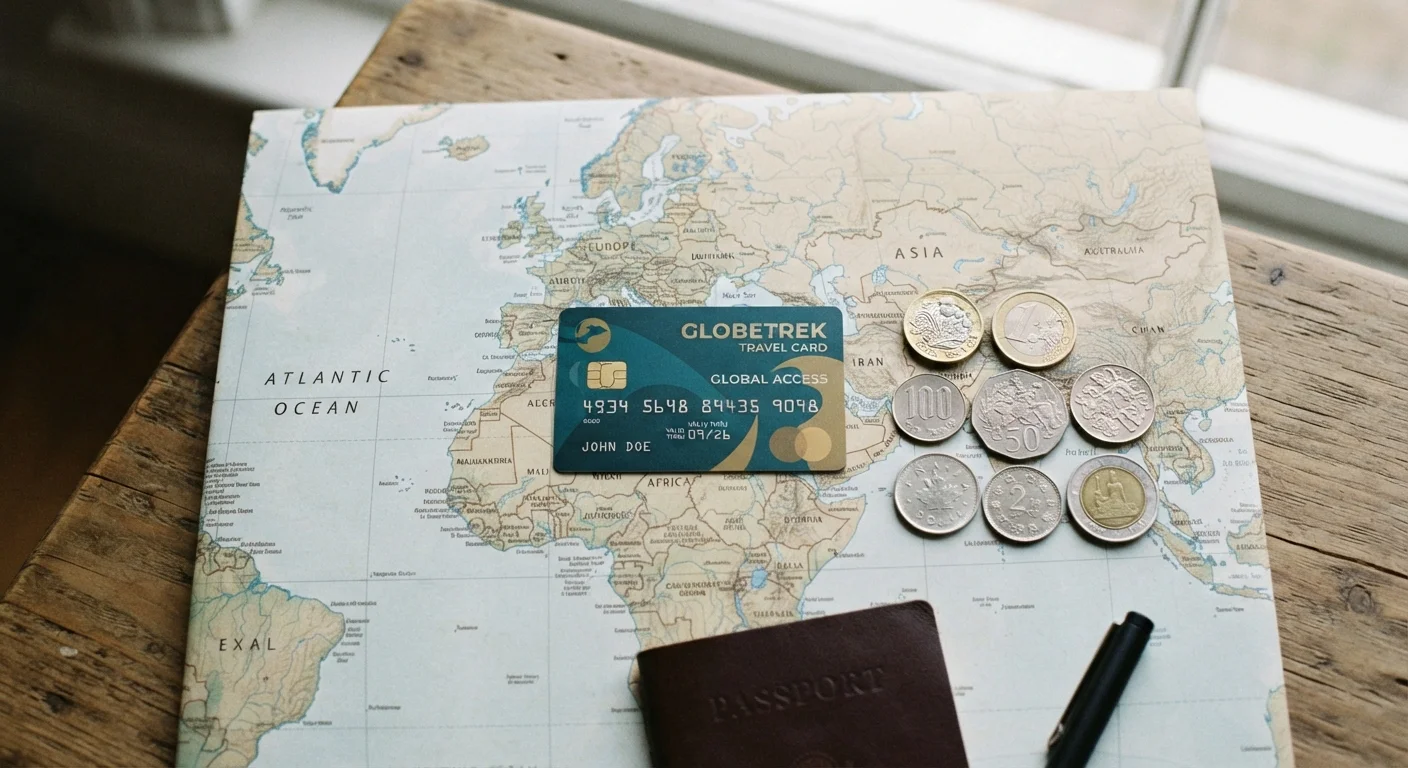
A prepaid travel card is a payment card you load with money — often in one or more foreign currencies — before you travel. Unlike a regular debit card, it draws from a pre-loaded balance rather than your bank account. Unlike a credit card, it doesn't extend you a credit line.
You typically buy and load one through a bank, currency exchange service, or specialist provider. Once loaded, you can use it to pay at merchants or withdraw cash at ATMs abroad, generally in the local currency you've loaded. For a broader overview of how travel money works, see our travel money beginner's guide.
Prepaid Cards Are Not All the Same
The term 'prepaid travel card' covers a wide range of products with very different fee structures, accepted currencies, and reload options. One provider's card might charge no ATM fees while another charges several dollars per withdrawal. Reading the full fee schedule — not just the headline rate — is essential before committing to any specific card.
Where Prepaid Travel Cards Work Well
Prepaid cards have real, practical strengths — especially for first-time international travelers.
Locks in an exchange rate before you travel
Loading a foreign currency when rates are favorable shields you from mid-trip rate swings. This is particularly useful for longer trips where exchange rate volatility could otherwise affect your purchasing power.
Caps spending to what you've loaded
Because the card draws from a pre-set balance, you can't accidentally overspend your travel budget. This built-in discipline is helpful for students managing limited funds across a multi-week trip.
Separates travel money from your main bank account
If the card is lost or compromised, your primary account is unaffected. This reduces financial exposure compared with using your regular debit card directly.
Widely accepted at major merchants and ATMs
Most prepaid travel cards run on major payment networks, meaning they're accepted wherever that network is supported — which covers a large share of card-accepting businesses in popular travel destinations.
Can hold multiple currencies on one card
Some providers let you load several currencies onto a single card, which is convenient for multi-country trips — though currency conversion between wallets often comes with its own fees.
The fixed-balance nature of a prepaid card makes it easier to stick to a daily spending limit, which is one of the more underrated benefits for students on tight budgets. If you're heading to a single country and load that country's currency when rates are favorable, you also sidestep the uncertainty of fluctuating exchange rates during your trip.
Where Prepaid Travel Cards Fall Short
The marketing around prepaid cards often downplays a string of fees and practical limitations that can catch travelers off guard.
Multiple fees can erode the value quickly
Loading fees, ATM withdrawal fees, inactivity fees, and currency conversion margins are all common. A card with several of these can end up costing more than a straightforward low-fee debit card.
Not accepted everywhere abroad
Smaller vendors, local markets, and some ATMs may not accept prepaid cards — particularly in less-visited destinations. Relying solely on a prepaid card can leave you stuck in a pinch.
Reloading mid-trip can be slow or limited
If you run through your balance faster than expected, topping up remotely isn't always instant or straightforward. Some providers require a desktop login or impose transfer delays of several business days.
Unused balances can be difficult to recover
Retrieving leftover funds when you return home sometimes involves fees or a cumbersome process. In some cases, inactivity fees will gradually drain a forgotten balance over time.
No credit-building or purchase protections
Unlike credit cards, prepaid cards typically offer no fraud chargeback rights beyond basic network protections, and they don't contribute to building a credit history — something worth considering for young travelers.
Rate locks can work against you
If you load a currency and the exchange rate then moves in your favor, you've missed out on the better rate. Locking in early is a trade-off, not a guaranteed win.
Fee structures vary widely between providers, so reading the full terms before loading is non-negotiable. If you're visiting multiple countries with different currencies, managing multiple currency wallets or accepting unfavorable conversion rates can offset any initial savings. For a reality check on common payment assumptions abroad, see our piece on travel money myths.
~3%
Typical currency conversion markup on prepaid cards
Many prepaid travel cards apply a margin of roughly 2–4% above the interbank rate on currency conversions, according to general industry analysis of retail travel card fee structures.
$2–$5
Common per-transaction ATM fee on prepaid cards
ATM withdrawal fees on prepaid travel cards commonly range from $2 to $5 per transaction, which adds up quickly on a trip involving frequent cash withdrawals.
A Common Pitfall: Dynamic Currency Conversion
One scenario worth knowing: when you pay with a prepaid card abroad, a merchant terminal may offer to charge you in US dollars instead of the local currency. This is called dynamic currency conversion (DCC), and it almost always uses a worse exchange rate than your card would apply. The result is a hidden markup you've agreed to without realizing it.
The rule is simple: always choose to pay in the local currency when prompted. Our article on dynamic currency conversion explains exactly why this offer typically costs you more.
How to Use a Prepaid Card Without Getting Burned
A prepaid card works best as one layer of a broader strategy, not your sole payment method. A practical approach for student travelers:
- Compare fee schedules across a few providers before choosing — look specifically at loading fees, ATM withdrawal fees, inactivity fees, and any currency conversion markup.
- Load only what you plan to spend in that currency. Unused balances can be hard or slow to retrieve, and some cards charge to unload funds.
- Pair it with a backup — a low-foreign-transaction-fee debit or credit card covers you if the prepaid card is declined or lost.
- Keep a small cash reserve for places that don't accept cards at all.
Before you leave, cross-reference your money setup against our pre-departure money checklist. And if you're still weighing cards against cash more broadly, our cash vs. card comparison lays out the real trade-offs without oversimplifying.
This article is for general informational purposes only and does not constitute personalized financial advice. Fee structures, terms, and product availability vary by provider and may change. Consult a qualified financial professional for advice suited to your individual circumstances.
The content provided on our blog site traverses numerous categories, offering readers valuable and practical information. Readers can use the editorial team’s research and data to gain more insights into their topics of interest. However, they are requested not to treat the articles as conclusive. The website team cannot be held responsible for differences in data or inaccuracies found across other platforms. Please also note that the site might also miss out on various schemes and offers available that the readers may find more beneficial than the ones we cover.