

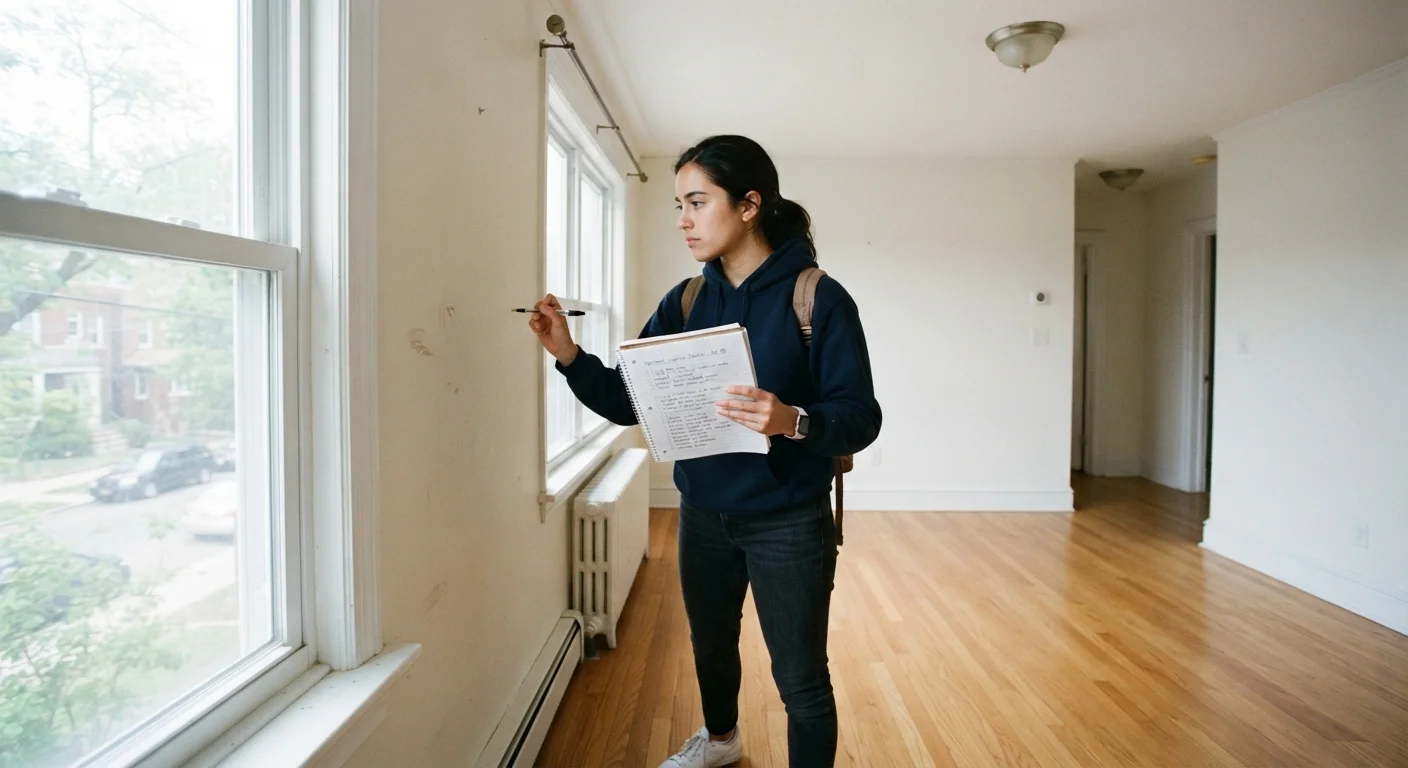
The Details That Catch First-Timers Off Guard
Signing your first lease is exciting, but most students focus almost entirely on rent, location, and whether the bedroom is big enough. The details that actually shape your day-to-day experience — and sometimes cost you real money — tend to go unexamined until it's too late to do anything about them.
This isn't a general apartment tour checklist. Our move-in day checklist covers the room-by-room inspection you should do after you've already decided to rent. What follows is about what to investigate before you commit — the specific, easy-to-overlook factors that first-timers almost never think to ask about.
If you're still at the very beginning of the process, the complete introduction to apartment renting for students is a solid starting point for context.
Mobile signal strength inside the unit
Don't assume your phone will work well in a new apartment. Thick concrete walls, basement-level units, and certain building materials can severely degrade signal — even in urban areas with good outdoor coverage. Walk through every room with your phone during your viewing and check signal bars and data speed. If you rely on your phone as a hotspot for study or work, this matters even more.
Thick concrete walls can kill your signal even in a city with great outdoor coverage.
What broadband infrastructure is actually available
Ask the landlord which broadband providers serve the building — not just the area. Some older buildings only support slower copper-line connections, while others are wired for fiber. If the listing says "internet available," that tells you almost nothing useful. Check whether a router is already installed, who pays for the service, and whether you're locked into a specific provider. Slow, unreliable internet is a serious problem when you're submitting assignments or attending online lectures.
"Internet available" tells you nothing — find out exactly which providers and connection types the building supports.
The age and condition of the heating system
An aging boiler or inefficient heating system won't just leave you cold — it can significantly inflate your energy bills. Ask when the boiler was last serviced and whether there's a recent inspection certificate. Ask also about the type of heating (central, baseboard, radiator) and who is responsible for maintenance. In most US rental arrangements, certain maintenance duties fall to the landlord, but it's worth confirming this in writing. For more on what landlords typically cover versus what tenants pay, see our utilities explainer.
An older heating system can quietly cost you far more in energy bills than you'd expect.
Bin collection days and recycling rules
This sounds trivial until you've missed collection for three weeks running and your kitchen smells accordingly. Find out which day trash and recycling are collected, where bins are stored, and whether the building has any specific sorting requirements. Some apartment buildings have shared dumpsters with strict rules about what can be disposed of there — violations can result in fines passed to tenants.
Missing bin collection for even a couple of weeks makes a small apartment feel very unpleasant very fast.
Guest policies and quiet hours in the building
Many rental agreements and building rules place restrictions on overnight guests, parties, or noise after certain hours. These rules aren't always in the main lease — they can appear in a separate building handbook or HOA (homeowners association) document. Ask for any supplementary rules in writing before signing. Discovering that your building enforces strict quiet hours from 9 p.m. onward — or that guests must be registered — well after you move in is a frustrating surprise.
Building guest and noise rules are often in separate documents that tenants never think to request upfront.
Natural light and ventilation at different times of day
A unit can look bright and airy at 11 a.m. during a viewing and feel like a cave by mid-afternoon. If at all possible, visit the apartment at two different times of day. Note which direction windows face, whether there are obstructions blocking light, and how air circulates through the space. Poor ventilation contributes to dampness and mold — a genuine health concern — while inadequate natural light affects mood and energy, especially during long study periods.
Always visit an apartment at more than one time of day — light and airflow vary dramatically depending on the hour.
Parking availability and rules
If you have a car — or plan to get one — find out upfront whether parking is included, what it costs if not, and whether spaces are assigned or first-come, first-served. Also check street parking restrictions in the neighborhood. In some areas, residential parking permits are required and can take time to obtain. Assuming parking "won't be an issue" is one of the most common and avoidable errors first-time renters make.
Parking costs and permit requirements can add meaningfully to your monthly expenses if you haven't planned for them.
Make These Checks Count
None of these checks require special skills — just a little extra time and a willingness to ask questions that might feel awkward. Landlords who are straightforward will answer them without hesitation; evasive answers are useful information too.
Bring a Simple Checklist to Every Viewing
Write down your questions before you visit — it's easy to forget them once you're inside and distracted by the space itself. Note the answers on paper or in your phone so you can compare units accurately afterward. Landlords generally expect thorough questions from serious applicants; asking them signals you'll be a responsible tenant.
Renting is also a financial commitment that extends well beyond monthly rent. Before you sign, it's worth mapping out all likely costs — our guide to building your first monthly budget as a renter and the explainer on which utilities are typically included will help you avoid budget surprises. Once you're settled in, basic home maintenance skills will keep small issues from becoming expensive ones.
The content provided on our blog site traverses numerous categories, offering readers valuable and practical information. Readers can use the editorial team’s research and data to gain more insights into their topics of interest. However, they are requested not to treat the articles as conclusive. The website team cannot be held responsible for differences in data or inaccuracies found across other platforms. Please also note that the site might also miss out on various schemes and offers available that the readers may find more beneficial than the ones we cover.