

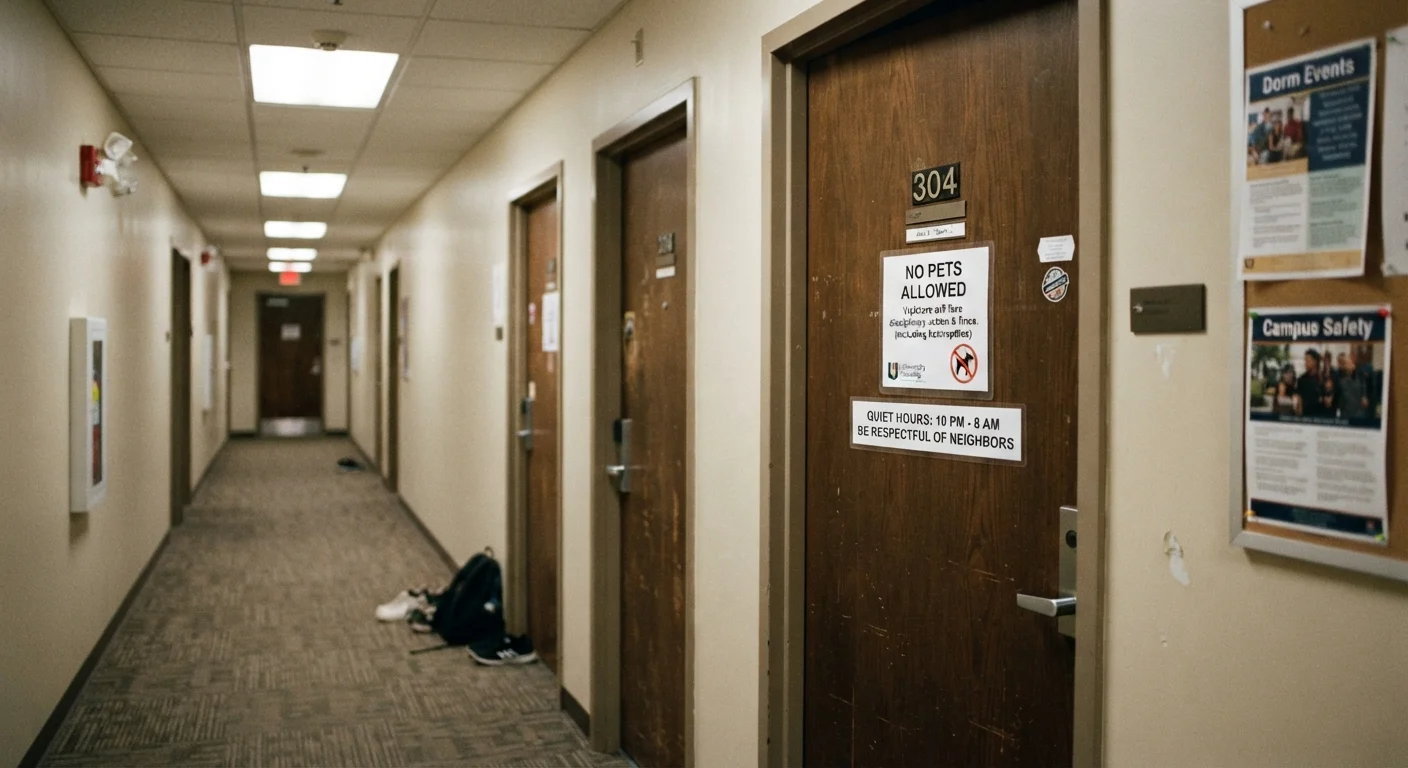
Why This Matters More Than Students Expect
It's easy to assume that sneaking a small pet into a dorm is a low-stakes decision - maybe a hamster, a cat, or a friend's dog staying for a few nights. In practice, the consequences of a confirmed no-pet policy violation can ripple into areas of student life that have nothing to do with the animal itself.
Campus housing is governed by a binding contract. When you sign your housing agreement, you're agreeing to specific terms - including what animals are and are not allowed. Violating those terms puts your housing arrangement at risk in ways that are both financially and academically significant. Before bringing any animal onto campus, it's worth understanding what's actually at stake. See our guide to campus pet policies for a full breakdown of what those agreements typically contain.
Common Consequences Schools Enforce
Universities handle pet violations through residential life offices, and the specific outcome depends on the institution, the nature of the violation, and whether it's a first offense. That said, several consequences appear consistently across schools:
- Formal written warning: For minor or first-time violations, some schools issue a written warning logged in your housing file. This is the lightest outcome but still creates a record.
- Monetary fines: Fines for unauthorized pets commonly range from $50 to several hundred dollars per occurrence. Repeat violations typically result in escalating penalties.
- Mandatory pet removal: You will almost always be required to remove the animal within a set timeframe - often 24 to 72 hours. Failure to comply compounds the violation.
- Loss of campus housing: In more serious cases, or after repeated violations, students can be removed from residence halls entirely. This can happen mid-semester, creating a significant disruption to your academic year.
- Student conduct referral: If the case is elevated to the formal student conduct process, a disciplinary notation may appear in your record - relevant to graduate school applications and some employment background checks.
$50-$500+
Typical fine range per pet violation
Fine amounts vary significantly by institution; many schools also add cleaning or damage fees on top of the base penalty.
24-72 hrs
Common window to remove an unauthorized pet
Most residential life offices require prompt removal after a violation is confirmed; failure to comply typically escalates the case.
It's also worth noting that roommates and suite neighbors are sometimes affected. If you share a space, a policy violation can involve your neighbors in a process they didn't initiate, which can damage relationships and living situations for everyone involved.
The ESA Misconception That Catches Students Off Guard
One of the most common misunderstandings involves emotional support animals (ESAs). Under federal fair housing regulations, universities that receive federal funding are generally required to consider ESA accommodation requests from students with qualifying disabilities. However, this is not a blanket exemption from pet policies.
An ESA must be formally approved through your university's housing or disability services office before the animal arrives on campus. Documentation alone - even from a licensed mental health professional - does not automatically grant permission. Bringing an ESA without going through the proper channel is treated the same as bringing any other unauthorized pet.
Start the ESA Process Early
ESA approval applications can take several weeks to process, especially during peak periods at the start of a semester. If you need an ESA accommodation, submit your request well before move-in day - not after the animal has already arrived. Contact your campus disability services office for the specific forms and documentation they require.
If you believe you qualify for an ESA accommodation, the correct first step is contacting your campus disability services or residential life office to understand their specific application process. For common misconceptions about what ESA rules actually cover, see our article on myths about keeping pets in college housing.
How to Protect Yourself Before You Commit
The simplest way to avoid a violation is to read your housing agreement carefully and contact your residential life office with any questions before bringing an animal to campus. Policies use specific language that's easy to misread - for guidance on interpreting common clauses, see our article on reading your dorm's pet policy without getting it wrong.
If you're considering pet ownership more broadly as a student, the practical demands go well beyond policy compliance. Our overview of pet ownership in college covers the time, financial, and lifestyle commitments that many students underestimate. And for students who already have a pet and want to stay on the right side of campus rules, responsible student pet ownership practices outlines the habits that make the experience sustainable.
The core principle is straightforward: ask first, bring the animal second. No pet - however small or quiet - is worth losing your housing or adding a conduct note to your record.
Frequently Asked Questions
Yes. Most university housing contracts include pet restrictions as binding terms. A confirmed violation can result in removal from campus housing mid-semester, leaving you to find off-campus accommodation on short notice. The process typically involves a formal hearing, but the outcome can still mean losing your room.
You'll typically be required to remove the animal within a short window - often 24 to 72 hours. If you cannot rehome or relocate the pet quickly, some schools may involve animal control. The stress of rapid rehoming can also be harmful to the animal, which is a welfare concern worth considering before the situation arises.
It depends on the severity and your institution's policies. Minor first-time violations may result only in a housing warning. However, repeated infractions or escalated cases processed through the student conduct system can create a disciplinary record, which some graduate programs and employers may ask about.
ESAs may be permitted as a reasonable accommodation under federal fair housing law, but only after a formal approval process through your university's disability services or housing office. Simply having documentation from a provider does not automatically grant permission - you must request and receive approval before bringing the animal to campus.
Fines vary widely by institution. Common ranges fall between $50 and $500 for an initial violation, with repeat offenses often carrying higher penalties. Some schools also charge cleaning or damage fees if the animal causes any physical damage to the room or common areas.
Most universities have a formal appeal process through residential life or the student conduct office. Appeals are more likely to be considered when there are mitigating circumstances or procedural errors - not simply because you disagree with the policy. Acting quickly and respectfully after a violation notice is important.
The content provided on our blog site traverses numerous categories, offering readers valuable and practical information. Readers can use the editorial team’s research and data to gain more insights into their topics of interest. However, they are requested not to treat the articles as conclusive. The website team cannot be held responsible for differences in data or inaccuracies found across other platforms. Please also note that the site might also miss out on various schemes and offers available that the readers may find more beneficial than the ones we cover.