

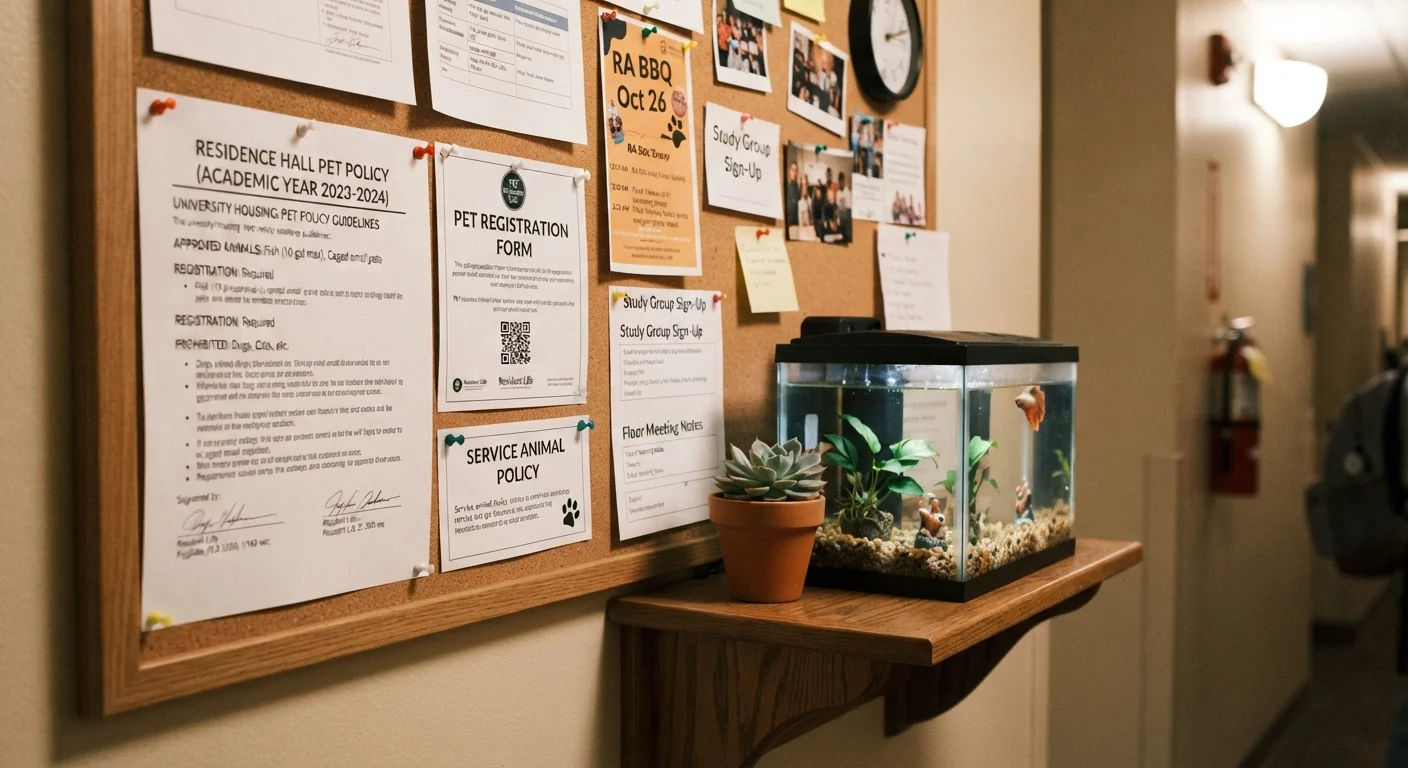
Why Campus Pet Policies Are More Complex Than They Seem
When students picture bringing a pet to college, they often imagine a simple yes-or-no rule. In practice, campus pet policies are layered documents that address species, containment, health records, noise, liability, and more. A policy that says "no pets" may still allow fish. A policy that permits pets may restrict them to specific buildings or room types.
Beyond the housing handbook, students also need to understand how federal law interacts with campus rules - particularly around service animals and emotional support animals. These are not the same as ordinary pets, and the rules governing them come from outside the university's internal policy. Understanding the distinction between ESAs and regular pets is essential before pursuing either path.
Students who skip this research often discover the rules mid-semester - after they've already bonded with an animal and face an urgent decision. Several common myths about campus pet rules contribute to this problem, including the assumption that small animals are universally allowed.
Policies Vary - Even Within One Campus
It's common for different residence halls at the same university to have different pet rules. A first-year dorm may prohibit all animals, while an upper-division apartment-style building permits cats with registration. Always confirm the policy for your specific building, not just the general university policy page.
What Standard Dorm Pet Policies Typically Cover
Most on-campus pet policies address several core areas. Knowing what to look for helps you read the fine print accurately.
- Permitted species: Fish are the most commonly allowed animal, often with a tank size cap of 10 to 20 gallons. Some schools permit small caged animals like hamsters or guinea pigs in specific housing. Dogs, cats, and reptiles are prohibited in most traditional residence halls.
- Registration requirements: Even where pets are permitted, schools typically require you to register the animal with the housing office and provide proof of current vaccinations.
- Fees: Pet-friendly units often charge a non-refundable pet fee or a refundable deposit, typically ranging from $100 to $500 depending on the institution.
- Health and hygiene standards: Policies generally require that animals be kept in clean, contained environments and that owners manage odor, noise, and waste responsibly.
- Violation consequences: Unauthorized animals can result in fines, mandatory removal, and in repeat cases, housing contract consequences.
For a detailed walkthrough of how to interpret specific policy language, see how to read your dorm's pet policy without getting it wrong.
~10 gal
Typical maximum fish tank size allowed in dorms
Many university housing policies that permit fish specify a tank size limit, commonly around 10 gallons, though this varies by institution.
$100-$500
Typical campus pet deposit or fee range
Universities with designated pet-friendly housing commonly charge a registration fee or refundable deposit; exact amounts vary widely by school.
Several weeks
Typical processing time for ESA accommodation requests
Disability services offices generally require time to review documentation and make housing accommodation decisions; students are advised to apply well before the semester begins.
Emotional Support Animals: A Separate Process
An emotional support animal (ESA) is not a pet under campus housing law - it is an accommodation. Under the Fair Housing Act, colleges that offer housing are generally required to consider reasonable accommodation requests for ESAs, even in buildings that otherwise prohibit animals. However, this does not mean ESAs are automatically approved.
To request an ESA accommodation, students typically need to submit documentation from a licensed mental health or medical professional confirming a disability-related need for the animal. The school's disability services or housing accommodations office reviews the request and has the authority to approve, deny, or propose an alternative arrangement. The process takes time - often several weeks - so students should begin well before the semester starts.
Service animals, which are trained to perform specific tasks for individuals with disabilities, operate under the Americans with Disabilities Act and have broader access rights than ESAs. These are distinct categories, and confusing them is a common mistake.
Realistic Costs Students Should Plan For
Even when a campus allows a pet, the financial picture goes beyond the animal's purchase price. Students planning for a campus-approved animal should account for:
- Initial setup: Tank, enclosure, bedding, food, and basic supplies - costs that range widely depending on species
- Registration and deposit fees: Charged by many schools with pet-friendly housing, typically non-refundable
- Ongoing supplies: Food, litter, bedding replacement, and enrichment items add up monthly
- Veterinary care: Even small animals require occasional vet attention; unexpected illness can cost hundreds of dollars
- Housing transition costs: If you move off-campus, pet deposits with private landlords are common and can be substantial
Responsible financial and policy planning for student pet owners covers budgeting strategies in detail. If you're still deciding whether pet ownership fits your current situation, what no one tells you before committing to a college pet is a practical starting point.
Start the ESA Process Early
If you believe you may qualify for an emotional support animal accommodation, contact your school's disability services office at least 6-8 weeks before your intended move-in date. Gathering documentation from a licensed provider and completing the formal review process takes significantly longer than most students anticipate. Starting early gives you time to address any follow-up requests from the housing office without added stress.
How to Get It Right Before Move-In
The most important step is simple: read your school's current housing handbook directly, then contact the housing office with any questions. Policies change year to year, and secondhand information from older students or online forums is frequently outdated.
If you're interested in having a pet in on-campus housing, confirm permitted species, the registration process, any required deposits, and what documentation you'll need. If you're pursuing an ESA accommodation, contact disability services early - the process takes longer than most students expect.
For a structured approach, the pre-arrival campus pet readiness checklist walks through the key steps to confirm you're genuinely prepared. Students who want to explore which animals are realistically suited to dorm life can also browse dorm-friendly pet options to match species to their specific living situation.
This article provides general educational information about campus pet policies. Rules vary significantly between institutions; always verify current policies directly with your university's housing office before making any decisions about keeping an animal on campus.
Frequently Asked Questions
Some schools allow small, contained animals like fish in tanks up to a certain gallon capacity. A small number of institutions have designated pet-friendly housing units with stricter requirements. Always check your specific school's housing handbook rather than assuming any animals are permitted.
No. Emotional support animals are processed through a school's disability services office and require documented medical or mental health need. They are not subject to the same blanket prohibitions as pets, but they also are not automatically approved - documentation and a formal request are required.
Consequences typically include a formal warning, a fine ranging from around $50 to several hundred dollars, and a requirement to remove the animal immediately. Repeat violations can result in disciplinary action that goes on your academic record.
Yes. Most housing offices consider health and safety conflicts between roommates, and an allergy complaint can override an existing pet permission or ESA accommodation in shared spaces. Housing staff typically work to find a resolution, but the animal may need to be relocated.
No. Off-campus housing is governed by your individual lease agreement with a private landlord. Restrictions, pet deposits, and breed or weight limits vary widely. Always read the lease carefully and get any verbal pet permissions confirmed in writing.
Check your university's housing or residential life website, your residence hall handbook, or contact the housing office directly. Policies are updated periodically, so always refer to the current academic year's version rather than older student forums or word-of-mouth.
The content provided on our blog site traverses numerous categories, offering readers valuable and practical information. Readers can use the editorial team’s research and data to gain more insights into their topics of interest. However, they are requested not to treat the articles as conclusive. The website team cannot be held responsible for differences in data or inaccuracies found across other platforms. Please also note that the site might also miss out on various schemes and offers available that the readers may find more beneficial than the ones we cover.