

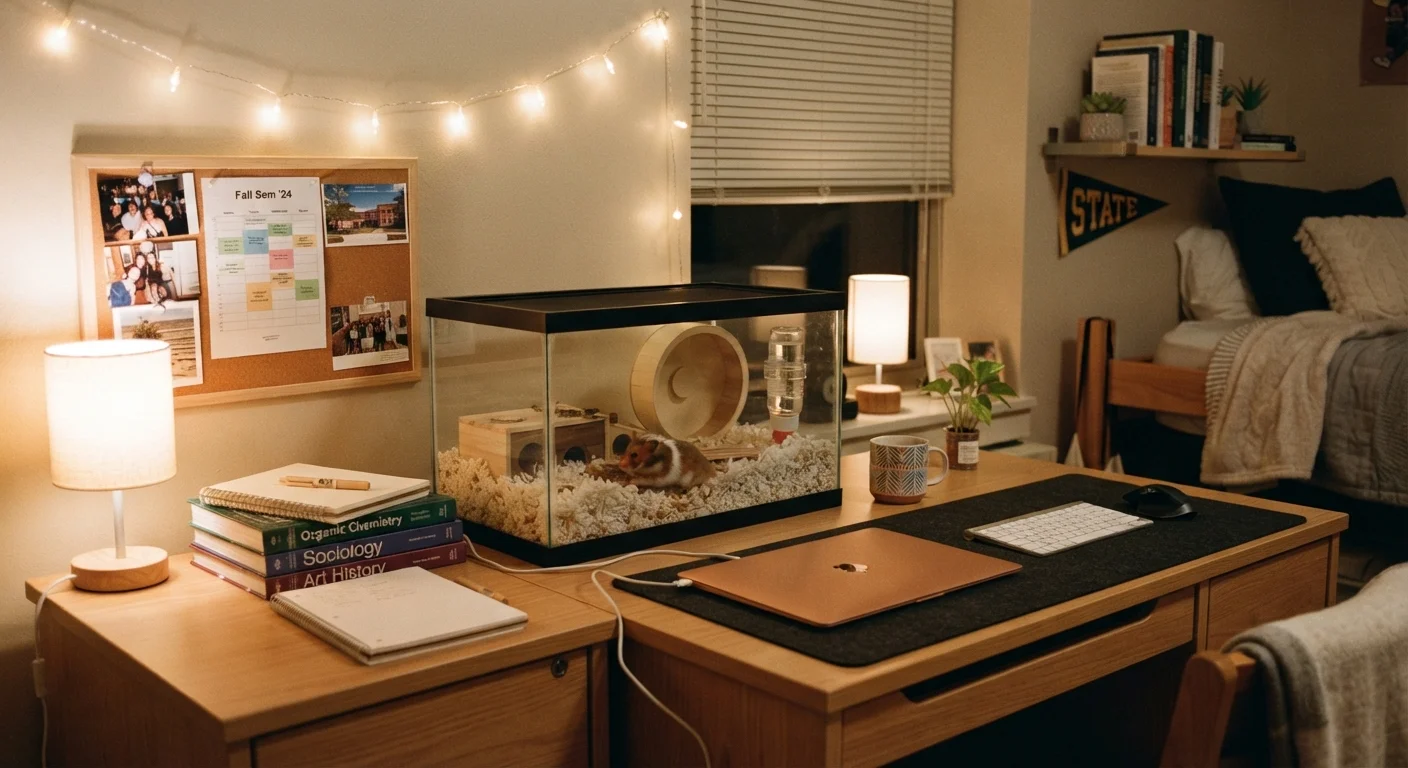
Before You Buy: Policies, Permissions, and Roommate Buy-In
Setting up a small animal habitat in a dorm starts well before you visit a pet store. Two conversations must happen first: one with your residence life office and one with your roommate.
Most colleges permit only a narrow range of animals in residence halls - typically fish in tanks under 10 gallons, or small caged animals like hamsters or gerbils in some buildings. Policies vary significantly by institution and even by hall, so check your specific housing agreement rather than assuming what a friend was allowed elsewhere applies to you.
Once you have confirmed what is permitted, talk openly with your roommate. Their allergies, sleep schedule, and personal comfort with animals are all legitimate concerns that deserve honest discussion before anything is purchased. For a broader look at managing shared responsibilities, see our guide on having a pet in shared housing. Establishing ground rules early also keeps your living space manageable - the shared dorm room etiquette guide covers this well.
What you will need
Step-by-Step: Setting Up the Habitat
With permissions confirmed and your roommate on board, you can move to the physical setup. Follow these steps carefully - the order matters for both your animal's safety and your roommate's peace of mind.
Choose the right animal for the space
Prioritize animals with small habitat footprints, low noise output, and minimal odor. Hamsters, gerbils, and bettas are among the most commonly permitted options. Avoid animals that vocalize frequently (such as birds) or require large enclosures, as these are rarely allowed and quickly strain roommate relations. A single betta fish in a filtered 3-5 gallon tank or a hamster in a 40×20 cm minimum footprint cage are realistic starting points.
Select an appropriately sized enclosure
Measure your designated shelf or desk area before ordering anything. For small rodents, a wire cage with a solid bottom tray is easier to clean than all-plastic habitrail-style enclosures and provides better airflow. For fish, a filtered tank with a lid prevents evaporation and reduces spills. Confirm the enclosure fits your measured space with at least a few centimeters of clearance on each side for airflow and access.
Identify the best placement location
Avoid placing the habitat in direct sunlight, near heating or cooling vents, or adjacent to your roommate's sleeping area. Consistent ambient temperature - generally 65-75°F (18-24°C) for most small mammals - is essential. A shelf on your side of the room, away from windows and exterior walls, is usually the safest spot. Keep the habitat at eye level or above floor level to reduce drafts.
Set up substrate, enrichment, and water
Line the cage base with an appropriate substrate - paper-based bedding for rodents is low-dust and highly absorbent. Avoid cedar or pine shavings, which release aromatic compounds that can irritate small animals' respiratory tracts. Add a water bottle or dish, a hide or shelter, and at minimum one enrichment item such as a wheel or tunnel. For fish, treat tap water with a dechlorinator before adding it to the tank, and cycle the filter for at least 24-48 hours before introducing the fish.
Establish and communicate your maintenance routine
Write out a cleaning and feeding schedule and share it with your roommate. Transparency reduces friction. Typical small rodent care involves: daily fresh food and water check, spot-cleaning soiled bedding every 2-3 days, and a full cage clean weekly. Fish tanks need a partial water change (roughly 20-25% of volume) weekly and filter media rinsed monthly. Set phone reminders if needed - skipping care sessions is how odors develop and animals become ill.
Start Simple, Then Expand
Resist the urge to add multiple enrichment items, decorations, or a second animal right away. Start with the minimum viable setup, observe how it fits into your routine and shared space, and add complexity only once the basics are stable. A simpler habitat is also faster to clean - a real advantage during exam weeks.
Maintaining the Habitat Without Disrupting Shared Life
Setup is a one-time task, but maintenance is ongoing. In a shared room averaging around 150-200 square feet, odor and clutter accumulate quickly if habitat care lapses. Build a weekly cleaning schedule into your routine - spot-clean bedding every two to three days and do a full substrate change on a set day each week. Designate a specific time when your roommate is out or has agreed to mild disruption.
Dorm rooms often lack good airflow, so a cage or tank placed near a vent or window - but not in direct sun or cold drafts - helps manage ambient odor. Keeping the habitat footprint compact also preserves floor space; vertical shelf placement is a practical option explored in our article on using vertical space in a small dorm. For general tidiness strategies that work alongside a pet habitat, the guide to keeping a shared dorm tidy offers practical systems you can adapt.
Odor Is the Most Common Eviction Trigger
Residence advisors frequently cite odor - not noise or visibility - as the reason a student is asked to rehome a pet. Substrate that is not changed on schedule, uneaten fresh food left in the cage, and poor airflow are the primary causes. Treat your cleaning schedule as a fixed commitment, not optional.
The content provided on our blog site traverses numerous categories, offering readers valuable and practical information. Readers can use the editorial team’s research and data to gain more insights into their topics of interest. However, they are requested not to treat the articles as conclusive. The website team cannot be held responsible for differences in data or inaccuracies found across other platforms. Please also note that the site might also miss out on various schemes and offers available that the readers may find more beneficial than the ones we cover.