

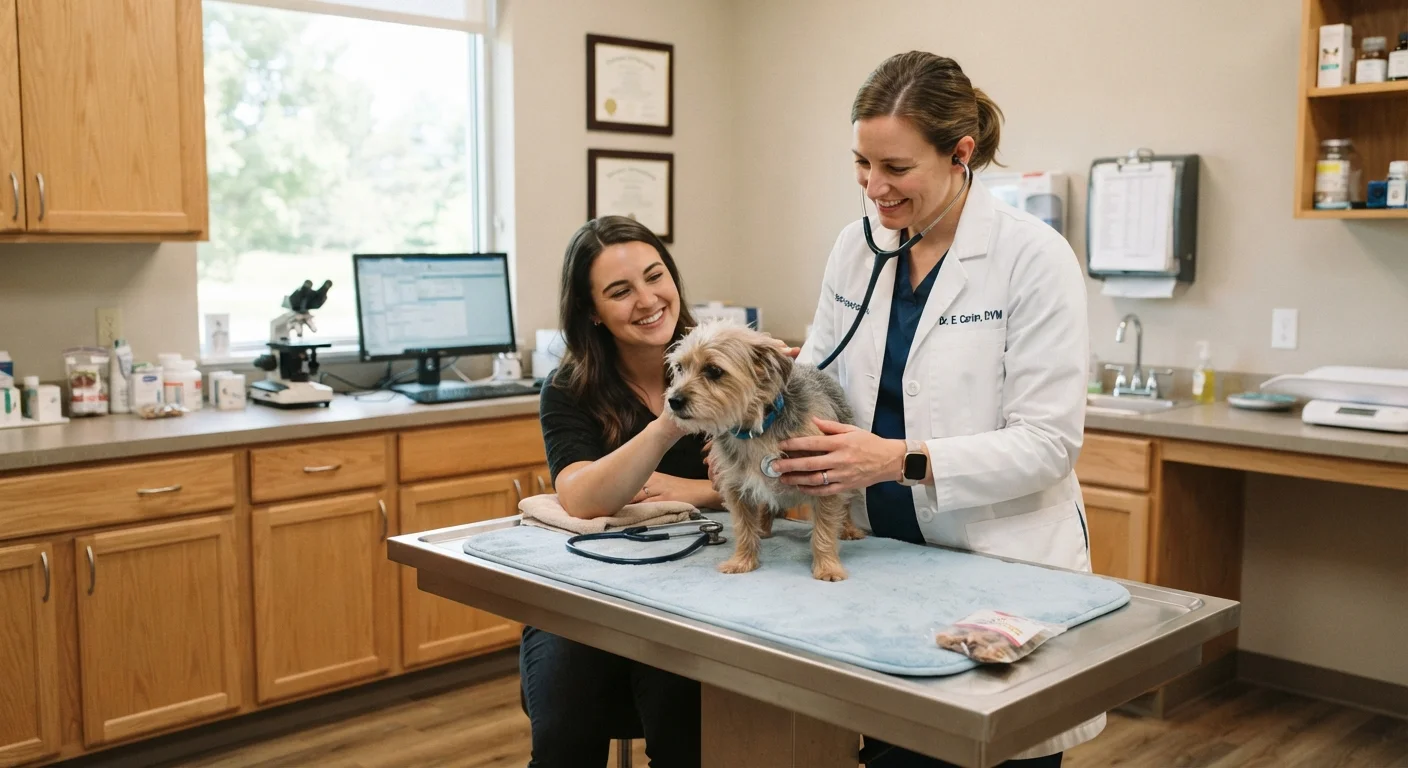
What Happens at a Wellness Exam
A routine wellness exam is more than a quick look-over. During a typical visit, the veterinarian will assess your pet's weight, body condition, eyes, ears, teeth, coat, heart rate, and overall mobility. They'll ask about diet, behavior, and any changes you've noticed at home.
For new student pet owners, this appointment is also your chance to ask foundational questions - feeding schedules, appropriate exercise, signs of stress, and housing-specific concerns. Vets see a wide range of pets and are used to helping first-time owners build good habits from the start.
If you're keeping a pet in a dorm or campus apartment, let your vet know. Living environments affect everything from parasite exposure to stress-related behaviors. Pair your vet routine with a consistent home care schedule - the core habits for a healthy dorm pet guide covers what that looks like day to day.
Keep a Simple Pet Health Log
A basic notes app or small notebook works well. Record your pet's weight, any behavioral changes, what they eat, and the dates of vet visits and vaccines. This information is genuinely useful during appointments and helps you notice gradual changes that might otherwise go undetected.
Vaccines: Core, Non-Core, and What Your Pet Actually Needs
Vaccines train the immune system to recognize and fight specific pathogens. For dogs, the core set typically includes rabies and a combination vaccine covering distemper, adenovirus, parvovirus, and parainfluenza. For cats, core vaccines generally include rabies and FVRCP. These are widely recommended because the diseases they prevent are serious, transmissible, or - in the case of rabies - governed by law.
Non-core vaccines are given based on risk. Bordetella (kennel cough) is commonly recommended for dogs who visit groomers, dog parks, or boarding facilities. Leptospirosis may be suggested for dogs in areas with wildlife exposure. Your vet will assess your pet's specific situation.
Puppies and kittens follow a series of vaccines starting as early as six to eight weeks of age, with boosters given every few weeks until around 16 weeks. Adult animals typically receive boosters on a one- to three-year schedule depending on the vaccine type.
1 in 3
Pets needing emergency vet care each year
According to the American Veterinary Medical Association, roughly one in three pets requires emergency or unplanned veterinary care annually, underscoring the value of having a care plan in place.
~$50-$250
Typical cost range for a wellness exam
Wellness exam costs vary widely by region and practice type; veterinary teaching hospitals and nonprofit clinics often fall at the lower end of this range.
3 years
Maximum interval for adult rabies boosters
Many rabies vaccines for dogs and cats are licensed for three-year protection after initial administration, though local laws may require more frequent vaccination - verify your state's requirements.
Recognising When a Visit Can't Wait
Knowing the difference between a concern to monitor and a genuine emergency is one of the most important skills a new pet owner can develop. Symptoms that warrant same-day or emergency care include: labored or noisy breathing, pale or bluish gums, inability to urinate (especially in male cats), suspected ingestion of a toxic substance, uncontrolled bleeding, loss of consciousness, or repeated vomiting and diarrhea lasting more than a few hours.
Less urgent but still important signs - gradual weight loss, subtle changes in behavior, increased thirst, or a new lump - should be noted and brought up at your next scheduled visit. For a fuller breakdown, see our companion article on early signs your pet may be unwell.
If you're unsure whether a symptom is urgent, call a vet clinic directly - most practices provide brief phone guidance. Emergency animal hospitals are typically open after hours when your regular vet is closed.
Building a Sustainable Vet Care Routine on a Student Budget
Consistent preventive care is almost always less costly than treating advanced illness. Budgeting for one wellness visit per year - and setting aside a small emergency fund - makes ownership more manageable and avoids the difficult situation of facing a large unexpected bill.
Students have real options for reducing costs. Veterinary teaching hospitals, often located at universities with veterinary programs, provide supervised care at reduced rates. Nonprofit humane societies and community clinics frequently host low-cost vaccine events. Some private practices offer wellness plans that spread costs across monthly payments. The low-cost veterinary care guide details how to find and access these resources.
Before semester breaks or travel, make sure your pet's vaccinations are current and your vet records are accessible. The pet care planning checklist for breaks walks through exactly what to confirm before you leave campus. Budgeting and campus policy questions are also covered in the broader Pet Rules & Costs hub.
This article is for general informational purposes only and does not constitute veterinary advice. Always consult a licensed veterinarian for guidance specific to your pet's health needs.
Frequently Asked Questions
Most healthy adult dogs and cats benefit from at least one wellness exam per year. Senior pets (generally over age 7) and young animals may need visits every six months. Exotic pets like rabbits or guinea pigs also need annual checkups with a vet experienced in their species.
For dogs, rabies vaccination is legally required in most U.S. states, and distemper-parvovirus combination vaccines are considered core. For cats, rabies and the FVRCP combination (covering feline viral rhinotracheitis, calicivirus, and panleukopenia) are core vaccines. Your vet can advise on anything additional based on your pet's lifestyle.
Signs that require immediate veterinary attention include difficulty breathing, uncontrolled bleeding, collapse or inability to stand, suspected poisoning, prolonged seizures, or complete refusal to eat or drink for more than 24 hours. When in doubt, call an emergency vet line - most clinics offer phone triage.
There are several options to make care more affordable. Veterinary teaching hospitals at universities often offer reduced-cost services. Some nonprofit organizations and humane societies run low-cost vaccine or wellness clinics. See our guide on <a href="/dorm-pets/pet-rules-and-costs/low-cost-veterinary-care-options-for-college-students">low-cost veterinary care options</a> for a full breakdown.
Yes. Even indoor pets can be exposed to pathogens through open windows, new household items, or contact with other animals. Rabies vaccination is typically required by law regardless of a pet's indoor status. Your vet can help you determine which vaccines are appropriate.
Bring any prior medical records or vaccine documentation if available, a stool sample (for parasite screening), and a list of questions or concerns. Note your pet's diet, any behavioral changes, and the environment it lives in - all of this helps the vet build an accurate health picture.
The content provided on our blog site traverses numerous categories, offering readers valuable and practical information. Readers can use the editorial team’s research and data to gain more insights into their topics of interest. However, they are requested not to treat the articles as conclusive. The website team cannot be held responsible for differences in data or inaccuracies found across other platforms. Please also note that the site might also miss out on various schemes and offers available that the readers may find more beneficial than the ones we cover.