

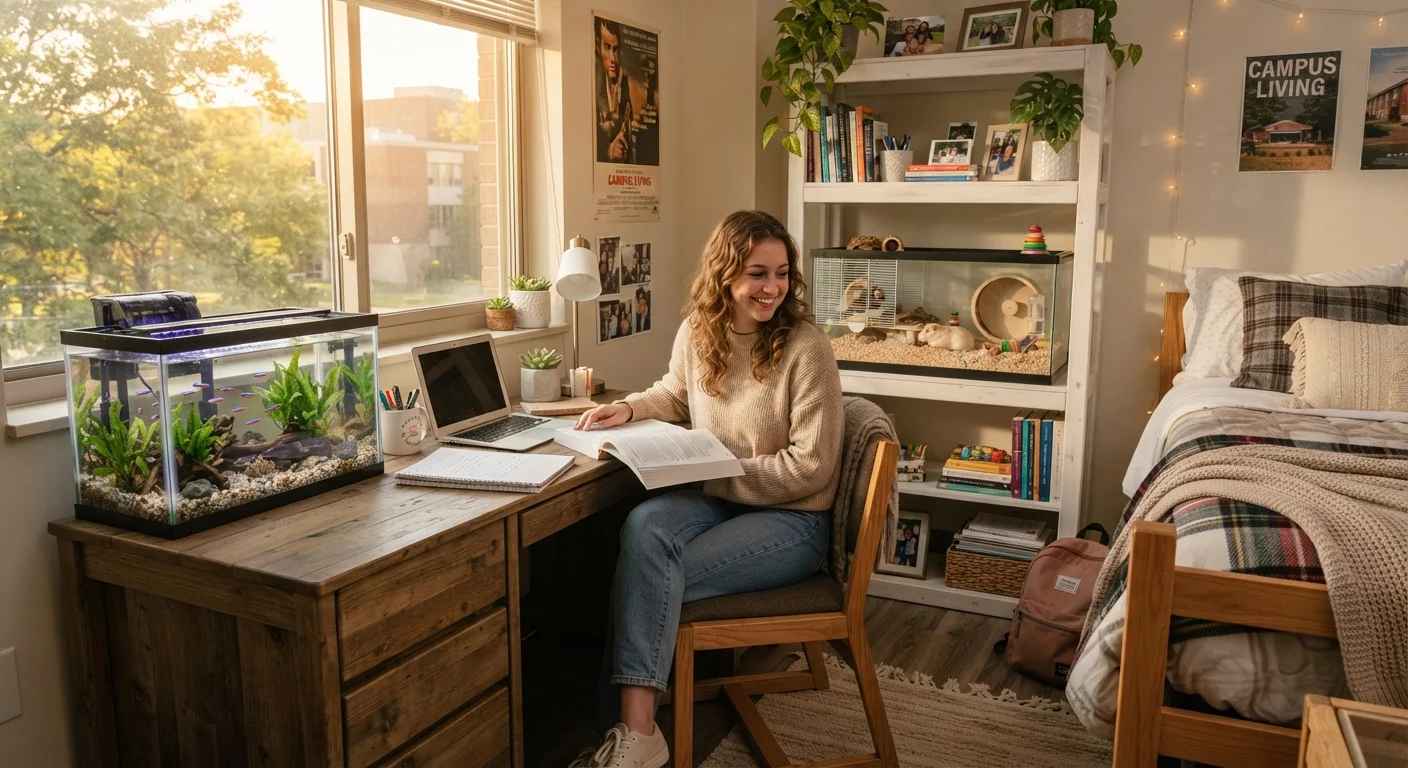
Why Mental Stimulation Matters for Dorm Pets
When a pet sits alone in a dorm room for six to eight hours while you're in class, the risk isn't just loneliness - it's boredom-related stress. For many animals, a lack of mental engagement can lead to repetitive behaviors, reduced appetite, lethargy, or, in some species, signs of anxiety. This is true even for pets that seem low-maintenance on the surface.
Before diving into specific strategies, it helps to understand that different animals have different stimulation needs. A betta fish benefits from a visually interesting tank environment, while a hamster needs opportunities to burrow, explore, and forage. Meeting those species-specific needs is more effective than applying a one-size-fits-all approach. If you're still deciding whether pet ownership fits your lifestyle, this honest overview of student pet ownership is worth reading first.
The good news: most enrichment strategies for dorm-appropriate pets are affordable, space-efficient, and easy to rotate - even on a student schedule. Below are seven practical approaches to keeping your pet mentally active while you're away.
Rotate Cage Furniture and Accessories Regularly
One of the simplest and most effective enrichment techniques for small mammals, reptiles, and birds is periodically rearranging their habitat. Moving a hiding spot, adding a new tunnel, or swapping the position of a climbing branch creates novelty without requiring new purchases. For animals like hamsters, gerbils, or rats, novelty in their environment encourages exploration - a cognitively engaging behavior that mimics how they'd interact with a changing natural environment.
Aim to make small changes every one to two weeks. You don't need to overhaul the habitat; even relocating a single item can reset your pet's curiosity about their space.
Rearranging cage accessories every week or two can reset your pet's curiosity at zero cost.
Use Foraging Feeders and Puzzle Toys
Rather than placing food directly in a bowl, consider making your pet work for part of their meal. Foraging feeders - devices that require the animal to manipulate or explore to access food - are available for many small pet species and encourage natural problem-solving behavior. For birds, this might mean a hanging foraging toy; for small mammals, food can be hidden in bedding or tucked into a cardboard roll.
This approach is well-documented in zoo animal management as a form of behavioral enrichment. Applied at home, it extends the time your pet spends mentally active, even in your absence. Many foraging options can be made from household materials like paper bags, cardboard tubes, or egg cartons.
Making pets forage for food extends mental engagement and mirrors natural behavior patterns.
Provide Appropriate Species-Specific Sensory Stimulation
Sensory enrichment goes beyond sight. Depending on your pet's species, this could mean providing safe herbs or scents for a small mammal to investigate, introducing different textures of bedding material, or adding background sound through a low-volume radio or nature sounds playlist. Fish benefit from a varied tank environment - live or artificial plants, hiding caves, and proper lighting cycles all influence their activity levels and stress.
It's important to research what's safe and appropriate for your specific animal. Some scents or sounds that seem harmless can be stressful or even harmful to certain species. When in doubt, consult a veterinarian or a reputable species-specific care guide.
Sensory variety - scents, textures, sounds - can meaningfully reduce boredom in confined pets.
Set Up a Window View or Visual Stimulation Source
For pets that are visually oriented - birds, some reptiles, and even certain small mammals - a view of the outside world can be genuinely stimulating. Positioning a cage or habitat near a window (while avoiding direct sunlight that could overheat the space) gives animals movement, changing light, and outdoor activity to observe throughout the day.
For aquarium fish, placing the tank in a location with moderate visual activity in the room - rather than a completely static corner - can also encourage more active fish behavior. Be cautious about direct sun exposure, which can cause temperature spikes and algae problems in aquariums.
A safe window view gives visually aware pets something to track and engage with all day.
Choose Habitat Sizes That Allow Natural Movement
Enrichment is significantly limited when a pet's primary enclosure is too small to allow natural movement. A hamster in an undersized cage, for example, has nowhere to channel foraging or exploration energy, regardless of how many toys you add. Before investing in enrichment accessories, verify that your pet's habitat meets the minimum size recommendations from veterinary or species-specific welfare guidelines.
In a dorm context, this can be a real constraint - but it's a foundational one. A larger habitat doesn't have to mean a bigger footprint; vertical space and multi-level designs are often available for small mammals and birds. The dorm-friendly pets hub covers species that tend to thrive in compact living situations.
Adequate enclosure size is the foundation that all other enrichment strategies depend on.
Establish a Consistent Light and Activity Cycle
Many pet species are sensitive to light cycles, which regulate sleep, activity, and feeding rhythms. Leaving a dorm room dark all day or flooded with artificial light at inconsistent hours can disrupt your pet's natural biological patterns - a subtle but meaningful stressor over time. Where possible, use a simple plug-in timer to regulate room or tank lighting, maintaining a predictable cycle aligned with natural daylight hours.
This is particularly important for reptiles, which often depend on UVB lighting schedules, and for birds, whose mood and vocalization patterns are tied closely to day length. A stable light cycle is a low-effort baseline that supports everything else you do for enrichment.
A predictable daily light cycle supports your pet's biological rhythms and overall stress levels.
Pre-Engage Your Pet Before Leaving for Class
Spending five to ten minutes actively interacting with your pet before heading out can positively influence how they spend the hours that follow. For social animals like rats or guinea pigs, handling and play before your absence can reduce anxiety. For others, offering a foraging activity or novel item right as you leave gives them something immediate to focus on.
This pre-departure routine also benefits you - it provides a natural daily checkpoint to observe your pet's behavior, appetite, and overall condition. Any changes in alertness, movement, or eating habits are easier to catch when you're consistently paying attention. For broader guidance on keeping your pet healthy on a busy schedule, see keeping a dorm pet healthy during classes.
A brief interaction before you leave gives social pets a positive anchor for the hours ahead.
Building Enrichment Into Your Everyday Routine
Enrichment doesn't need to be an elaborate project. The most sustainable approach is weaving small stimulation habits into the routines you already have. Rearranging cage accessories on Sunday, setting up a foraging puzzle before your morning class, or switching out a hiding spot midweek takes only a few minutes but meaningfully varies your pet's experience throughout the day.
Start Simple and Build Gradually
If you're new to enrichment, resist the urge to introduce multiple changes at once. Some pets - particularly prey animals like rabbits and guinea pigs - can find too much novelty stressful rather than stimulating. Introduce one new item or change at a time, and observe how your pet responds over several days before adding more.
Pairing enrichment with a consistent daily care schedule also helps. Routines built around a class schedule can make enrichment feel automatic rather than like an added task. And if you're planning ahead for breaks and extended absences, planning for your pet over winter break is a related challenge worth thinking through early.
Ultimately, a mentally engaged pet is generally a healthier, calmer, and more rewarding companion - something that benefits both of you during the demanding stretch of an academic semester.
This article provides general pet care information for educational purposes. For concerns about your specific pet's health or behavior, consult a licensed veterinarian.
The content provided on our blog site traverses numerous categories, offering readers valuable and practical information. Readers can use the editorial team’s research and data to gain more insights into their topics of interest. However, they are requested not to treat the articles as conclusive. The website team cannot be held responsible for differences in data or inaccuracies found across other platforms. Please also note that the site might also miss out on various schemes and offers available that the readers may find more beneficial than the ones we cover.