

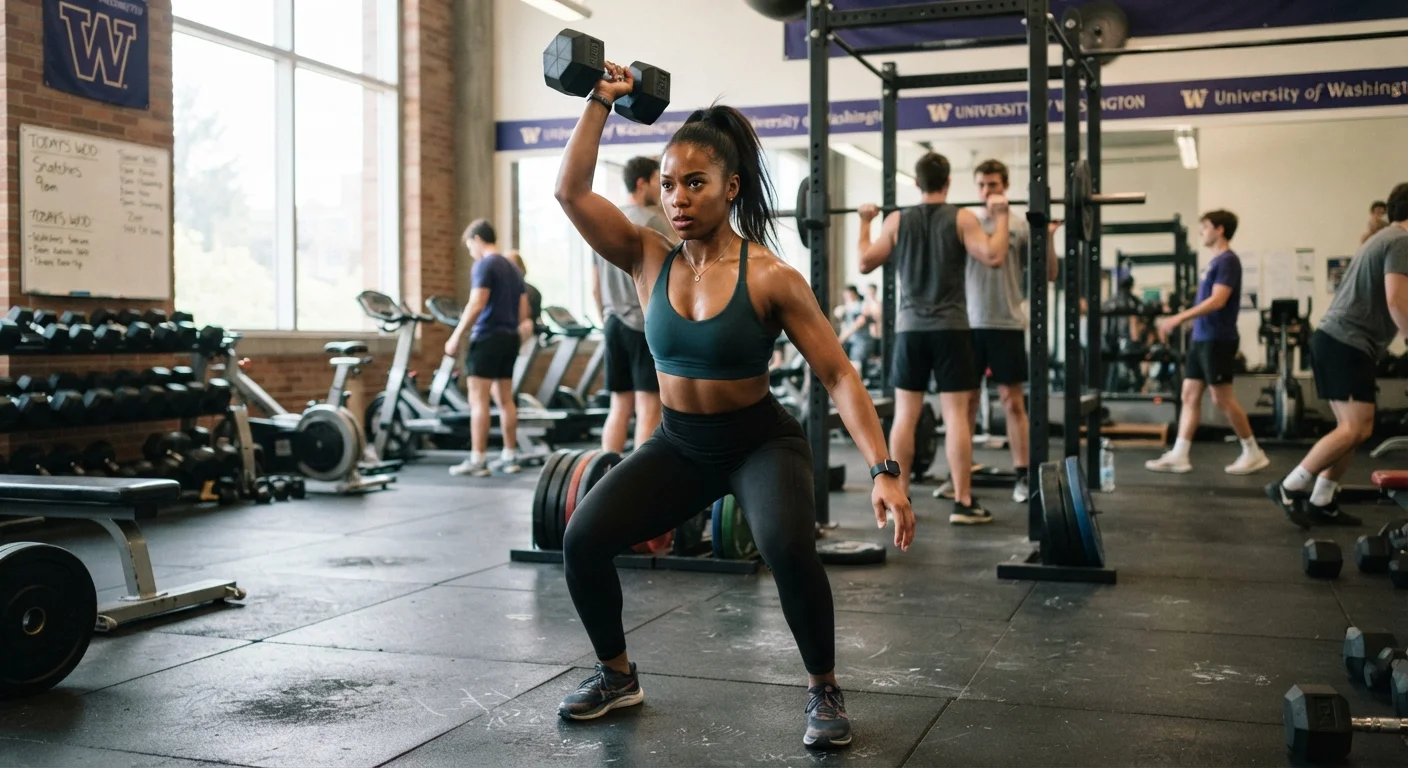
Option A
Cardio Training
The heart-rate booster that fits almost anywhere.
Best for: Students who want to manage stress, improve endurance, and need minimal or no equipment.
Option B
Strength Training
The muscle-building approach that pays dividends over time.
Best for: Students focused on body composition, bone health, and workouts that keep burning calories after they finish.
Why 30 Minutes Is Actually Enough
Between back-to-back classes, part-time jobs, and the occasional need for sleep, most college students aren't squeezing two-hour gym sessions into their week - and they don't need to. The ACSM and the U.S. Department of Health and Human Services both recognize that meaningful health benefits are achievable with as little as 150 minutes of moderate-intensity activity per week, which breaks down to about 30 minutes five days a week.
The real question isn't whether 30 minutes is enough. It's how to spend those 30 minutes in a way that lines up with what you actually need right now. That's where understanding the core differences between cardio and strength training becomes genuinely useful. For a broader look at how movement fits into student wellness, see our foundational physical wellness guide.
| Criterion | Cardio Training | Strength Training |
|---|---|---|
| Primary benefit | Heart & lung health, endurance | Muscle mass, bone density |
| Equipment needed | Often none | Weights, bands, or machines |
| Calorie burn during session | Generally higher | Moderate, varies by intensity |
| Afterburn effect (EPOC) | Low to moderate | Moderate to high |
| Stress & mood relief | Strong, rapid effect | Present but typically slower |
| Bone density support | Moderate (weight-bearing only) | Strong |
| Beginner accessibility | Very high | Moderate - form matters |
| 30-minute efficiency | High for aerobic goals | High for compound circuits |
What Cardio Does for You in Half an Hour
Cardiovascular exercise - running, cycling, swimming, jump rope, or even a brisk uphill walk - raises your heart rate and keeps it elevated. In a 30-minute session, you can realistically complete a solid aerobic workout that supports heart and lung health, improves circulation, and triggers the release of endorphins that many students describe as a natural stress reset.
Research consistently links regular aerobic activity to better sleep quality and reduced symptoms of anxiety - two things that matter enormously during finals season. Cardio also tends to have a lower barrier to entry: you can walk out the door and start immediately, no equipment required.
The trade-off is that purely aerobic training does relatively little to build muscle mass or improve bone density compared to resistance work. If those are priorities for you, cardio alone won't get you all the way there.
150 min/week
Recommended moderate aerobic activity
The U.S. Department of Health and Human Services Physical Activity Guidelines recommend at least 150 minutes of moderate-intensity aerobic activity per week for adults.
2x/week
Recommended strength sessions for adults
The same federal guidelines recommend muscle-strengthening activities involving all major muscle groups on at least two days per week.
~30%
Students meeting aerobic activity guidelines
The American College Health Association's National College Health Assessment has consistently found that fewer than a third of college students meet recommended aerobic activity targets.
What Strength Training Does for You in Half an Hour
Resistance training - using free weights, machines, resistance bands, or your own bodyweight - builds skeletal muscle and strengthens connective tissue. A 30-minute session built around compound movements (exercises that engage multiple muscle groups at once, like squats, deadlifts, push-ups, or rows) can be surprisingly comprehensive.
One underappreciated benefit: strength training produces an "afterburn" effect, technically called excess post-exercise oxygen consumption (EPOC), meaning your body continues to use more energy than usual for hours after you finish. For students who want the most metabolic return from a short session, this is meaningful.
Strength training also supports bone density - particularly important for young adults in their early twenties, when peak bone mass is still being established. If you're working out in a dorm room, check out our comparison of gym vs. home workouts for practical setup advice.
When You Don't Have to Choose: HIIT as a Middle Ground
High-Intensity Interval Training (HIIT) alternates short bursts of intense effort with brief recovery periods. It's technically cardio, but it loads muscles enough to produce some strength-adjacent adaptations. Studies published in journals like the Journal of Physiology suggest HIIT can improve both aerobic capacity and muscle endurance in less time than traditional steady-state cardio or isolated strength sessions.
For a student with 30 minutes and one training slot, a well-designed HIIT circuit - think 40 seconds of effort, 20 seconds rest, cycling through 8-10 exercises - covers a lot of ground. It's not a perfect substitute for dedicated strength or endurance work, but it's an effective compromise when life gets chaotic.
Building any kind of habit is easier when your schedule is somewhat predictable. Our article on building a fitness habit when your week never looks the same offers realistic strategies for students whose days shift constantly. And if common gym myths are clouding your decision, it's worth reading about fitness myths that circulate every college campus before committing to any one approach.
This article is for general informational purposes only and does not constitute medical or fitness advice. Consult a qualified healthcare provider or certified fitness professional before beginning any new exercise program, especially if you have an existing health condition or injury.
The content provided on our blog site traverses numerous categories, offering readers valuable and practical information. Readers can use the editorial team’s research and data to gain more insights into their topics of interest. However, they are requested not to treat the articles as conclusive. The website team cannot be held responsible for differences in data or inaccuracies found across other platforms. Please also note that the site might also miss out on various schemes and offers available that the readers may find more beneficial than the ones we cover.