

Start here
What Self-Directed Learning Actually Means
Understand the challenge
Why First-Year Students Struggle With It
Build your toolkit
Core Study Methods That Work
Create your system
Building a Personal Learning System
Use your campus
Campus Resources That Support Independent Learners
What Self-Directed Learning Actually Means
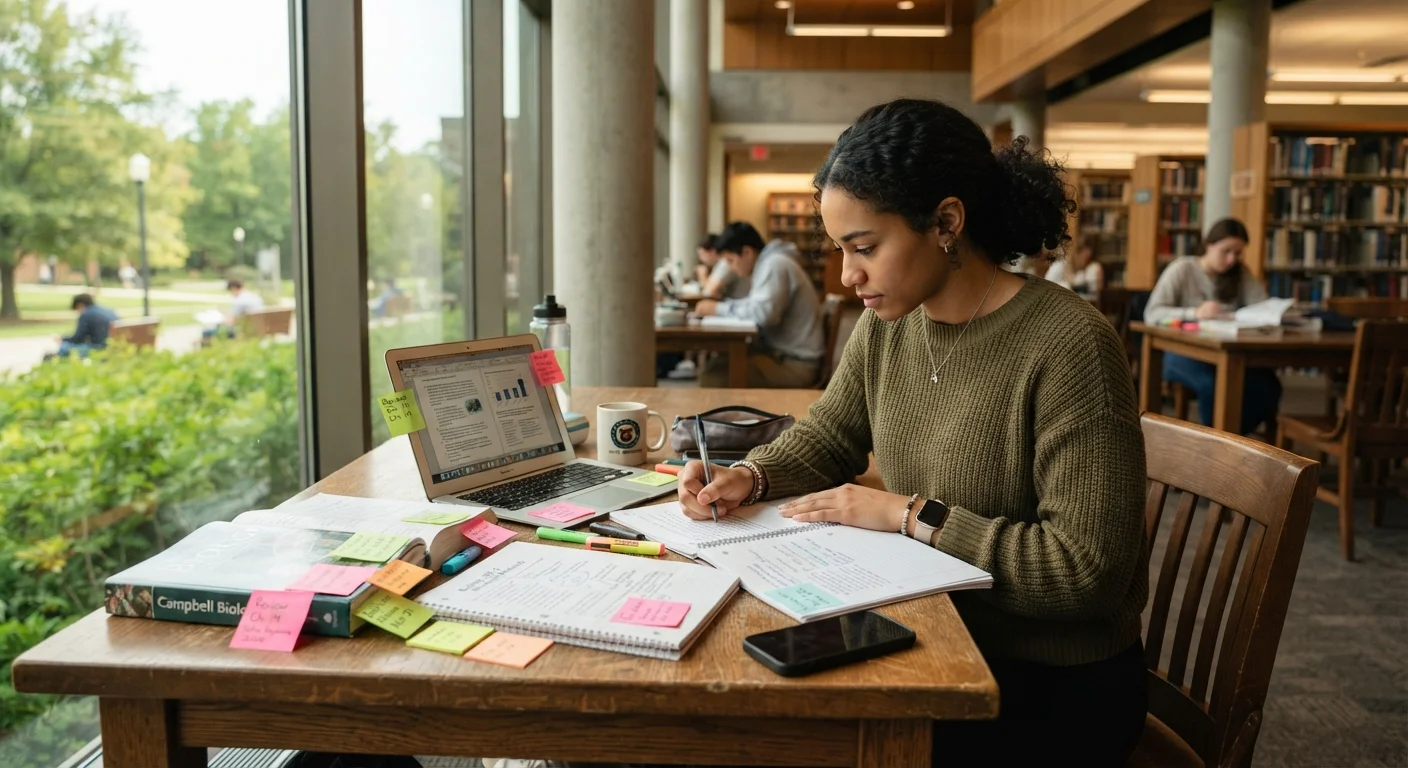
In high school, the structure was largely built for you - attendance was mandatory, homework due dates were frequent, and teachers regularly checked whether you understood the material. College works differently. Professors outline expectations on a syllabus, and then the responsibility for actually learning the content shifts to you.
Self-directed learning is the ability to identify what you need to learn, choose how to approach it, manage your time around it, and evaluate whether it's working. It's less about studying harder and more about studying intentionally. This is the foundation of nearly every other academic skill you'll develop in college.
Self-directed learning
A learning approach where you take responsibility for setting your own goals, choosing study methods, managing your time, and reflecting on your progress - rather than relying on external direction.
Spaced practice
A study strategy that involves reviewing material across multiple sessions spread out over time, which helps information stick in long-term memory more effectively than cramming.
Retrieval practice
Actively pulling information from memory - through quizzes, flashcards, or self-explanation - rather than passively rereading. The act of recalling strengthens retention.
Self-regulated learning
The broader skill of monitoring your own understanding, adjusting your approach when something isn't working, and taking deliberate steps to improve your learning over time.
Pomodoro Technique
A time management method that breaks work into focused 25-minute intervals followed by short breaks, designed to improve concentration and reduce mental fatigue.
For a broader look at study skills across all four years, see the end-to-end study skills guide which builds on these fundamentals.
Why First-Year Students Struggle With It
The jump from high school to college is often described as a freedom gain - but it's also a structure loss. Without daily homework checks or parent reminders, many students find the first semester disorienting. Free periods get filled with socializing or passive scrolling rather than purposeful review, and the first round of exams can feel like an ambush.
The core problem isn't laziness - it's the absence of a system. Most students have never had to build one before. Recognizing this gap is the first productive step.
Don't Mistake Busyness for Studying
Many first-year students spend hours at a desk and still retain little because they're engaged in passive activities - scrolling through slides, highlighting entire pages, or copying notes without processing them. Time spent is not the same as learning achieved. Focus on what you're actively doing with the material, not just how long you sit with it.
Managing a new living environment adds another layer of complexity. If you're figuring out apartment responsibilities alongside academics, the apartment basics hub can help you separate those logistics from your study time.
Core Study Methods That Work
Not all study techniques are equally effective. Passive methods - highlighting, rereading notes, watching recorded lectures on repeat - feel productive but produce weak retention. Cognitive science research consistently supports two strategies above others:
- Spaced practice: Reviewing material across multiple sessions spread over days, rather than one long block before a test. Each time you return to the material, your brain reinforces the memory more durably.
- Retrieval practice: Actively pulling information from memory - through practice tests, flashcards, or explaining concepts aloud - rather than passively reviewing it. The effort of recall is what strengthens memory.
A practical third tool is the Pomodoro Technique: work in focused 25-minute blocks followed by a 5-minute break. This helps sustain attention and makes large tasks feel more manageable.
Test Yourself Before You Feel Ready
A common mistake is waiting until you feel confident before trying practice questions. In reality, attempting retrieval when the material feels unfamiliar is exactly when it builds the strongest memory. Use practice problems and self-quizzes early - before you think you're ready - and treat wrong answers as useful data, not failure.
Building a Personal Learning System
A learning system doesn't need to be complicated. It needs to be consistent. Three habits form the core:
- Weekly planning: At the start of each week, look at what's due, what exams are coming, and what material needs review. Assign specific study blocks to your calendar the same way you would a class.
- Daily minimums: Commit to a small amount of focused study every day - even 30 minutes. Consistency across the semester outperforms intensive cramming before deadlines.
- Regular self-assessment: After studying, briefly ask yourself: what did I understand? What's still unclear? Adjust next session accordingly.
Managing your time well also connects to managing other parts of student life. If you're commuting to campus, see the campus commuter guide for strategies on fitting study into your travel schedule.
Campus Resources That Support Independent Learners
Self-directed learning doesn't mean learning alone. Campuses invest heavily in support structures specifically designed to help students who are developing independence - and using them is a sign of self-awareness, not weakness.
- Tutoring and academic support centers: Often free and staffed by trained peers or professional tutors across subjects.
- Writing centers: Available for feedback at any stage of an assignment, not just proofreading at the end.
- Academic advisors: Help you align your course load with your goals and flag issues before they affect your GPA.
- Supplemental instruction (SI) sessions: Extra study sessions tied to historically difficult courses, often led by students who already passed the class.
Your Campus Tutoring Center
Most colleges offer free tutoring across core subjects. Visit during the first few weeks - before you're struggling - to learn what's available and how to book sessions.
Academic Advisor Appointments
Your assigned academic advisor can help you map out a realistic course load, understand degree requirements, and identify early warning signs of academic difficulty.
Supplemental Instruction (SI) Sessions
Many campuses run SI sessions for high-enrollment, historically difficult courses. These peer-led study groups reinforce lecture content using active learning techniques.
Taking care of your physical wellbeing supports your ability to study effectively. The physical wellness guide for college students covers sleep, nutrition, and movement habits that directly affect focus and memory.
Frequently Asked Questions
Self-directed learning means you take ownership of planning, executing, and evaluating your own studying - without waiting for a teacher to tell you exactly what to do. In college, professors set the syllabus but you decide how deeply to engage and when to review material. It's a skill you can deliberately build.
A commonly cited guideline in higher education is roughly two hours of study for every hour spent in class, though the right amount varies by course difficulty and your personal learning pace. Rather than hitting a specific number, focus on consistent, focused sessions spread across the week rather than marathon cramming sessions.
Research in cognitive psychology consistently highlights spaced practice (spreading review over time) and retrieval practice (actively recalling information rather than passively rereading) as among the most effective study strategies. Techniques like the Pomodoro method can also help manage focus and avoid burnout.
Breaking study goals into small, specific tasks makes them far less daunting. Scheduling study blocks on a calendar - treating them like class appointments - and identifying your most productive time of day both help reduce avoidance. Starting with a five-minute minimum commitment can also lower the barrier to beginning.
Most colleges offer free tutoring centers, writing labs, academic advisors, and study skills workshops. Many also have supplemental instruction sessions tied to high-enrollment courses. These resources are designed specifically for students who want to strengthen independent learning habits.
It's a learnable skill. Research on self-regulated learning suggests that students who reflect on their study habits and adjust their strategies over time consistently improve their academic outcomes. Nobody arrives at college fully equipped - it's something you develop with practice and feedback.
The content provided on our blog site traverses numerous categories, offering readers valuable and practical information. Readers can use the editorial team’s research and data to gain more insights into their topics of interest. However, they are requested not to treat the articles as conclusive. The website team cannot be held responsible for differences in data or inaccuracies found across other platforms. Please also note that the site might also miss out on various schemes and offers available that the readers may find more beneficial than the ones we cover.