

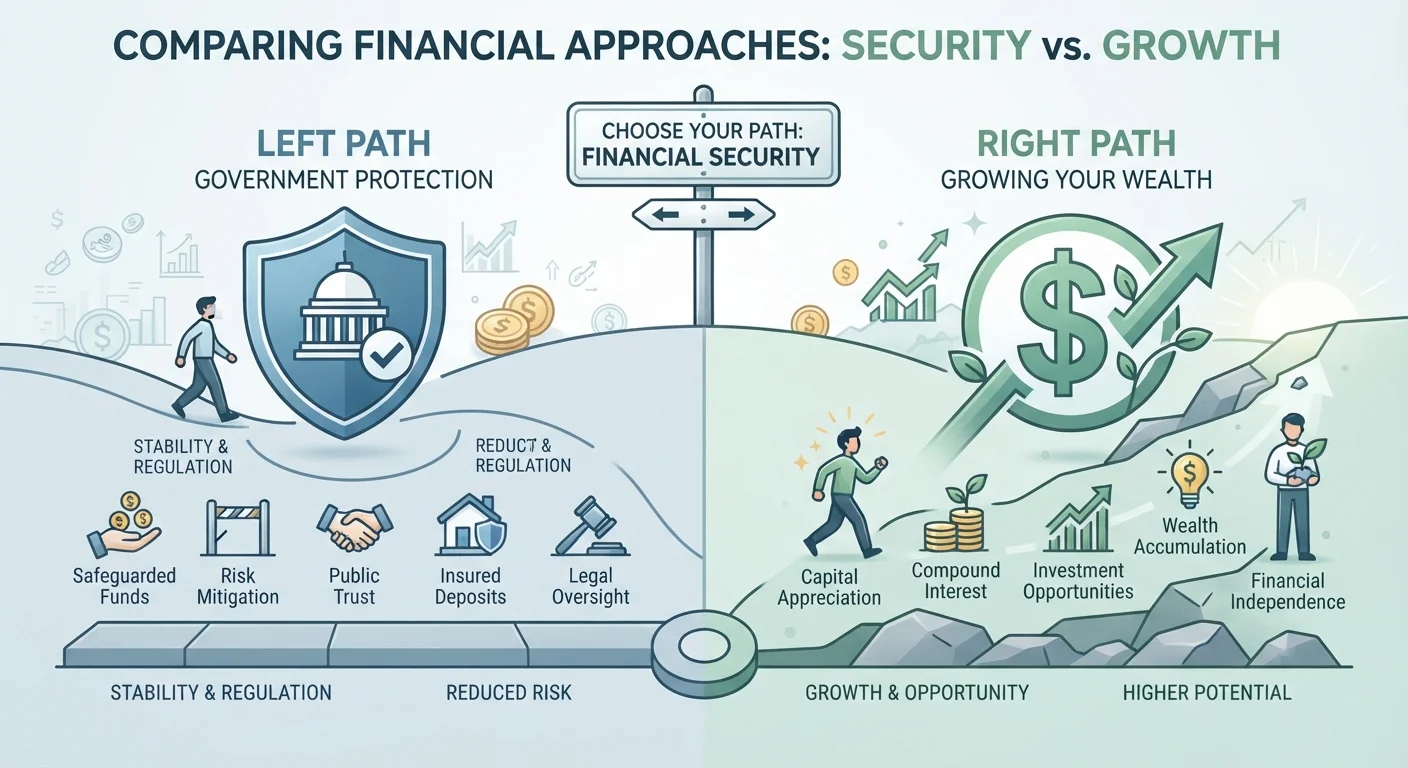
Option A
Direct Subsidised Loans
The need-based loan where the government covers interest during school.
Best for: Undergraduate students who demonstrate financial need and want to minimize interest buildup while enrolled.
Option B
Direct Unsubsidised Loans
The broadly available loan where interest accrues from day one.
Best for: Students at any level — undergraduate or graduate — who need additional funding beyond subsidised loan limits.
The Core Distinction: Who Pays Interest and When
Both Direct Subsidised and Direct Unsubsidised Loans are federal student loans issued by the U.S. Department of Education. They share the same interest rates for a given enrollment level and the same repayment plan options. What separates them is a single but consequential rule: who bears the cost of interest while you are in school.
With a Direct Subsidised Loan, the federal government pays the interest that accrues during three specific periods: while you are enrolled at least half-time, during the six-month grace period after leaving school, and during approved deferment periods. This is the subsidy the name refers to.
With a Direct Unsubsidised Loan, interest begins accumulating from the moment the loan is disbursed — regardless of whether you are in class or on break. If you do not pay that interest as it accrues, it is eventually capitalised (added to your loan principal), meaning you then owe interest on a larger balance. To understand exactly how this compounding process works, see our explainer on common student loan interest misconceptions.
| Criterion | Direct Subsidised Loans | Direct Unsubsidised Loans |
|---|---|---|
| Who pays in-school interest | Federal government | The borrower (accrues on balance) |
| Eligible students | Undergraduates with financial need | Undergrad, graduate, and professional students |
| Need-based requirement | Yes — FAFSA need required | No — available regardless of need |
| Interest during grace period | Government covers it | Accrues and may capitalise |
| Interest rate (same enrollment level) | Identical to unsubsidised | Identical to subsidised |
| Repayment plan options | All federal plans available | All federal plans available |
| Risk of interest capitalisation | Lower — subsidy prevents accrual | Higher — unpaid interest capitalises |
Eligibility and Loan Limits: Who Can Borrow What
Eligibility rules are another key difference between these two loan types.
- Subsidised loans are available only to undergraduate students who demonstrate financial need, as determined by the Free Application for Federal Student Aid (FAFSA). Graduate and professional students are not eligible.
- Unsubsidised loans are available to undergraduate, graduate, and professional students regardless of demonstrated financial need. Your school determines the amount you can borrow based on your cost of attendance and other aid received.
Annual and aggregate borrowing limits apply to both types. For dependent undergraduates, subsidised loan limits range from $3,500 to $5,500 per year depending on year in school. Total combined limits (subsidised plus unsubsidised) are higher. Graduate students face separate, higher limits — but exclusively through unsubsidised loans. For a detailed look at how graduate borrowing rules differ, see our guide on borrowing for graduate school.
$5,500
Max annual subsidised loan for dependent freshmen
The U.S. Department of Education sets annual limits by year in school; this is the ceiling for first-year dependent undergraduates.
6.53%
2024–25 undergraduate Direct Loan interest rate
Both subsidised and unsubsidised undergraduate Direct Loans carry the same fixed rate, set annually by Congress.
$31,000
Aggregate subsidised + unsubsidised limit for dependent undergrads
Federal aggregate borrowing caps apply across all undergraduate years; no more than $23,000 of this total may be subsidised.
The Real Cost Difference Over Time
The interest accrual difference may seem abstract, but it has a measurable dollar impact. Consider a simplified example: if you borrow $5,500 in unsubsidised loans at a 6.53% interest rate (the 2024–25 undergraduate rate) and do not pay interest during a four-year enrollment period, you would accumulate roughly $1,400 in unpaid interest. Once capitalised, your repayment balance would be approximately $6,900 — not the original $5,500.
With a subsidised loan of the same amount under the same conditions, your balance at repayment would remain $5,500, because the government covered that accruing interest.
That gap widens further when you factor in that interest then accrues on the capitalised balance throughout repayment. To build a complete picture of how principal, interest, and fees compound together, read our article on the true cost of a student loan.
One practical strategy for unsubsidised borrowers: making interest-only payments while still in school prevents capitalisation and keeps your principal stable — even small monthly payments can reduce your long-term balance meaningfully.
This article is for general informational and educational purposes only. It is not personalised financial or legal advice. Consult a qualified financial aid adviser or licensed financial professional regarding decisions specific to your situation.
The content provided on our blog site traverses numerous categories, offering readers valuable and practical information. Readers can use the editorial team’s research and data to gain more insights into their topics of interest. However, they are requested not to treat the articles as conclusive. The website team cannot be held responsible for differences in data or inaccuracies found across other platforms. Please also note that the site might also miss out on various schemes and offers available that the readers may find more beneficial than the ones we cover.