

Our Verdict
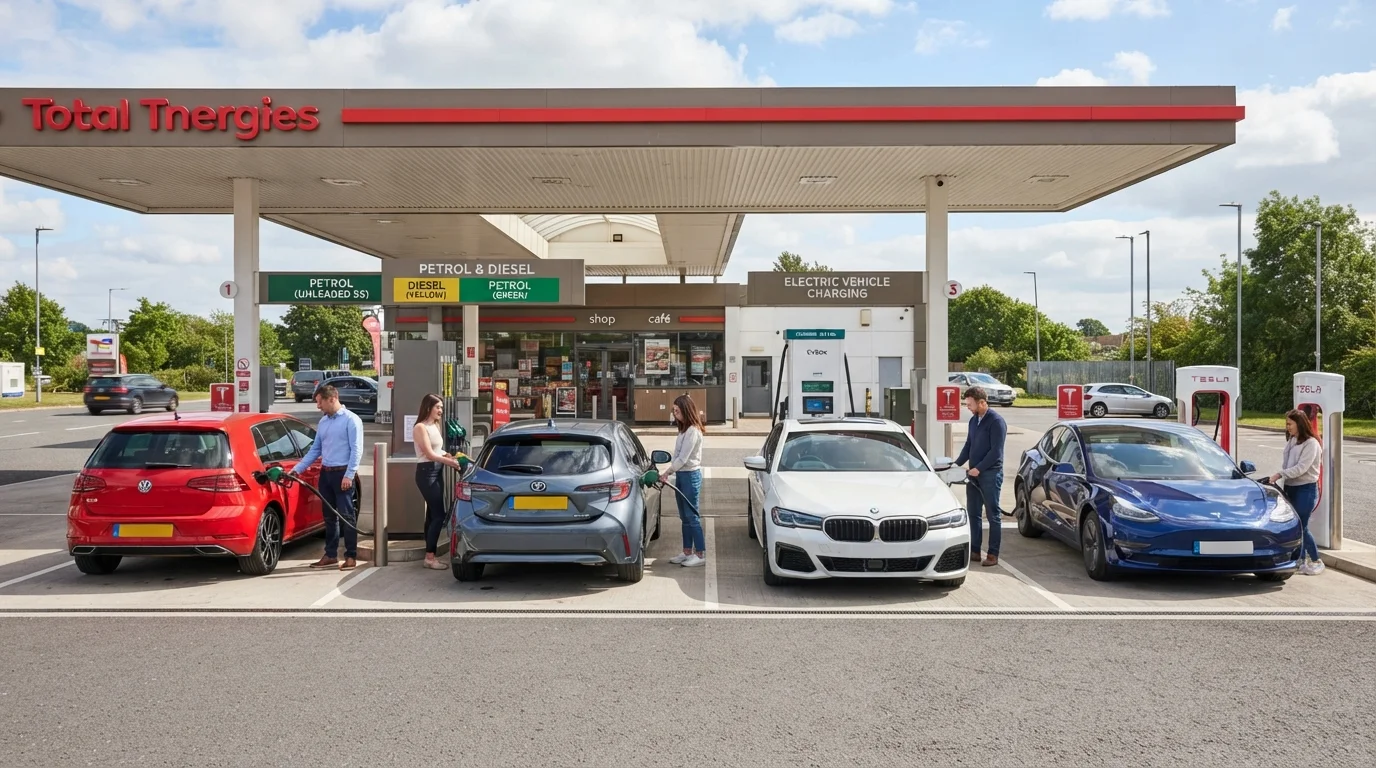
No single fuel type is right for every student. Petrol remains the most practical for those in rural areas or tight budgets. Hybrid suits drivers who want better efficiency without committing to a charging setup. Electric makes sense only when reliable home or campus charging is available. Diesel is rarely the right fit for short, frequent student commutes.
| Best for | Recommended |
|---|---|
| Students on a tight budget with unpredictable routes | Petrol |
| Students doing longer daily commutes who want better fuel economy | Hybrid |
| Students with reliable home or campus charging access | Electric |
| Long-distance highway commuters (less common for students) | Diesel |
Why Fuel Type Is About More Than What Goes in the Tank
When most people think about fuel type, they picture the pump. But whether a car runs on petrol, diesel, a hybrid system, or electricity shapes nearly every aspect of owning it - from how often you visit a mechanic to how far you can travel on a single charge or tank, and even how much your insurance might cost.
For college students buying or leasing their first vehicle, understanding these differences upfront can prevent expensive surprises. This guide breaks down what each fuel type actually means in day-to-day ownership terms. For a broader picture of total ownership costs, see our introduction to student car ownership costs.
| Petrol | Diesel | Hybrid | Electric | |
|---|---|---|---|---|
| Typical upfront cost (used market) | Lower | Lower to moderate | Moderate | Higher |
| Fuel/energy cost per mile | Moderate | Moderate to low (highway) | Lower than petrol | Generally lowest |
| Maintenance complexity | Low | Moderate | Moderate | Low to moderate |
| Refuel/recharge convenience | Very high | High | Very high | Depends on local access |
| Best driving environment | Mixed | Highway/long distance | City/stop-and-go | City/short commutes |
| Infrastructure needed | Gas station | Diesel station | Gas station only | Home or public charger |
Petrol: The Familiar Default
Petrol (gasoline) vehicles are the most common option students encounter in the used car market. They're widely understood by mechanics, easy to refuel almost anywhere, and typically carry lower sticker prices than hybrid or electric alternatives.
Maintenance: Petrol engines need regular oil changes, air filter replacements, and spark plug checks. These are well-understood services at most shops, keeping costs predictable.
Running costs: Fuel economy varies widely by model, but petrol is generally the least efficient option on a per-mile basis compared to hybrids and electric. In stop-and-go city driving - common near campuses - fuel costs add up quickly.
Infrastructure: Gas stations are everywhere, making petrol the most flexible option for students who travel across regions or live in rural areas.
Check Fuel Economy Ratings Before You Buy
The U.S. Department of Energy's fueleconomy.gov publishes official EPA fuel economy estimates for most vehicles sold in the United States. Comparing ratings across models is a quick way to estimate realistic running costs before you commit to a purchase. Remember that real-world economy often differs from rated figures depending on driving style and conditions.
Diesel: Efficient on Highways, Less Ideal for Short Trips
Diesel engines are more fuel-efficient than petrol at highway speeds, which is why they're historically popular with long-distance drivers. However, for the average college student making short trips across town or campus, diesel is often a poor match.
Maintenance: Diesel engines require specific oil grades and have components like diesel particulate filters (DPFs) - devices that capture exhaust soot - that can clog when the engine doesn't run hot enough on short journeys. Repair costs when these systems fail can be significant.
Running costs: Diesel fuel tends to cost slightly more than regular petrol at the pump, though better highway efficiency can offset this for high-mileage drivers.
Infrastructure: Diesel is available at most major stations, though not all smaller stations carry it. This is rarely a critical issue but worth noting if you live in a very rural area.
Hybrid: Better Efficiency Without Charging Infrastructure
Hybrid vehicles use both a petrol engine and an electric motor, recovering energy through a process called regenerative braking - where slowing down recharges a small battery. You never plug a standard (non-plug-in) hybrid in; it manages itself.
Maintenance: Hybrids have more components than a pure petrol car - two powertrains working in tandem means more systems to maintain. However, because the electric motor handles low-speed driving, brake wear is often reduced. Overall maintenance costs tend to be slightly higher than petrol but typically lower than many drivers expect. See our guide to what mechanics actually recommend for broader maintenance context.
Running costs: Hybrids genuinely shine in city and stop-and-go driving - exactly the environment many students drive in. Fuel savings compared to petrol can be meaningful over time.
Infrastructure: Standard hybrids refuel at any gas station. Plug-in hybrids (PHEVs) also accept charging but can run on petrol alone, offering flexibility.
Electric: Lower Running Costs, Higher Infrastructure Dependency
Electric vehicles (EVs) run entirely on electricity stored in a battery pack. They have no engine oil, no exhaust system, and far fewer moving parts than combustion vehicles - which simplifies certain aspects of maintenance significantly.
Maintenance: EVs don't need oil changes, and brake service is less frequent due to regenerative braking. However, battery health is a key long-term consideration, and any high-voltage system work should be handled by a qualified technician.
Running costs: Electricity generally costs less per mile than petrol or diesel, though exact figures depend on local electricity rates and how you charge. For a detailed cost comparison, our gas vs. electric running costs breakdown covers this in depth.
Infrastructure: This is the critical variable for students. If your campus or apartment has reliable charging access, an EV can work well. If you rely on public chargers, range anxiety and charging wait times become real concerns. Always research your specific campus area before committing.
Don't Assume Campus Charging Is Available
EV charging infrastructure on college campuses varies enormously - some schools have extensive networks, others have very few or no public chargers. Before choosing an electric vehicle, contact your campus facilities office or check their website to confirm what's actually available. Relying on public fast-chargers for daily use can be inconvenient and more expensive than home charging.
How to Think About This as a Student
The right fuel type depends on three practical questions: What can you afford upfront? Where will you refuel or recharge? How far do you drive regularly?
Petrol remains the most accessible and lowest-risk choice for students with unpredictable schedules, limited budgets, or who live in areas without EV infrastructure. Hybrids offer a meaningful efficiency upgrade with minimal lifestyle change. EVs are compelling but require honest assessment of your charging situation before buying.
Diesel is rarely the practical choice for student use cases - short urban trips and infrequent highway journeys don't suit how diesel engines perform best.
For a full picture of how fuel costs fit into your total vehicle budget, explore our category-by-category student car cost reference, and don't overlook the costs students often forget to budget for.
The content provided on our blog site traverses numerous categories, offering readers valuable and practical information. Readers can use the editorial team’s research and data to gain more insights into their topics of interest. However, they are requested not to treat the articles as conclusive. The website team cannot be held responsible for differences in data or inaccuracies found across other platforms. Please also note that the site might also miss out on various schemes and offers available that the readers may find more beneficial than the ones we cover.