

Our Verdict
Dorm pet ownership is genuinely rewarding for students who choose a species that fits their living situation, budget, and schedule - and who have done the policy homework first. It is not a casual decision: even a small fish requires daily attention and upfront cost. For students who are ready to commit, a well-chosen low-maintenance pet can be a positive part of college life.
Best for students in pet-permitting housing who can realistically afford startup and ongoing costs, have a plan for care during breaks, and are drawn to the routine and companionship a pet provides.
What 'Dorm-Friendly' Actually Means
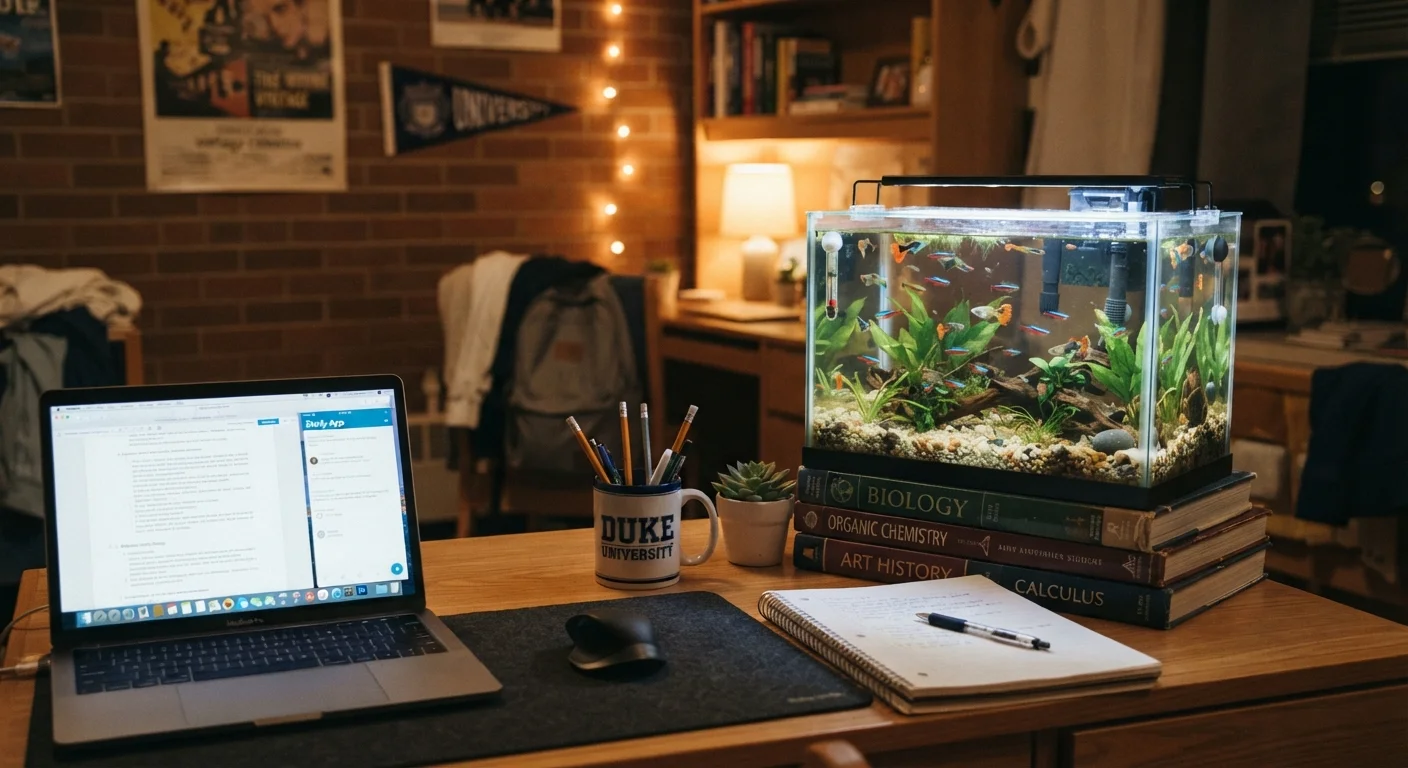
The phrase 'dorm-friendly pet' gets used loosely, but it has a practical definition rooted in campus policy and biology. Most residence halls restrict pets to small, caged, or contained animals - fish in tanks under a certain gallon limit (commonly 10 gallons), small rodents like hamsters or gerbils, or occasionally small reptiles. Dogs, cats, and rabbits are prohibited in the majority of on-campus housing, with exceptions sometimes made for documented emotional support animals under a formal accommodation process.
Before thinking about which pet to get, confirm what your specific housing agreement allows. Policies vary not just by university but by individual residence hall. The Pet Rules & Costs hub is a good starting point for understanding how to read and navigate these policies. Choosing a pet that violates your housing contract isn't a gray area - it typically means fines, mandatory rehoming, or disciplinary action.
Within permitted categories, 'low-maintenance' is relative. A betta fish needs daily feeding, weekly partial water changes, and a cycled, heated tank. A hamster is nocturnal and needs enrichment. Even the simplest pet requires a consistent caretaker - something worth weighing honestly against a student schedule.
The Real Upsides of Having a Campus Pet
Pets can meaningfully reduce day-to-day stress
Interacting with animals - even watching fish - is associated with lower cortisol levels and a calmer mood. For students under academic pressure, this is a tangible, repeatable benefit.
A pet creates structure in an unstructured schedule
Feeding times, cleaning schedules, and daily check-ins impose a gentle routine. This kind of external anchor can help students manage time more consistently.
Companionship during a period of social transition
Adjusting to college life can be isolating. A pet provides consistent, low-stakes companionship that many students find grounding, especially in the first year away from home.
Responsibility builds practical life skills
Managing the needs of another living creature - budgeting for supplies, tracking health, planning for absences - develops habits that transfer to other areas of adult life.
Small pets fit within tight living spaces
Species like bettas, guppies, or dwarf hamsters require minimal square footage, making them genuinely compatible with the limited footprint of a dorm room.
Research consistently links pet ownership with reduced perceived stress and lower anxiety - both meaningful for students navigating academic pressure. A pet introduces a non-negotiable routine: feeding times, tank maintenance, and cage cleaning create structure that can anchor a day otherwise shaped entirely by class schedules and social demands.
There is also a social dimension. Aquariums and small animals often become conversation starters in shared living spaces. And for students who live far from home, a pet can provide a sense of continuity and companionship that helps with the emotional adjustment to college life.
For students considering more than just dorm housing, the cats vs. dogs comparison for off-campus students explores how those dynamics shift when you have more space and fewer restrictions.
The Genuine Downsides You Should Anticipate
Startup and ongoing costs add up quickly
Even a basic aquarium setup involves equipment, water treatment, food, and periodic replacements. Veterinary care for fish, reptiles, or small mammals can be costly because these animals require specialist vets.
Policy violations carry serious consequences
Keeping an unpermitted pet in a dorm can result in fines, required rehoming of the animal, or disciplinary action that affects your housing status - outcomes that outweigh the convenience of bending the rules.
Break periods and travel require a care plan
Every absence - holiday breaks, weekend trips, overnight stays - requires arranging care in advance. Animals cannot be left without food, water, or monitoring, and this logistical burden falls entirely on the owner.
Roommates and shared spaces complicate ownership
Allergies, noise from nocturnal animals, odors, and differing comfort levels with pets can create friction in shared living arrangements that are already naturally stressful.
Pet illness or death adds emotional strain
Losing a pet during a demanding academic period is a real source of grief for many students. The emotional investment in any animal - even a fish - should be factored into the decision.
Cost is one of the most frequently underestimated factors. Startup expenses for even a simple betta setup - tank, heater, filter, substrate, water conditioner, and the fish itself - can run $60-$120 before the first feeding. Ongoing costs include food, replacement supplies, and occasional veterinary care, which for exotic animals (fish, reptiles, small mammals) can be surprisingly expensive since these species require specialized vets. For a fuller breakdown, see the real cost of owning a pet in college.
Time is equally real. Midterms, finals, club commitments, and spontaneous travel all compete with a pet's care needs. Unlike a plant, an animal cannot go a week unattended. Students need a concrete plan - a trusted friend, family member, or pet-sitter - for every break period and overnight absence. Failing to arrange this isn't just inconvenient; it affects the animal's health and welfare.
The emotional weight of pet ownership is also worth acknowledging. A pet that becomes ill or dies while you're managing coursework can be genuinely distressing. These are not reasons to avoid pets, but they are reasons to be honest with yourself about readiness.
Making a Responsible Decision
The students who thrive as dorm pet owners tend to share a few habits: they read the policy before choosing a pet, they budget for the full cost of ownership (not just the purchase price), and they have a care plan for absences before the animal arrives. The responsible student pet ownership guide covers these habits in practical detail.
Still Weighing Whether to Get a Pet?
If you're still deciding whether pet ownership fits your current situation, the broader question of trade-offs - time, lifestyle, and long-term commitment - is explored in detail in related guides on this site. Consider your housing policy, your budget, and your academic calendar before making a commitment. A pet rehomed after a few months is a poor outcome for both the student and the animal.
If you're still deciding whether pet ownership fits your current situation, the broader question of trade-offs - time, lifestyle, and long-term commitment - is explored in getting a pet as a student: advantages, drawbacks, and honest trade-offs. For daily care guidance once you've committed, the Basic Pet Care hub offers routines and species-specific advice to help you stay consistent.
The content provided on our blog site traverses numerous categories, offering readers valuable and practical information. Readers can use the editorial team’s research and data to gain more insights into their topics of interest. However, they are requested not to treat the articles as conclusive. The website team cannot be held responsible for differences in data or inaccuracies found across other platforms. Please also note that the site might also miss out on various schemes and offers available that the readers may find more beneficial than the ones we cover.