

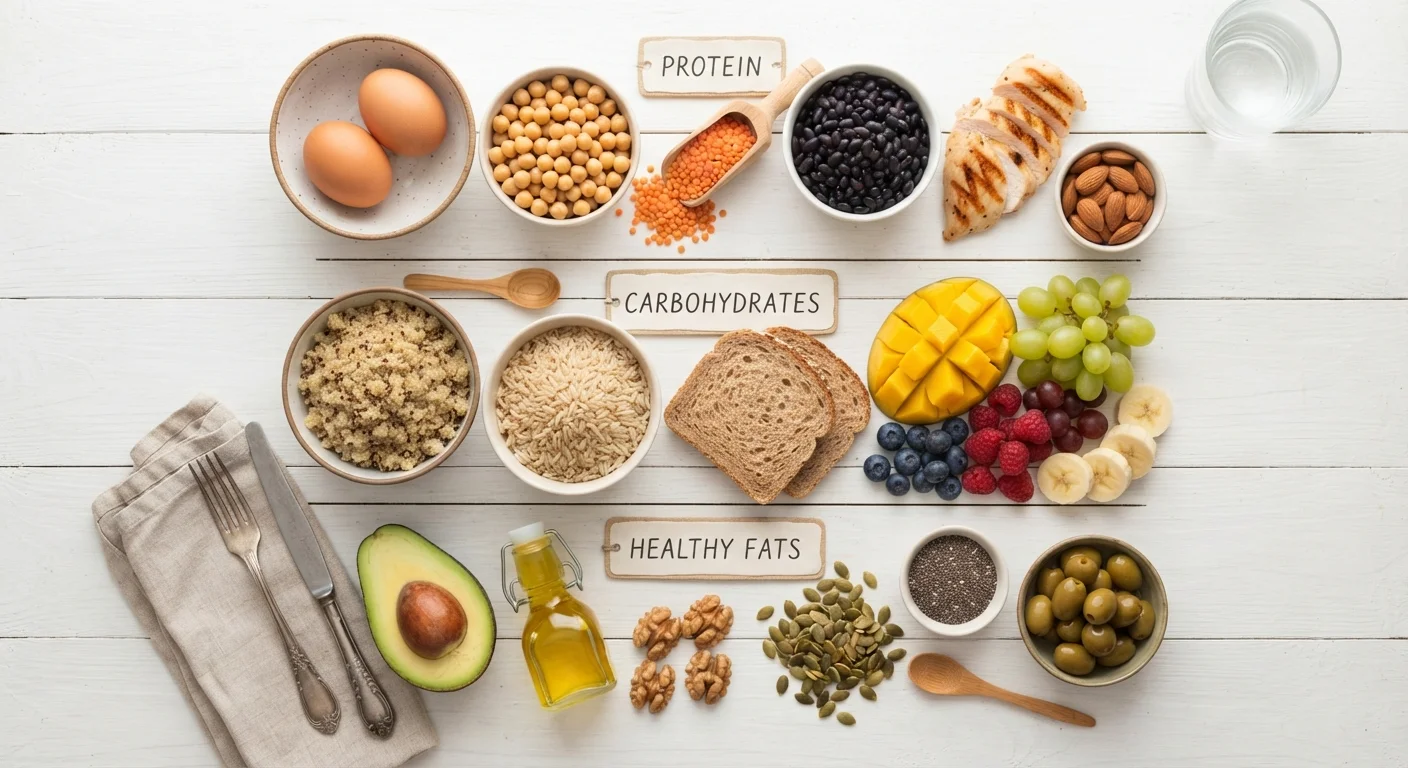
Why Macronutrients Matter for Students
Between back-to-back classes, late-night studying, and dining hall meals, food choices can feel complicated. Diet culture adds another layer of confusion - one week carbs are the enemy, the next it's fat. The reality? Your body runs on all three macronutrients, and understanding what each one actually does makes it a lot easier to fuel yourself well without the anxiety.
This isn't a guide about eating perfectly. It's a straightforward breakdown of protein, carbohydrates, and fat so you can make informed choices - whether that's at a dining hall, a campus convenience store, or cooking in a dorm room with one pot.
45-65%
Recommended daily calories from carbohydrates
According to the Dietary Guidelines for Americans, carbohydrates should make up roughly 45-65% of total daily calorie intake for most adults.
10-35%
Recommended daily calories from protein
The Dietary Reference Intakes published by the National Academies suggest protein should account for 10-35% of daily caloric intake for adults.
20-35%
Recommended daily calories from fat
The Dietary Guidelines for Americans recommend that dietary fat make up 20-35% of total daily calories, with an emphasis on unsaturated fat sources.
Carbohydrates: Your Body's Go-To Fuel
Carbohydrates are your body's preferred energy source - particularly for your brain and during physical activity. When you eat carbs, your digestive system breaks them down into glucose, which cells use for fuel. Any excess glucose gets stored in your muscles and liver as glycogen for later use.
There are two broad types worth knowing:
- Simple carbohydrates (sugars) are broken down quickly and provide fast energy. Found in fruit, dairy, and also in processed foods like candy and soda.
- Complex carbohydrates (starches and fiber) take longer to digest, providing steadier energy and supporting gut health. Found in oats, brown rice, whole-grain bread, beans, and vegetables.
Fiber - a type of carbohydrate your body can't fully digest - plays a particularly important role in digestive health, blood sugar regulation, and keeping you full between meals. Most college students don't get enough of it. Whole grains, legumes, and vegetables are your best budget-friendly sources.
Protein: Repair, Build, and Keep Things Running
Protein gets a lot of attention in fitness circles, but its job goes well beyond building muscle. Proteins are made of amino acids, which your body uses to repair tissues, produce enzymes and hormones, support immune function, and transport molecules throughout the bloodstream.
Your body can make some amino acids on its own, but nine are classified as essential - meaning you have to get them from food. Animal products like meat, eggs, and dairy contain all nine essential amino acids and are called complete proteins. Many plant sources are lower in one or more essential amino acids, but eating a variety of plant proteins throughout the day - beans, lentils, tofu, nuts, seeds, and whole grains - easily covers your needs.
Quick High-Protein Options on Campus
Hard-boiled eggs, cottage cheese, edamame, hummus with whole-grain pita, and a handful of mixed nuts are easy grab-and-go options that don't require cooking. Most campus dining halls also have a legume-based option at the salad bar - beans and lentils are protein powerhouses that cost very little.
For students on a tight budget, eggs, canned beans, Greek yogurt, and peanut butter are among the most affordable and protein-dense options available.
Fat: Essential, Not the Enemy
Dietary fat has been unfairly maligned for decades. In reality, fat is essential for absorbing fat-soluble vitamins (A, D, E, and K), producing hormones, maintaining cell membranes, and supporting brain function - roughly 60% of the brain is made of fat.
The type of fat matters more than total fat intake:
- Unsaturated fats (found in olive oil, avocados, nuts, and fatty fish) are associated with heart health benefits in research contexts.
- Saturated fats (found in butter, red meat, and full-fat dairy) are fine in moderate amounts for most people, but dominant in many fast-food and processed items.
- Trans fats (found in some partially hydrogenated oils) are widely considered harmful and have largely been phased out of the U.S. food supply following regulatory action.
Fat also slows digestion, which helps you stay fuller for longer - an underrated benefit when you're trying to make it from lunch to a 4 p.m. seminar without crashing.
This article is for general informational and educational purposes only and is not a substitute for professional medical or dietary advice. If you have specific health concerns or nutritional questions, please consult a registered dietitian or qualified healthcare provider.
Frequently Asked Questions
Tracking macros isn't necessary for most people. Understanding what each macronutrient does can help you make informed food choices without the need for meticulous counting. Focus on eating a variety of whole foods across all three categories rather than obsessing over exact numbers.
No - carbohydrates are your body's primary energy source and are especially important for brain function. The quality of carbs matters more than the quantity; whole grains, legumes, fruits, and vegetables provide fiber and nutrients, while highly processed options offer fewer benefits.
General public health guidelines suggest approximately 0.8 grams of protein per kilogram of body weight per day for most adults, though needs vary based on activity level and other factors. If you're very physically active or have specific health goals, a registered dietitian can give you personalized guidance.
No - eating fat doesn't directly translate to gaining body fat. Dietary fat is a macronutrient that serves important functions, including absorbing vitamins and supporting hormone production. Body fat accumulation is influenced by overall energy balance and many other factors, not fat intake alone.
Eggs, canned beans, oats, frozen vegetables, and peanut butter are affordable sources that cover all three macronutrients. Building meals around a grain, a protein source, and a fat-containing food - like a grain bowl with beans and olive oil - is a simple, low-cost strategy.
Yes. Legumes, tofu, tempeh, dairy, eggs, and certain grains like quinoa all provide protein. Eating a variety of plant-based protein sources throughout the day generally covers your needs without requiring meat at every meal.
The content provided on our blog site traverses numerous categories, offering readers valuable and practical information. Readers can use the editorial team’s research and data to gain more insights into their topics of interest. However, they are requested not to treat the articles as conclusive. The website team cannot be held responsible for differences in data or inaccuracies found across other platforms. Please also note that the site might also miss out on various schemes and offers available that the readers may find more beneficial than the ones we cover.