

Why Campus Eating Is Harder Than It Looks
Managing your own meals for the first time - on a fixed meal plan, in a dining hall designed for efficiency over variety - is genuinely challenging. You're not imagining the friction. Research published through the American College Health Association consistently finds that many college students fall short on vegetables, whole grains, and adequate protein, not because they don't care, but because their environment makes it harder to choose well.
The good news: nutrition science doesn't demand perfection. What it actually shows is that small, consistent habits - applied over weeks and months - drive most of the benefit. This article translates that evidence into practical moves you can make starting at your next dining hall visit. For a broader look at how nutrition fits alongside sleep and movement, see the Physical Wellness Foundational Overview.
This article is for general informational and educational purposes only and is not a substitute for personalized advice from a registered dietitian or healthcare provider.
Evidence-Based Practices for Eating Well on Campus
These approaches are grounded in established nutritional guidance, including frameworks from the Dietary Guidelines for Americans and the Academy of Nutrition and Dietetics. None require a personal chef or an unlimited food budget.
Build your plate using the half-plate vegetable rule at every dining hall visit.
Filling roughly half your plate with vegetables at each meal is a durable, evidence-supported habit that increases fiber, micronutrient intake, and satiety without requiring calorie counting. It works because it crowds out lower-nutrient options by default rather than through restriction.
Anchor every meal with a protein source to support focus and sustained energy.
Adequate dietary protein supports muscle maintenance, helps regulate appetite hormones, and is linked to better cognitive performance - all relevant when you're studying under pressure. Many students undereat protein at breakfast and lunch, then overcompensate at dinner.
Choose water or unsweetened beverages as your default drink with meals.
Sugar-sweetened beverages are one of the largest sources of added sugar in the college student diet, according to public health nutrition data, and they add calories without nutritional benefit. Hydration also directly affects concentration and mood.
Keep shelf-stable, nutrient-dense snacks in your dorm room for the gaps between meals.
Late-night hunger and long stretches between dining hours often drive the least nutritious food choices. Having accessible snacks on hand reduces impulsive vending machine visits and stabilizes energy levels through study sessions.
Eat breakfast - even a small one - most days of the week.
A consistent body of research links regular breakfast consumption in college students with better academic performance, improved mood regulation, and lower likelihood of overeating later in the day. Skipping it rarely saves meaningful calories but often creates an energy deficit that affects morning focus.
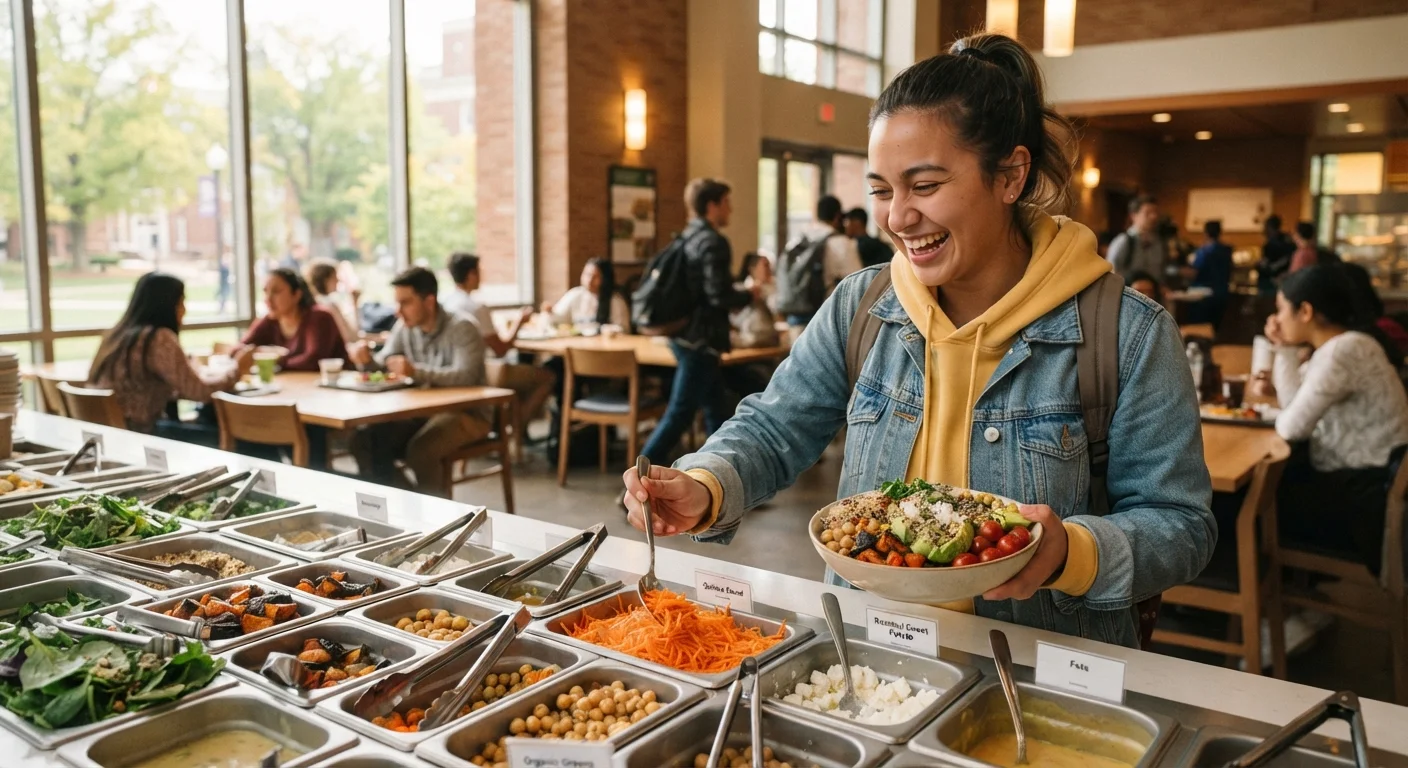
Treat the dining hall salad bar and hot bar as a build-your-own nutrition tool, not just a side option.
Students who actively compose their meals from multiple stations - rather than defaulting to a single entrée line - tend to achieve more varied and balanced nutrient intake. Dining halls are designed for volume, but they do contain the components of a balanced meal if you look across stations.
Closing the Nutrient Gaps Most Students Miss
Even students eating regularly in dining halls can run low on certain nutrients. Iron, calcium, vitamin D, potassium, and dietary fiber show up repeatedly in college-age nutrition data as common shortfalls. The practical fix isn't supplements first - it's food first where possible.
~60%
College students not meeting vegetable intake guidelines
Data from the American College Health Association's National College Health Assessment has consistently shown that a majority of college students fall below recommended daily vegetable consumption.
1 in 3
Students reporting food insecurity
Multiple large-scale studies, including research published in the Journal of Nutrition Education and Behavior, estimate that roughly one-third of college students experience some degree of food insecurity during their academic career.
~25g
Daily fiber target most students miss
The Dietary Guidelines for Americans recommends 25-38 grams of dietary fiber per day depending on age and sex; most Americans, including college students, consume well under half that amount on average.
At the dining hall, iron-rich options often include beans, lentils, fortified cereals, and dark leafy greens alongside meat. Pairing them with a vitamin C source (citrus, bell peppers, tomatoes) helps your body absorb plant-based iron more effectively - a well-supported interaction in nutrition science. Calcium and vitamin D come from dairy and fortified plant milks, both common in dining halls. Fiber gaps close fastest by choosing whole-grain bread over white and keeping vegetables on every plate.
If your meal plan leaves you relying on snacks between meals, the budgeting myths article can help you rethink how small food purchases add up - and where there's room to make smarter choices without spending more.
Making Your Meal Plan Work Smarter
Meal plans are a financial commitment - getting nutritional value out of them is part of getting your money's worth. That framing can make it easier to be intentional rather than grabbing whatever is fastest. For more on building a student budget that accounts for food costs and flexibility, see budgeting approaches for different student lifestyles.
“Students often assume they need to overhaul their entire diet to eat healthier. In reality, a few consistent, strategic choices - repeated across most meals - account for the vast majority of nutritional benefit.”
— Academy of Nutrition and Dietetics, Professional organization representing registered dietitian nutritionists
One of the most underused campus resources is the registered dietitian (RD) - a nutrition professional available at many campus health or wellness centers, often at no additional cost. An RD can review your specific eating patterns, flag real deficiencies, and help you build a plan that works with your schedule and dining options. They won't lecture you; their job is to help, not judge. Check your campus health center's website or student portal to find out what's available to you.
Always consult a qualified healthcare professional or registered dietitian before making significant changes to your diet, especially if you have a health condition, food allergy, or other medical concern.
The content provided on our blog site traverses numerous categories, offering readers valuable and practical information. Readers can use the editorial team’s research and data to gain more insights into their topics of interest. However, they are requested not to treat the articles as conclusive. The website team cannot be held responsible for differences in data or inaccuracies found across other platforms. Please also note that the site might also miss out on various schemes and offers available that the readers may find more beneficial than the ones we cover.