

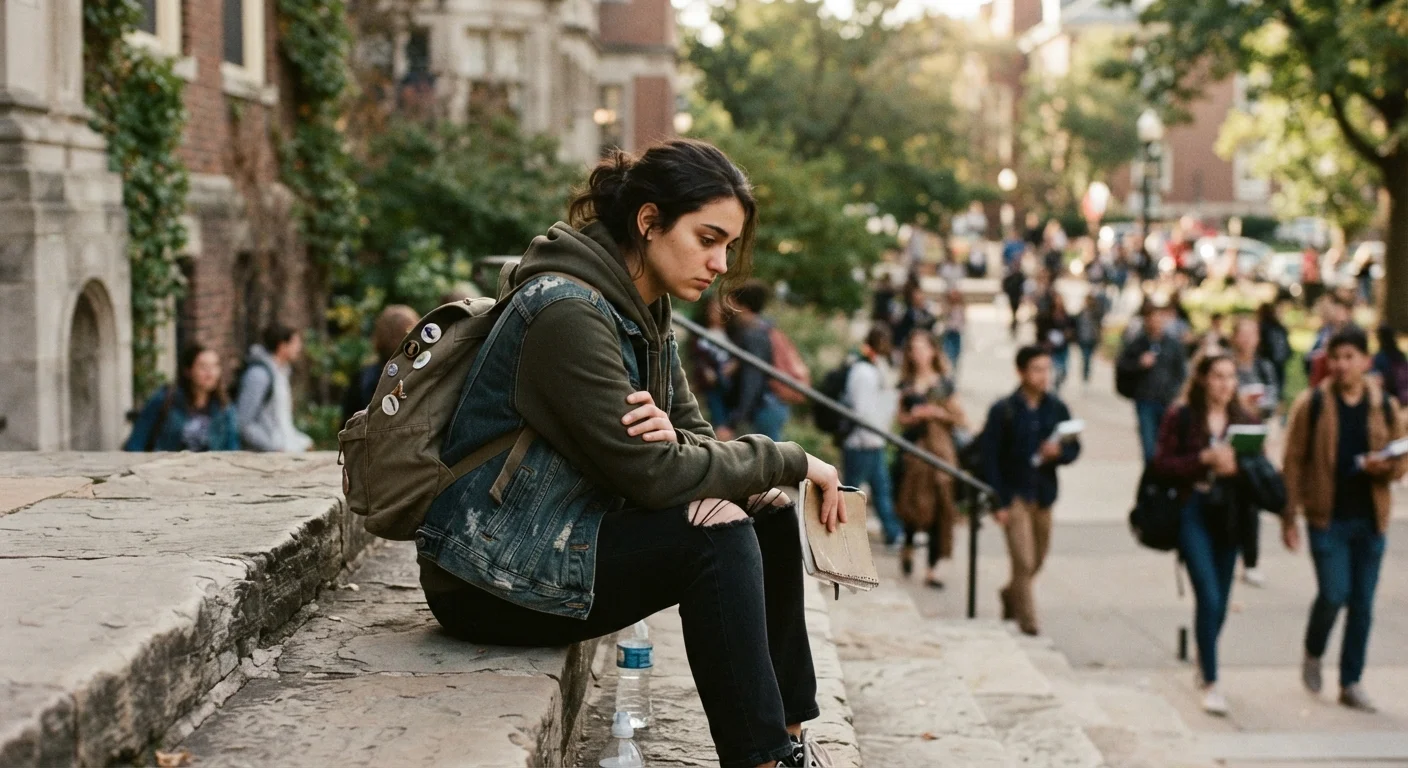
The Gap Between Struggling and Getting Help
Research consistently shows that students often wait months - sometimes years - between when mental health symptoms first appear and when they first seek professional support. According to the American College Health Association, anxiety and depression are among the most commonly reported conditions affecting academic performance, yet help-seeking rates remain lower than the prevalence of those conditions would suggest.
That gap isn't a mystery. It's the result of very specific, very common thinking patterns that feel completely rational in the moment. Understanding those patterns - and naming them honestly - is one of the most useful things you can do for yourself or someone you care about. This article is general health information, not a substitute for professional guidance; if you're concerned about your own mental health, please speak with a qualified healthcare provider.
Stigma still plays a real role in campus culture, but it's far from the only barrier. The mistakes below are just as common - and just as worth recognizing.
Common Mistakes That Lead to Waiting Too Long
Each of the patterns below describes a genuine, understandable reason students postpone care. None of them are signs of failure - they're signs you're human. The goal isn't judgment; it's recognition.
Waiting until things feel 'serious enough' to justify getting help.
Why it happens: Students often set an internal bar - "I'll reach out when it gets bad enough" - without realizing that bar keeps rising as they adapt to a new normal of low-grade distress.
Assuming that stress and anxiety are just part of college and don't warrant attention.
Why it happens: Campus culture often normalizes exhaustion and overwhelm as badges of effort, which makes it hard to distinguish typical adjustment stress from something that genuinely needs support.
Believing that reaching out is a burden on overstretched counseling centers.
Why it happens: Students are often aware that campus counseling services face high demand and feel guilty 'taking a spot' from someone who needs it more.
Relying entirely on self-management strategies while avoiding professional input.
Why it happens: Many students are resourceful and genuinely try to handle things themselves through exercise, journaling, or talking to friends - all of which have real value, but none of which replace professional assessment when symptoms persist.
Fearing that disclosing mental health struggles will affect academic standing or confidentiality.
Why it happens: Students sometimes worry that speaking to a counselor will trigger consequences with professors, financial aid, or their record - a concern that's understandable but mostly unfounded under standard privacy protections.
Don't Wait for a Crisis to Make the First Move
Campus counseling centers often have waitlists, especially mid-semester. If you think you might want to speak with someone, reaching out early - before things feel urgent - means you're far more likely to get timely access. Many campuses also offer same-day or walk-in crisis slots that are separate from regular appointments.
If at any point you're experiencing thoughts of self-harm or suicide, please contact the 988 Suicide and Crisis Lifeline by calling or texting 988. You don't have to be in full crisis to reach out - these services exist for moments of overwhelm too.
A Note on Timing and Campus Resources
One of the most durable myths in student culture is that counseling centers are only for people who are "really struggling" - as if there's a minimum threshold of suffering required to deserve support. There isn't. Campus mental health services routinely help students process adjustment stress, relationship friction, academic pressure, and identity questions, not just clinical crises.
Earlier is almost always better - and that applies to mental health just as much as academic tutoring or financial aid. If you're unsure how to start the conversation once you get there, there are practical ways to raise sensitive topics with campus health providers that can make that first appointment feel far less daunting.
First-generation students face particularly layered pressures that can make help-seeking feel even more fraught - knowing those dynamics exist is part of dismantling them.
60%
Students reporting overwhelming anxiety
According to the American College Health Association's National College Health Assessment, roughly 60% of college students reported feeling overwhelming anxiety in a recent survey period.
11 years
Average delay before seeking mental health treatment
The National Alliance on Mental Illness (NAMI) has reported that the average person waits approximately 11 years between first experiencing symptoms and first receiving treatment.
This article is for general informational and educational purposes only and does not constitute medical or mental health advice. If you have concerns about your mental health, please consult a qualified healthcare professional.
The content provided on our blog site traverses numerous categories, offering readers valuable and practical information. Readers can use the editorial team’s research and data to gain more insights into their topics of interest. However, they are requested not to treat the articles as conclusive. The website team cannot be held responsible for differences in data or inaccuracies found across other platforms. Please also note that the site might also miss out on various schemes and offers available that the readers may find more beneficial than the ones we cover.