

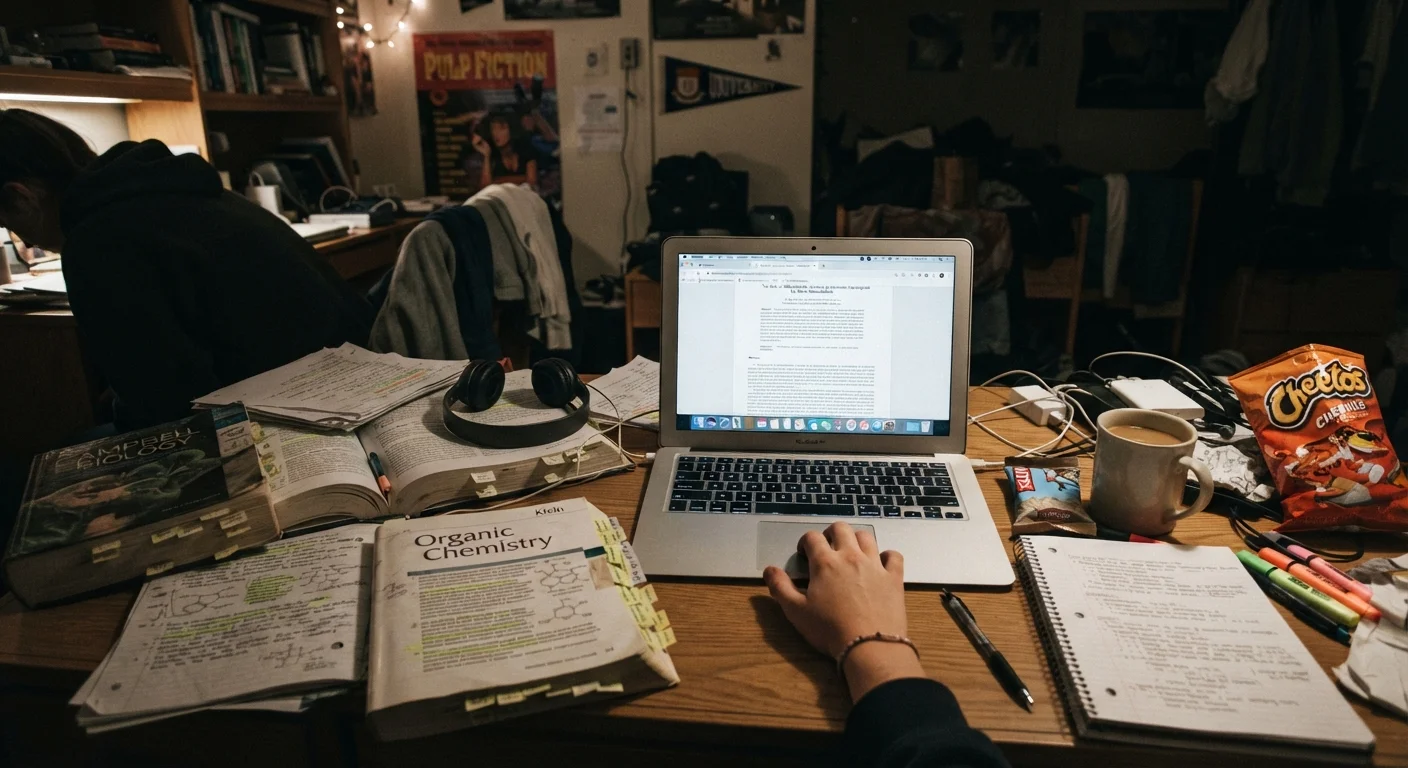
Why Your Study Space Matters More Than You Think
Most students blame themselves when concentration slips - chalking it up to laziness or lack of motivation. But research in cognitive psychology consistently shows that the physical environment shapes attention in measurable ways. Noise, lighting, temperature, clutter, and digital interruptions all compete with your working memory, the mental space your brain uses to process and retain new information.
The tricky part is that many environment mistakes feel neutral or even comfortable. Studying in bed feels relaxing. Having music on feels motivating. Keeping your phone nearby feels responsible. None of these feel like mistakes - which is exactly why they keep happening.
This article breaks down the most common study environment errors, explains why each one undermines focus, and gives you concrete fixes you can apply today. If you're also looking to improve how you schedule your sessions, see our guide to building a realistic study schedule for a complementary starting point.
The Most Common Study Environment Mistakes
Work through the mistakes below and honestly assess how many apply to your current setup. Even eliminating two or three can produce a noticeable improvement in your ability to concentrate.
Studying in bed or on a couch rather than at a dedicated desk.
Why it happens: Soft, comfortable spaces feel inviting, especially after long days on campus. Students often assume comfort helps them settle in.
Keeping a smartphone within reach with notifications enabled.
Why it happens: Students feel they need to stay reachable, or they underestimate how often they actually check the phone.
Studying with music that has lyrics or unpredictable audio.
Why it happens: Music feels motivating and many students grew up doing homework with it on, so the habit carries into college.
Working in spaces with poor or harsh lighting.
Why it happens: Students often study wherever they happen to be - a dim dorm room, a poorly lit corner - without considering how lighting affects alertness.
Allowing a cluttered, disorganized desk surface.
Why it happens: Clutter accumulates gradually and students normalize it, not realizing that visual noise consumes attentional resources.
Studying in high-traffic social areas without a plan for managing interruptions.
Why it happens: Campus common areas and dining halls feel energizing, and students may not realize how frequently they're pulled into conversation or distracted by movement.
Multitasking Feels Efficient - It Isn't
Switching between study material and social media, texting, or video in the background isn't multitasking - it's task-switching, and it carries a measurable cognitive cost each time. Studies consistently show that attempting to study alongside unrelated digital activity significantly reduces the depth of processing, meaning material is harder to recall later. Even a quick glance at a notification can break a train of thought that takes several minutes to rebuild.
Once you've addressed your environment, consider pairing those changes with a proven study method. Our comparison of structured study techniques can help you find a focus framework that fits your working style.
Building an Environment That Works Consistently
Fixing individual mistakes is useful, but the larger goal is creating a space your brain associates with focused work. Psychologists refer to this as context-dependent memory - your brain links mental states to the physical cues around you. If you always study in the same well-lit, low-distraction space, your brain begins entering focus mode faster simply because the environment signals it's time to work.
23 min
Average time to refocus after an interruption
Research by Gloria Mark at the University of California, Irvine found it takes an average of about 23 minutes to return to a task after being interrupted.
~20%
Drop in cognitive performance in noisy environments
Studies on open-plan and noisy learning environments suggest background speech can reduce reading comprehension and recall by a meaningful margin compared to quiet conditions.
Start by designating one primary study location and keeping it consistent. If you're exploring group work as a supplement, be aware that not all collaborative sessions support deep focus - our article on when study groups help and when they don't covers what separates productive sessions from distracted ones.
Environment adjustments are also most effective when paired with sound study methods. If you've been relying on re-reading or last-minute cramming, you may also want to examine the study habits quietly hurting your grades - small belief corrections there can multiply the benefit of a better environment.
This article is for general informational and educational purposes only. Individual experiences with focus, attention, and learning may vary. If you have concerns about concentration that persist across environments, consider speaking with a campus counselor or healthcare professional.
The content provided on our blog site traverses numerous categories, offering readers valuable and practical information. Readers can use the editorial team’s research and data to gain more insights into their topics of interest. However, they are requested not to treat the articles as conclusive. The website team cannot be held responsible for differences in data or inaccuracies found across other platforms. Please also note that the site might also miss out on various schemes and offers available that the readers may find more beneficial than the ones we cover.